TheJakartaPost
Please Update your browser
Your browser is out of date, and may not be compatible with our website. A list of the most popular web browsers can be found below.
Just click on the icons to get to the download page.


Popular Reads
Top Results
No results found. Please check your search term and try again
Can't find what you're looking for?
View all search results
Popular Reads
Top Results
No results found. Please check your search term and try again
Can't find what you're looking for?
View all search resultsThe precedents to Trump's Venezuela operation
While shocking, nothing about this calamity is new: it recalls four precedents that can help us see elements of the present that otherwise may be shrouded by propaganda or emotion.
Change text size
Gift Premium Articles
to Anyone
Share the best of The Jakarta Post with friends, family, or colleagues. As a subscriber, you can gift 3 to 5 articles each month that anyone can read—no subscription needed!
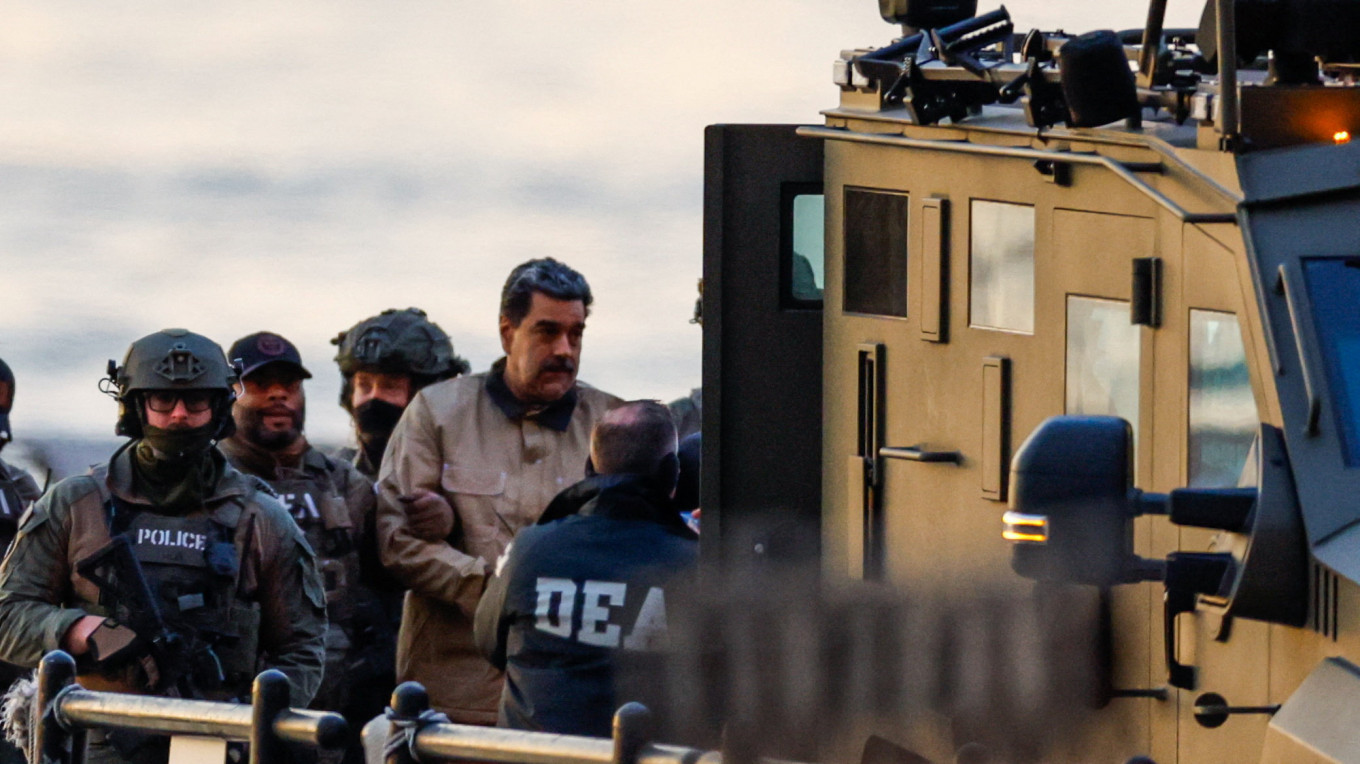 Venezuelan President Nicolas Maduro arrives at the Downtown Manhattan Heliport om Jan. 5, as he heads towards the Daniel Patrick Manhattan United States Courthouse for an initial appearance to face US federal charges including narco-terrorism, conspiracy, drug trafficking, money laundering and others in New York, the United States. (Reuters/Eduardo Munoz)
T
he United States has now extracted Nicolas Maduro from Venezuela and detained him in New York, with President Donald Trump claiming that the US will “run” the country. While shocking, nothing about this calamity is new: it recalls four precedents that can help us see elements of the present that otherwise may be shrouded by propaganda or emotion.
For starters, there is the long history of US intervention in Latin America, based on an implicit, if self-proclaimed, right to choose the region’s leaders. During the Cold War, installing a leader or government approved by US officials was typically dressed up as a pro-democracy crusade, with the logic being that the US’ main motivation was to stop communism, which was anti-democratic.
This time around, there is no pretense that democracy is the goal. Maduro and his allies stole Venezuela’s 2024 presidential election. But instead of punishing him for that very real crime, the Trump administration prefers the essentially fictional charge of “narco-terrorism.” And while Venezuela has a legitimately elected president, Edmundo González, there is no sign that he, or the opposition more generally, figures into the US administration’s plans.
Consider that after Maduro’s capture, Trump dismissed the courageous opposition leader and 2025 Nobel Peace Prize winner María Corina Machado as a “nice woman” who lacks support and respect in Venezuela. Given this, it is worth revisiting the US-backed extraction last month of Machado, who had been living in hiding in Venezuela since the 2024 election. At the time, many thought that the Trump administration was helping her attend the Nobel ceremony in Oslo. Now it looks much more like an effort to neutralize a popular politician and clear the way for a form of US imperialism directed against Venezuelans.
But this particular imperialist project is even more ill-conceived than most. Trump appears to be offering Venezuela’s oil to US energy firms (similar to how past US administrations chose leaders in Latin America who supported US business interests), explaining the whole operation in terms of the money to be made. But there is little profit in Venezuelan oil in the short run; tapping its potential would require huge long-term investments, which in turn depend on political stability.
Another obvious precedent is the 2003 invasion of Iraq, a turning point for US power. The invasion was predicated on the idea that defeating an army, deposing a bad ruler, and dismantling compromised institutions would be enough to create the conditions for a better, more democratic government. As a result, President George W. Bush’s administration barely planned for the country’s political future, and the US occupiers were reduced to cooperating with the people they claimed to have overthrown. By the end of the US occupation of the country, hundreds of thousands of Iraqis, and around 4,500 US soldiers had been killed, and US credibility was in tatters.

In the case of Venezuela, there is a similar belief that simply removing a dictator will bring about the desired outcome. But the Venezuelan army has not been defeated, and Maduro’s government remains in power. Insofar as the Trump administration has a plan, it is that Venezuelan Vice President Delcy Rodriguez can run the show for the US, even though she is no more legitimate when backed by US violence. For her part, Rodriguez has denounced Maduro’s kidnapping as illegal and claimed that it had “Zionist overtones.”