The Jakarta Post
Please Update your browser
Your browser is out of date, and may not be compatible with our website. A list of the most popular web browsers can be found below.
Just click on the icons to get to the download page.


Popular Reads
Top Results
No results found. Please check your search term and try again
Can't find what you're looking for?
View all search results
Popular Reads
Top Results
No results found. Please check your search term and try again
Can't find what you're looking for?
View all search resultsThe hidden costs of a GoTo–Grab merger
In the context of a GoTo-Grab merger, the participation of Danantara introduces a fundamental conflict of interest that cannot be resolved through rhetoric alone.
Change text size
Gift Premium Articles
to Anyone
Share the best of The Jakarta Post with friends, family, or colleagues. As a subscriber, you can gift 3 to 5 articles each month that anyone can read—no subscription needed!
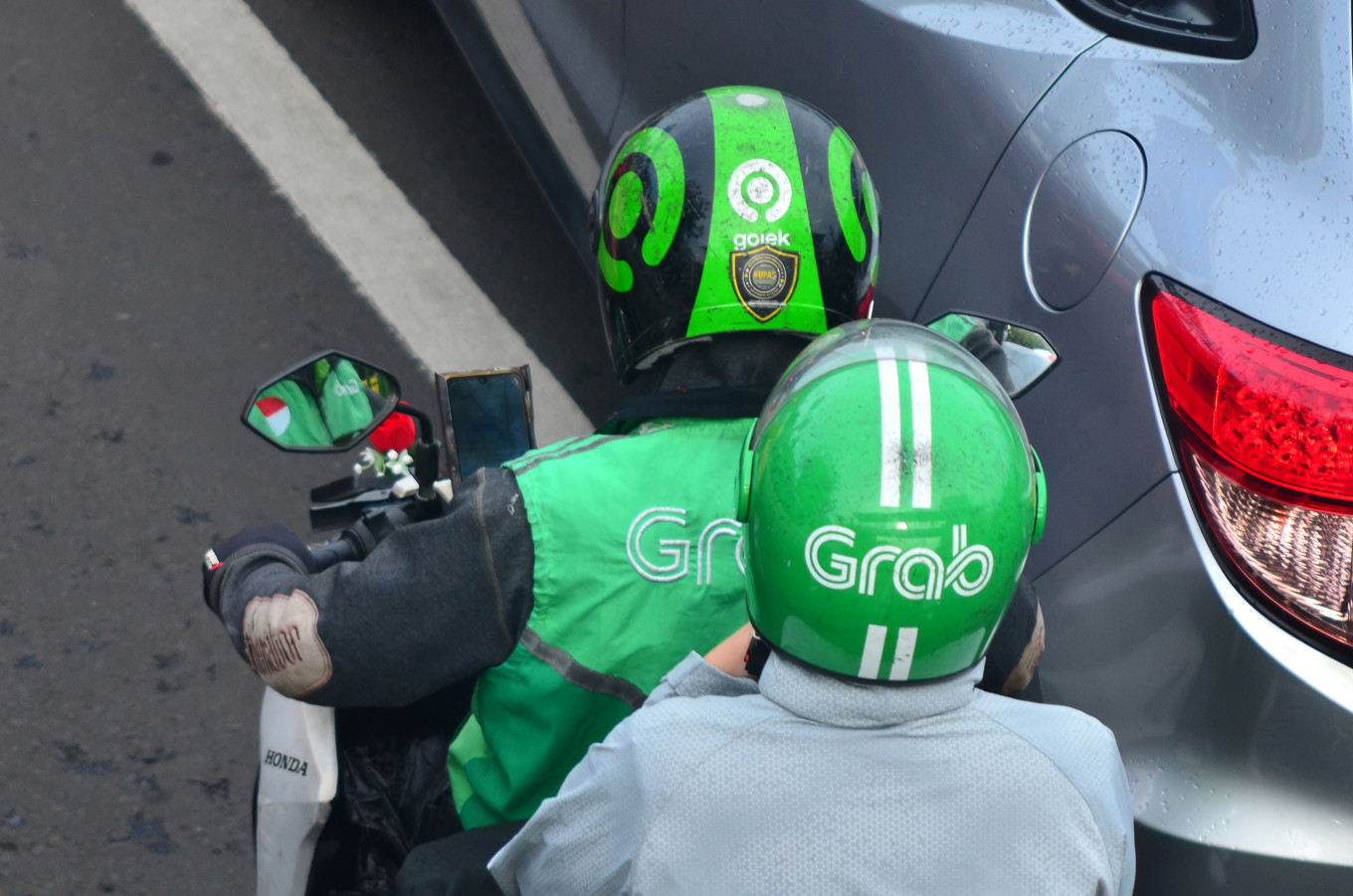 Sign of “GOJEK” and “GRAB” are seen on the helmets of an online motorcycle taxi driver and their passenger on Nov. 12 at Jl. Basuki Rachmat in Jakarta. (The Jakarta Post/Iqro Rinaldi)
B
y early 2026, the debate over a possible GoTo–Grab merger can no longer be treated as a theoretical exercise in market efficiency or regional competitiveness. The signals are already visible.
Pricing structures are becoming less transparent, incentives for drivers and merchants are tightening and consumers are quietly absorbing higher costs across everyday services. What was once framed as a strategic question for the tech sector has now become a broader test of governance as I consistently discussed in my previous writing.
Supporters of consolidation often argue that scale is necessary to survive intensifying regional competition and rising operational costs. Yes, there is some truth to this. Platform businesses do benefit from scale, and duplication can be inefficient.
But the more important question is not whether scale creates efficiencies, but who ultimately captures those efficiencies, and at what cost. In the case of a GoTo–Grab merger, the most significant costs are not immediately visible. They are hidden, deferred and increasingly borne by the public.
This merger would not resemble a conventional corporate transaction. GoTo and Grab do not merely compete in a single market; together they anchor an ecosystem spanning ride-hailing, food delivery, logistics and digital payments. These are markets characterized by strong network effects, high switching costs and deep data advantages.
Once consolidated, the resulting entity would exercise influence not just over prices, but over access, from access to customers, to income opportunities and to essential digital infrastructure.

In such markets, the loss of competition rarely produces dramatic price hikes overnight. Instead, it results in incremental changes that are difficult to track and harder to contest. Fare adjustments become more frequent but less visible. Platform fees rise in small steps. Service quality declines gradually, justified as optimization.