The Jakarta Post
Please Update your browser
Your browser is out of date, and may not be compatible with our website. A list of the most popular web browsers can be found below.
Just click on the icons to get to the download page.


Popular Reads
Top Results
No results found. Please check your search term and try again
Can't find what you're looking for?
View all search results
Popular Reads
Top Results
No results found. Please check your search term and try again
Can't find what you're looking for?
View all search resultsWhy Indonesia’s US deal could cost more than it delivers
For Indonesia, which is deeply embedded in East Asian production networks and heavily exposed to Chinese trade and investment, a reciprocal trade agreement with the US could trigger chaotic and costly supply chain realignments.
Change text size
Gift Premium Articles
to Anyone
Share the best of The Jakarta Post with friends, family, or colleagues. As a subscriber, you can gift 3 to 5 articles each month that anyone can read—no subscription needed!
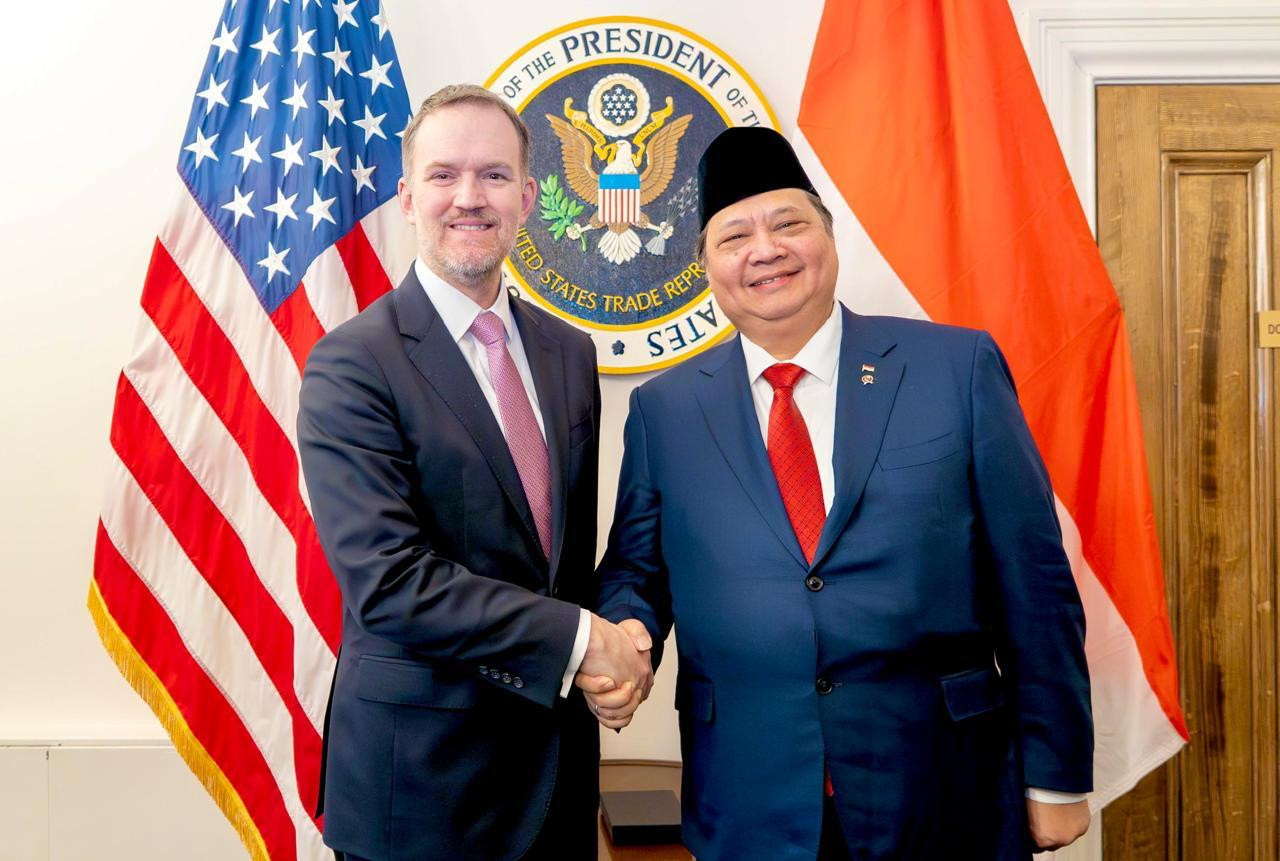 Coordinating Economy Minister Airlangga Hartarto (right) shakes hand with United States Trade Representative Jamieson Greer following a meeting on Dec. 23, 2025, at the USTR office in Washington, DC. Indonesia is preparing to seal a reciprocal trade agreement (ART) with the US in at the end of January next year after resolving all substantial issues in negotiations that had earlier risked stalling.
(Courtesy of/Coordinating Economy Ministry office)
Coordinating Economy Minister Airlangga Hartarto (right) shakes hand with United States Trade Representative Jamieson Greer following a meeting on Dec. 23, 2025, at the USTR office in Washington, DC. Indonesia is preparing to seal a reciprocal trade agreement (ART) with the US in at the end of January next year after resolving all substantial issues in negotiations that had earlier risked stalling.
(Courtesy of/Coordinating Economy Ministry office)
J
ust days before Christmas, Coordinating Economy Minister Airlangga Hartarto announced that Indonesia had secured tariff relief for many of its products entering the United States market as part of the incoming Agreement on Reciprocal Tariff (ART). The deal was presented as a "win-win" solution, with US Trade Representative Jamieson Greer even hailing it as “the best Christmas gift”.
Yet, as the festive dust settled, troubling details emerged: key manufacturing exports, such as textiles, are excluded from the zero-tariff arrangement.
The exclusion of certain sectors is common in trade negotiations. However, in this case, it signals deeper structural flaws. What was promised as a breakthrough now risks becoming a lopsided deal burdened with a long list of implementation obligations, mostly on the Indonesian side. Instead of hastening to finalize the agreement, Indonesia must adopt a more cautious negotiating stance.
Let us start with the scope of the agreement. Airlangga stated that the zero-tariff facility targets tropical natural-resource commodities, while manufactured goods remain subject to a 19 percent tariff. This is a critical disparity.
While the US absorbs roughly 11 percent of Indonesia’s total exports, a market share worth defending, manufactured goods account for more than 50 percent of that volume. This includes textile and garment products, sectors where 40 percent of exports are destined for the US.
It is easy to argue that the agreement is stacked against Indonesia, especially given that the exposed sectors, textiles, garments and footwear, are labor-intensive and vital sources of employment. Moreover, the "19 percent" figure is deceptive; in practice, businesses exporting to the US often face multiple tariff layers compounded by restrictive Rules of Origin (ROOs). Unless Indonesia addresses this, the deal offers little relief for its most vulnerable industries.

However, the tariff rate is only the tip of the iceberg. Learning from Malaysia’s recent ART experience, Indonesia faces significant risks regarding economic and security entanglement.