The Jakarta Post
Please Update your browser
Your browser is out of date, and may not be compatible with our website. A list of the most popular web browsers can be found below.
Just click on the icons to get to the download page.


Popular Reads
Top Results
No results found. Please check your search term and try again
Can't find what you're looking for?
View all search results
Popular Reads
Top Results
No results found. Please check your search term and try again
Can't find what you're looking for?
View all search resultsCaught upstream: Saving Indonesia’s dying textile industry
For Indonesia, protectionism does not generate the jobs the country needs, while damaging the competitiveness of its exports.
Change text size
Gift Premium Articles
to Anyone
Share the best of The Jakarta Post with friends, family, or colleagues. As a subscriber, you can gift 3 to 5 articles each month that anyone can read—no subscription needed!
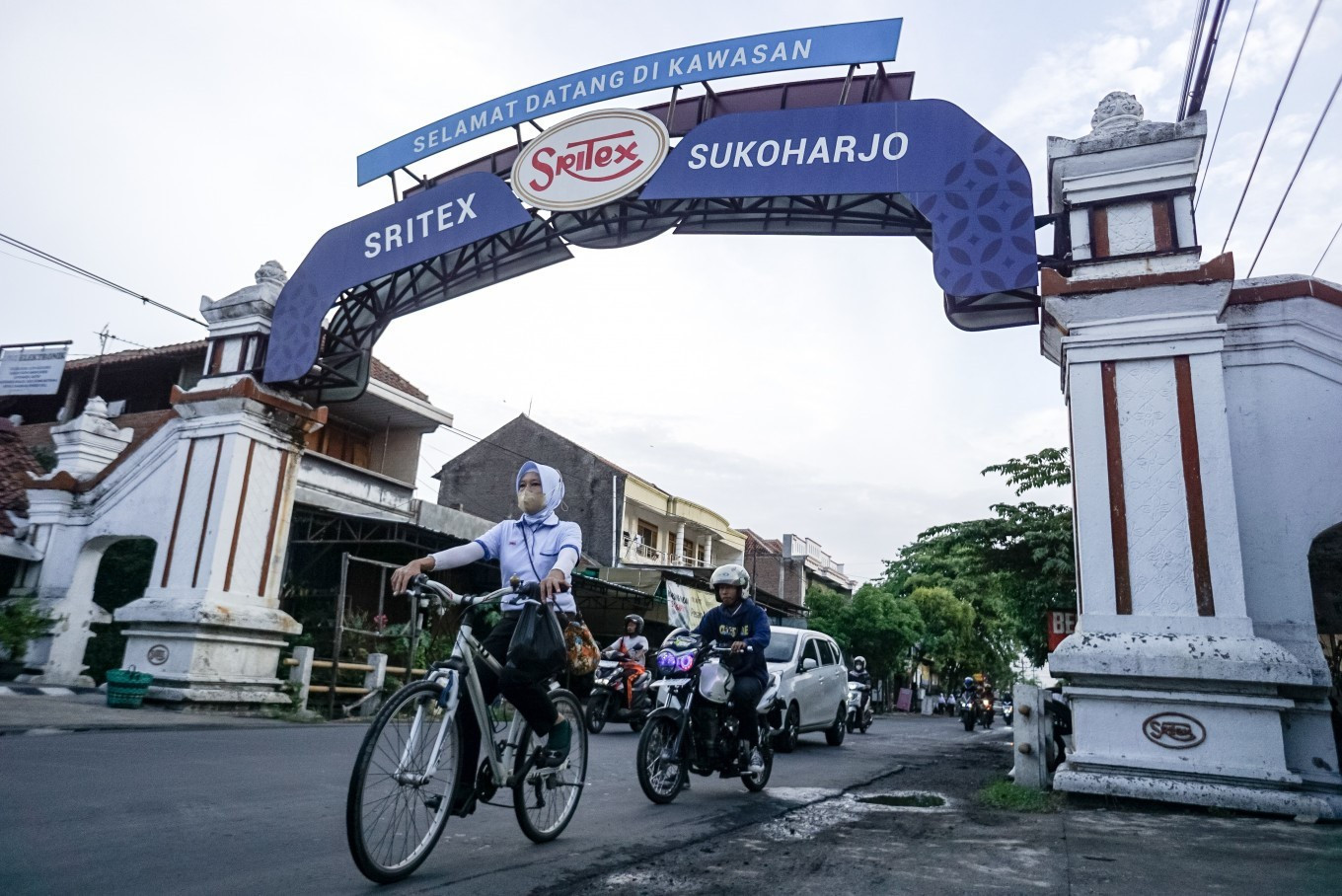 Workers leave a PT Sri Rejeki Isman (Sritex) factory, on Oct. 24, 2024, in Sukoharjo, Central Java. (Antara Foto/Mohammad Ayudha)
T
he bankruptcy of PT Sri Rejeki Isman, better known as Sritex, marked the end of Southeast Asia's largest vertically integrated textile manufacturer. After the Supreme Court rejected the company's final appeal in December 2024, operations ceased in March 2025, leaving over 10,000 workers jobless.
Prior to the COVID-19 pandemic, Sritex was a champion of Indonesia’s industry, with a revenue of US$1.3 billion at its peak in 2019. Competitive pressures and falling demand brought the decline of the Sukoharjo, Central Java-based textile giant, slashing revenue down to just US$325 million by 2023, while debts reached $1.6 billion.
To add insult to injury, two brothers at the helm of PT Sritex, Iwan Setiawan Lukminto and Iwan Kurniawan Lukminto, are standing trial for allegedly causing Rp 1.35 trillion ($81 million) in state losses through a corruption scheme involving credit facilities. Both men objected to the charges.
The fall of Sritex reflects a structural problem in Indonesia’s industry: scale does not always improve competitiveness, and policies that shield upstream industries can eventually lead to more job losses than gains.
Many blame the influx of Chinese imports. China is the largest textiles exporter to Indonesia, accounting for around half of all imports. In response, Jakarta has introduced numerous import restrictions on textiles since 2019. In July 2025, after the bankruptcy of Sritex, the government once again responded with technical considerations (PerTek) requiring Industry Ministry’s approval for textile imports, undoing an earlier liberalization. Active safeguard mechanisms now cover important inputs such as cotton yarn, fabrics and synthetic fiber yarn.
Protectionism has failed to stabilize the sector. The very firms these measures were designed to protect continue to shut down, while downstream garment manufacturers face rising costs that weaken their standing in global markets. This leaves the industry squeezed on both ends.

The situation in nearby Vietnam could not be more different. Despite having comparable wage levels to Indonesia, its downstream garment makers continued to increase their share of the global market, supported by access to cheaper imported inputs from China.