TheJakartaPost
Please Update your browser
Your browser is out of date, and may not be compatible with our website. A list of the most popular web browsers can be found below.
Just click on the icons to get to the download page.


Popular Reads
Top Results
No results found. Please check your search term and try again
Can't find what you're looking for?
View all search results
Popular Reads
Top Results
No results found. Please check your search term and try again
Can't find what you're looking for?
View all search resultsTaming unruly tourists with code of conduct
Social media addiction and the hyperconsumptive lifestyles of the 21st century often mean tourists forget the real purpose of their visit.
Change text size
Gift Premium Articles
to Anyone
Share the best of The Jakarta Post with friends, family, or colleagues. As a subscriber, you can gift 3 to 5 articles each month that anyone can read—no subscription needed!
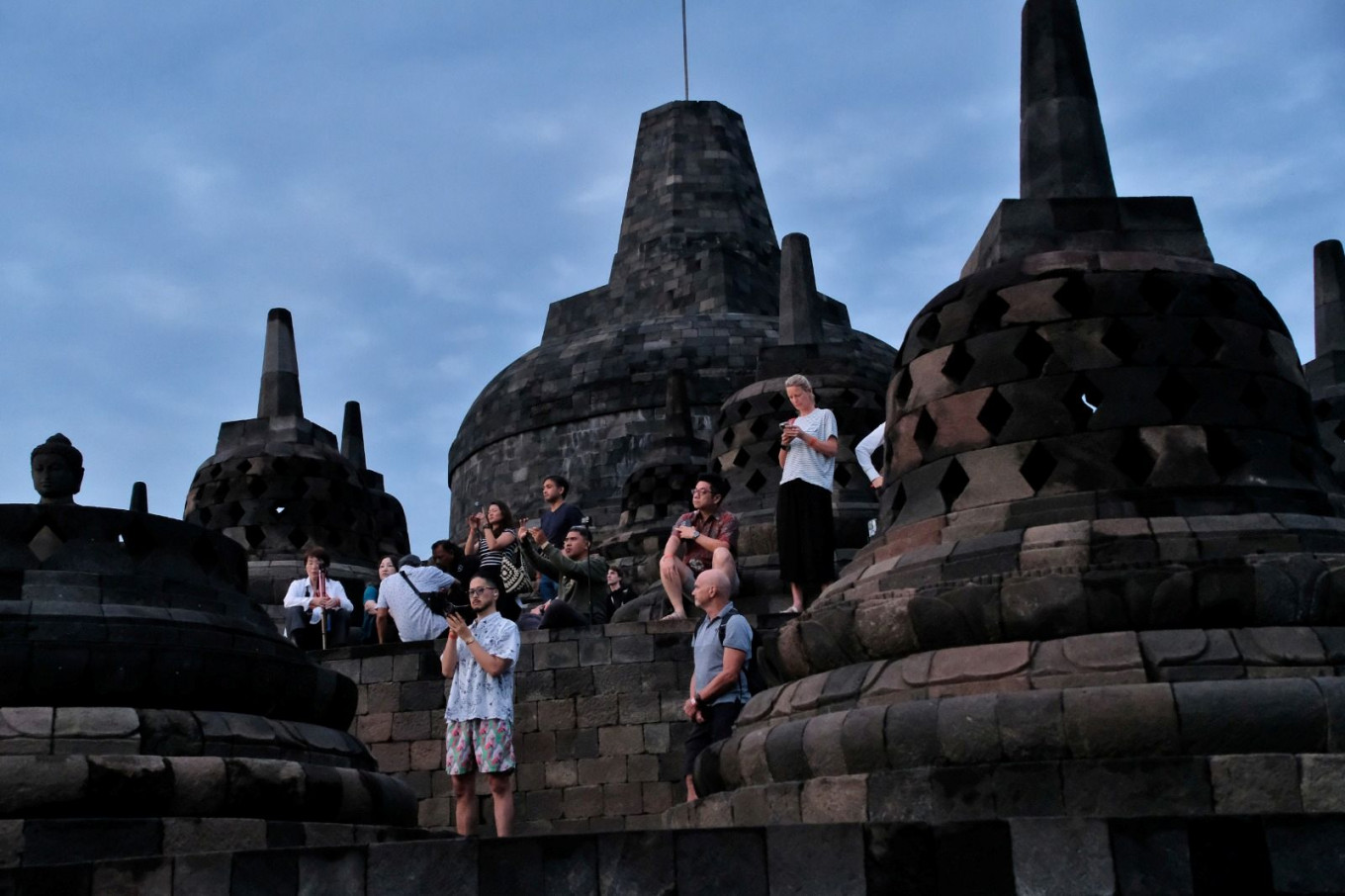 Reach the heights: Tourists capture the moment of the first sunrise of the year on Jan. 1, 2026 at the top of Borobudur Temple in Magelang, Central Java.
(Antara/Anis Efizudin)
Reach the heights: Tourists capture the moment of the first sunrise of the year on Jan. 1, 2026 at the top of Borobudur Temple in Magelang, Central Java.
(Antara/Anis Efizudin)
C
uriosity, discovery, thrill-seeking and the pursuit of happiness are fundamental to the human experience. Since tourism satisfies these desires, it has been a major driver of economic and social activity for centuries.
With evolving human needs and the commensurate growth in specialized activities, tourism is no longer generic; it has diversified into forms such as cultural, adventure, medical, wellness, gastronomy and faith-oriented tourism, among others. Space tourism is even expected to become a reality in the coming decades.
The global population has surged by 57 percent, rising from 5.3 billion in 1990 to an estimated 8.3 billion in 2025. A significant portion of this population is on the move, driven by a rising middle class, aggressive marketing by tourism boards, and the proliferation of affordable flights and hotels. Furthermore, the post-COVID-19 realization that one should not postpone "bucket-list" dreams has accelerated this trend.
However, this ballooning travel volume is creating an unfortunate - yet understandable - backlash that is denting the image of the tourism sector. The explosion of social media and the ability to monetize visits through vlogs, reels and paid promotions has created a serious crisis regarding tourist conduct.
We must remember that while the human population grows rapidly, the number of destinations with significant spiritual, environmental or historical value remains finite. When hordes rush to Queenstown (New Zealand), Hallstatt (Austria), Jungfraujoch (Switzerland), Abu Simbel (Egypt), the Louvre (France), the Taj Mahal (India) or the cherry blossom-lined streets of Osaka (Japan), destination infrastructure buckles under the pressure.
Capturing photos to preserve memories is natural. However, when the primary objective is narcissistic behavior that intrudes upon the privacy of others and shows disrespect to the local community, it is patently wrong and must be called out.

Many centuries-old destinations are fragile and face serious preservation challenges. Sites like Angkor Wat (Cambodia), the Colosseum (Italy), Machu Picchu (Peru), the Oracle of Delphi (Greece), Babylon (Iraq), Stonehenge (the United Kingdom), Borobudur and Pidhirtsi Palace (Ukraine) are already vulnerable to climate change; they cannot withstand additional damage from careless tourist behavior. Once damage is done, it is permanent, and the loss is incalculable.