TheJakartaPost
Please Update your browser
Your browser is out of date, and may not be compatible with our website. A list of the most popular web browsers can be found below.
Just click on the icons to get to the download page.


Popular Reads
Top Results
No results found. Please check your search term and try again
Can't find what you're looking for?
View all search results
Popular Reads
Top Results
No results found. Please check your search term and try again
Can't find what you're looking for?
View all search resultsTurning online conversations into child protection
In a country as diverse as Indonesia, decisions about immunization are shaped within families and communities and influenced by local social norms, religious guidance and lived experience.
Change text size
Gift Premium Articles
to Anyone
Share the best of The Jakarta Post with friends, family, or colleagues. As a subscriber, you can gift 3 to 5 articles each month that anyone can read—no subscription needed!
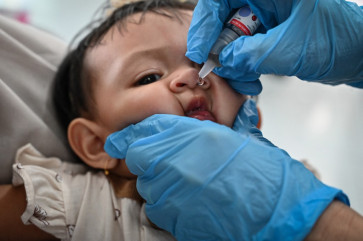
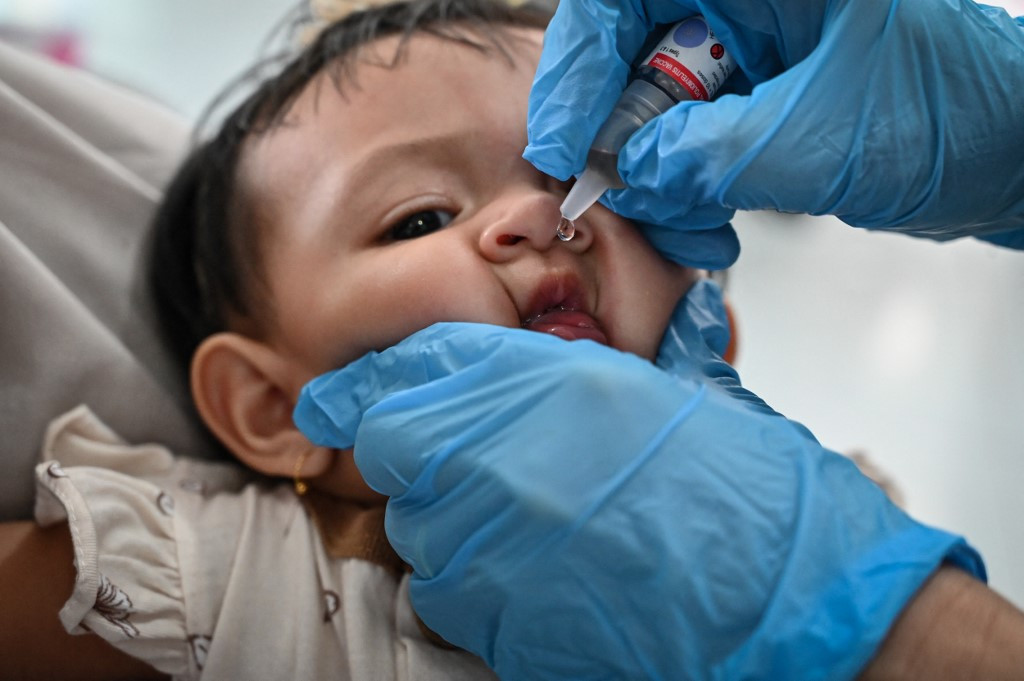 A child receives a vaccine to prevent polio on Aug. 10, 2023, as part of a monthly medical checkup program for children at an integrated services post in Banda Aceh. (AFP/Chaideer Mahyuddin)
J
ust weeks ago, Indonesia received uplifting news that deserves national recognition. The World Health Organization confirmed the official closure of our type-2 polio outbreak after nearly three years of deeply coordinated effort across the country.
Health workers traveled long distances, often crossing rivers and mountains, to reach children in remote communities. Parents, community leaders and local governments came together in an extraordinary national push that delivered almost 60 million additional vaccine doses. From Aceh to Papua, every layer of society played a role in stopping the virus.
This achievement shows what Indonesia can accomplish when communities are informed, engaged and united behind the goal of protecting children.
Yet even as we celebrate this milestone, significant challenges remain. Just a few months ago, measles resurfaced with alarming speed in parts of East Java and several other provinces. A disease many believed had been brought under control infected thousands of children and claimed young lives. More recently, severe flooding in parts of Sumatra has further disrupted access to essential health services, including routine immunization, putting already vulnerable communities at greater risk.
The resurgence of measles in Indonesia reinstates the risks that emerge when immunization momentum falters. Declines in routine coverage over recent years have translated into real consequences, with outbreaks reappearing across multiple provinces and thousands of children newly affected.
Our national immunization coverage fell from 94 percent in 2019 to 84.5 percent in 2021. Although coverage rose again to 94.9 percent in 2022, several provinces including North Sumatra, North Sulawesi, West Kalimantan and Riau remained behind. These gaps contributed to outbreaks of measles and polio. Alongside this decline, measles cases climbed from about 4,800 in 2022 to more than 10,600 in 2023.

These numbers are not just statistics. Most patients were children under five or of primary school age. Years meant to be full of joy were instead stolen by preventable diseases. These outbreaks highlight an important truth that protection depends not only on vaccine supply, but also equally on strong, sustained public demand. Yet hesitancy, misinformation and incomplete follow-up continue to weaken community immunity. Unless these barriers are addressed, preventable diseases will continue to threaten Indonesia’s hard-won progress against child mortality and disability.