TheJakartaPost
Please Update your browser
Your browser is out of date, and may not be compatible with our website. A list of the most popular web browsers can be found below.
Just click on the icons to get to the download page.


Popular Reads
Top Results
No results found. Please check your search term and try again
Can't find what you're looking for?
View all search results
Popular Reads
Top Results
No results found. Please check your search term and try again
Can't find what you're looking for?
View all search resultsWhat now for the 'rules-based order'?
Maduro’s forceful extraction represents something new, partly because US institutions have become much weaker and less democratic, but also because the veneer of legitimacy has been stripped off
Change text size
Gift Premium Articles
to Anyone
Share the best of The Jakarta Post with friends, family, or colleagues. As a subscriber, you can gift 3 to 5 articles each month that anyone can read—no subscription needed!
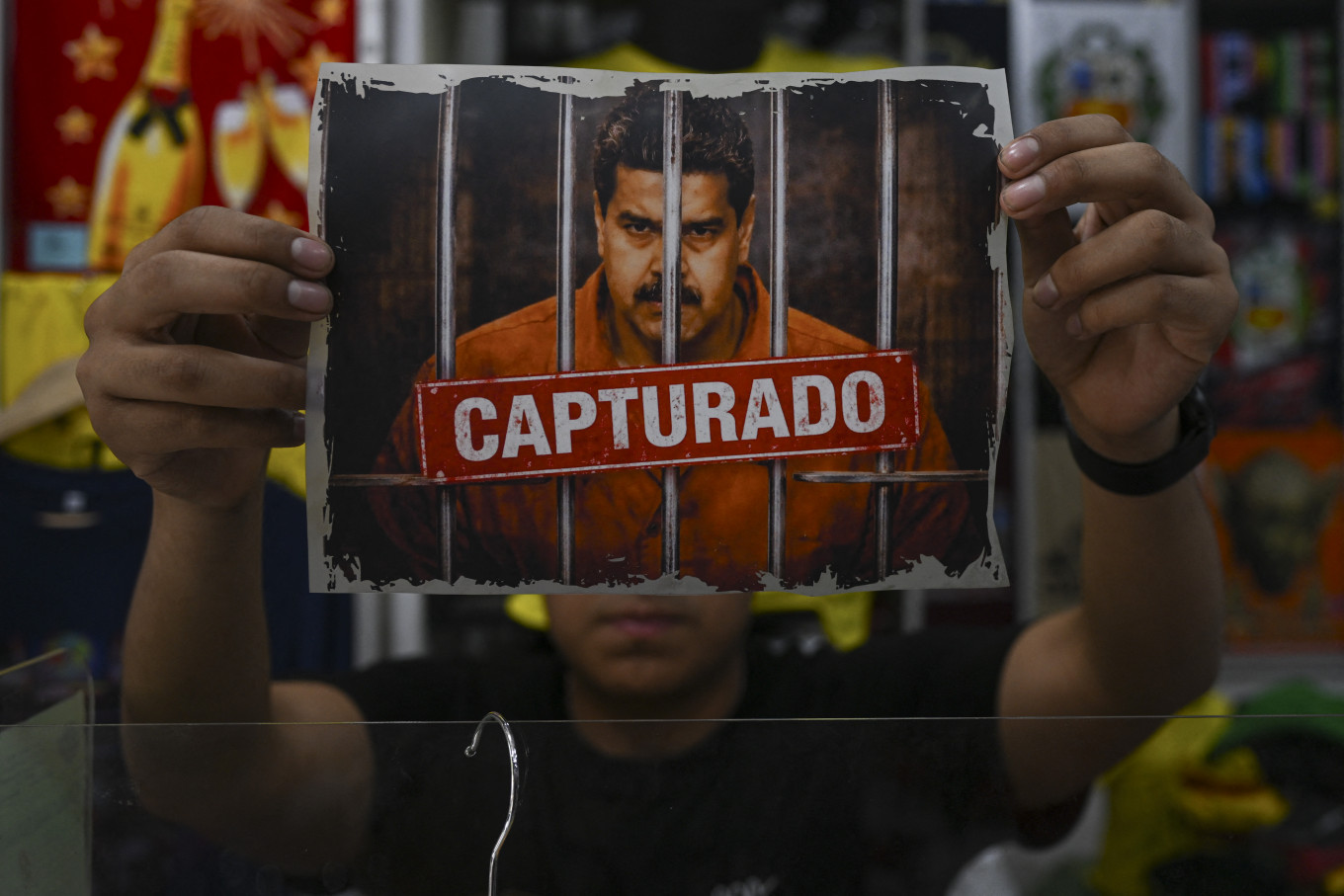 A man shows an image featuring a digitally altered image of the ousted Venezuelan President Nicolas Maduro before printing it on a shirt for sale at “Emporio Comercial de Gamarra“ in Lima on Jan. 6, 2026. (AFP/Ernesto Benavides)
U
nited States President Donald Trump administration’s capture of Venezuelan President Nicolas Maduro marks a watershed for international law and the global order. Of course, this is not the first time that the US has intervened in another country’s internal affairs. Such moves were not uncommon during the Cold War. Even as that era was nearing its end, in December 1989, the US toppled Panama’s de facto ruler, Manuel Noriega, who was also charged with drug trafficking.
But in all these previous cases, there was a critical difference from Maduro’s capture. Past US actions, even when cynical and driven by nothing but realpolitik, had a different veneer. During the Cold War, American democracy and institutions, however imperfect, were preferable to Soviet repression. Before Donald Trump, US presidents could plausibly claim to be defending democracy and supporting a “rules-based order,” and the US itself still had functioning institutions to check the executive and authorize foreign interventions.
Yes, the veneer was always thin. In several cases, such as the 1960 toppling of Patrice Lumumba in the Democratic Republic of the Congo (DRC), the 1953 coup against Iranian Prime Minister Mohammad Mossadegh and support for brutal dictatorships across Latin America (from Nicaragua’s Somoza regime to Gen. Augusto Pinochet’s government in Chile), the defense of democracy was little more than a euphemism.
But in these cases, the CIA’s unlawful activities were ultimately investigated by the Senate, such as in the famous Church Committee hearings of 1975. Because US institutions and political norms were far more robust than they are today, congressional oversight could not be stopped or defanged. The CIA was reined in, at least for a while.
Maduro’s forceful extraction represents something new, partly because US institutions have become much weaker and less democratic, but also because the veneer of legitimacy has been stripped off. All that remains is selfish, narrow self-interest.
Maduro was a brutal dictator who repressed the Venezuelan population, wrecked the economy, rigged elections and jailed and killed political opponents. Human Rights Watch (certainly no mouthpiece for the US government) and the United Nations have both documented a significant number of extrajudicial killings sanctioned by Maduro. Almost 8 million people have fled Venezuela to escape his reign of terror and economic incompetence.

Still, it remains to be seen what evidence the Trump administration actually has to support its claim that Maduro was a drug kingpin. Trump’s frequent talk of Venezuelan oil and of the money that US companies supposedly stand to make signals to everyone that this was not about helping ordinary Venezuelans or bolstering democracy. It was about nakedly advancing US and American corporate interests. The fact that the administration has provisionally backed Maduro’s own vice president, Delcy Rodriguez, rather than opposition politicians who commanded the most public support in past elections, further confirms this interpretation.