The Jakarta Post
Please Update your browser
Your browser is out of date, and may not be compatible with our website. A list of the most popular web browsers can be found below.
Just click on the icons to get to the download page.


Popular Reads
Top Results
No results found. Please check your search term and try again
Can't find what you're looking for?
View all search results
Popular Reads
Top Results
No results found. Please check your search term and try again
Can't find what you're looking for?
View all search resultsYear-end consumption surge: A sign of recovery or a seasonal mirage?
Focusing solely on credit expansion risks overlooking the fundamental issues of inequality and structural weakness in domestic demand.
Change text size
Gift Premium Articles
to Anyone
Share the best of The Jakarta Post with friends, family, or colleagues. As a subscriber, you can gift 3 to 5 articles each month that anyone can read—no subscription needed!
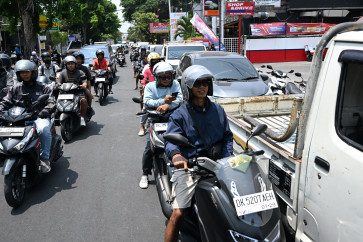
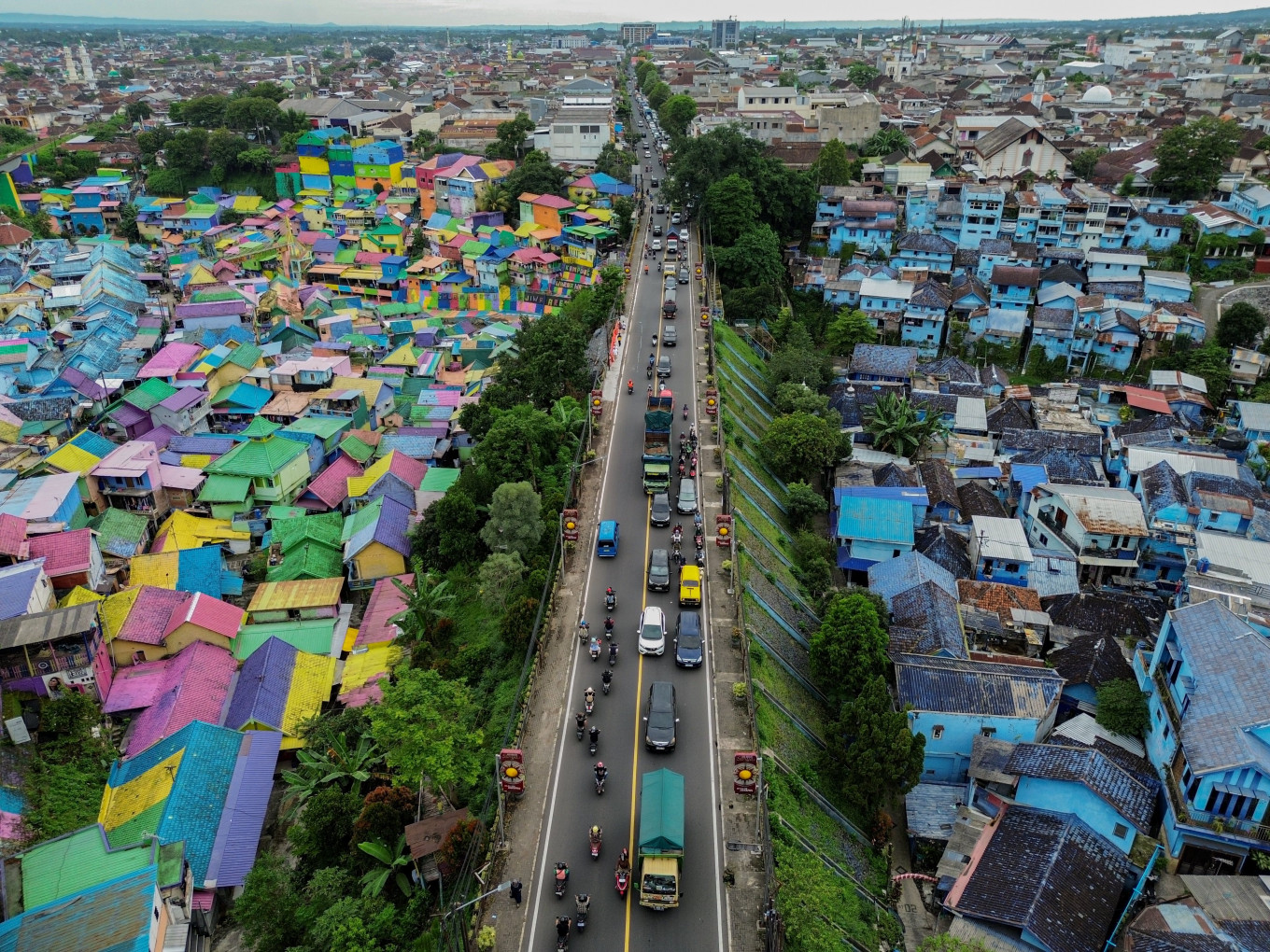 Heavy traffic congestion clogs the roads on Jan. 2, 2025, in Malang, East Java, as visitors from other cities traveled to Malang during the Christmas and New Year holiday. According to data from the Transportation Ministry, the peak of the return flow from the 2025 Christmas and 2026 New Year holidays was expected to be a projected 20.81 million travelers. (Antara/Irfan Sumanjaya)
I
ndonesia’s consumer market experienced a significant surge heading into the year-end festivities. Leisure spending flourished during the holiday season, buoyed by the government’s “work from anywhere” policy in the final week of 2025.
This momentum actually began earlier than expected; Bank Indonesia (BI) reported that the Real Sales Index maintained an annual growth rate of 5 percent over the last quarter, peaking at a robust 5.9 percent in November of last year.
This increasing consumer appetite has breathed new life into production sectors, particularly manufacturing. Indonesia’s Purchasing Managers’ Index (PMI) has remained in expansion mode since August 2025, reaching a peak of 53.3 in November. Crucially, this growth has been driven by a hungry domestic market, which has managed to offset cooling demand for Indonesian exports overseas.
This recent development marks a substantial turnaround from the first three quarters of the year, a period defined by waning business confidence and the public unrest seen in August. In the first half of 2025, aggressive fiscal contraction inadvertently stifled business activity and eroded the purchasing power of the lower-middle class, a demographic already under significant pressure since the COVID-19 pandemic.
The current recovery raises a critical question: Is this growth organic, or is it the result of the government’s aggressive policy interventions?
The central bank has lowered policy rates five times since last year, while the government has rolled out a series of fiscal stimuli. The most high-profile move came in September 2025, when the newly appointed Finance Minister Purbaya Yudhi Sadewa injected Rp 200 trillion (US$12 billion) of fiscal savings into five state-owned banks. The goal was to flood the market with liquidity, encouraging banks to lend to micro, small and medium enterprises, in theory creating a supply-side engine for growth.

However, focusing solely on credit expansion risks overlooking the fundamental issues of inequality and structural weakness in domestic demand. Recognizing this, the government subsequently released the "8-4-5" stimulus packages in October 2025, which included specific job creation programs. These measures represent progress, signaling that policymakers understand that purchasing power is the prerequisite for sustained growth.