TheJakartaPost
Please Update your browser
Your browser is out of date, and may not be compatible with our website. A list of the most popular web browsers can be found below.
Just click on the icons to get to the download page.


Popular Reads
Top Results
No results found. Please check your search term and try again
Can't find what you're looking for?
View all search results
Popular Reads
Top Results
No results found. Please check your search term and try again
Can't find what you're looking for?
View all search resultsBulgaria welcomes the eurozone: How Indonesia can benefit
Bulgaria has finally completed its full integration into the euro area, a journey that began with its membership of the European Union in 2007. What does the full integration mean for this nature-rich, beautiful country in the Balkans, which borders the Black Sea, and how can this benefit Indonesia?
Change text size
Gift Premium Articles
to Anyone
Share the best of The Jakarta Post with friends, family, or colleagues. As a subscriber, you can gift 3 to 5 articles each month that anyone can read—no subscription needed!
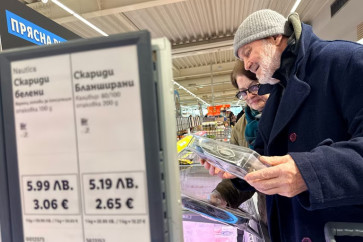
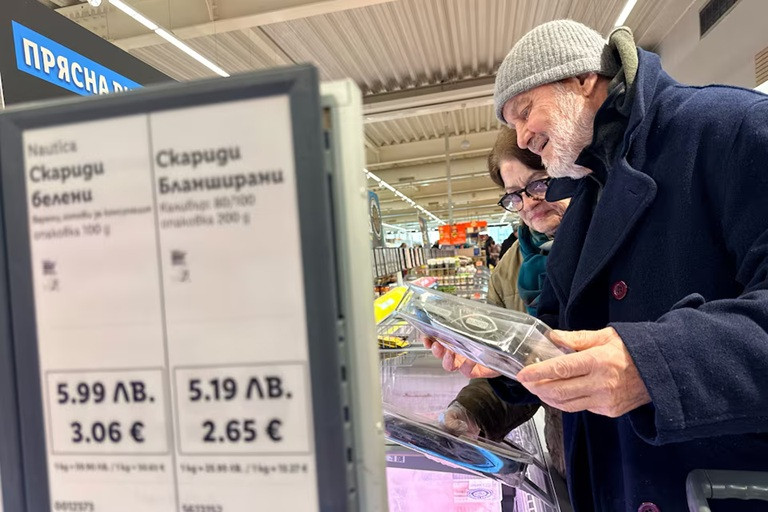 People shop inside a Lidl store in Sofia on Dec.18, 2025, as prices are displayed in both the Bulgarian lev and euro currencies, ahead of Bulgaria's adoption of the euro on Jan. 1, 2026. (Reuters/Fedja Grulovic)
B
ulgaria has finally completed its full integration into the euro area, a journey that began with its membership of the European Union in 2007. But what does this milestone mean for this nature-rich, beautiful country in the Balkans, bordering the Black Sea? More importantly, how can this benefit Indonesia?
Just before Christmas last month, Bulgaria, a nation of 6.6 million, went through a tumultuous period marked by massive yet peaceful demonstrations of more than 100,000 people in city centers, including the capital, Sofia.
The protests, driven largely by Generation Z, initially targeted a financial bill passed by parliament to prepare the 2026 budget, the country's first in euros. The bill was perceived as exacerbating the cost of living, which was already a sensitivity following the adoption of the euro. Demonstrators also accused the government of corruption and nepotism, prompting the resignation of Prime Minister Rosen Zhelyazkov and his cabinet.
Bulgarians have struggled to form lasting governments since 2021 due to a deeply fragmented electorate and mistrust between major political parties. When the next election is held around March or April, it will be the country's ninth general election in recent years.
Indeed, domestic dynamics affect foreign policy, for diplomacy starts at home. However, Bulgaria enters 2026 with different characteristics: as of Jan.1, it is a full member of the eurozone. As the 21st member of the bloc, the euro serves as a safety net to boost economic integration, promote greater stability, and provide wider EU market access.
Despite the political noise, the economic fundamentals have strengthened. By becoming a member of the eurozone, Bulgaria benefits from a stable, integrated financial market with direct access to the European Central Bank. This will help attract foreign direct investment to the country's key sectors, particularly information technology, renewable energy, tourism and agriculture. The country continues to offer a business-friendly environment with a flat corporate tax rate of 10 percent and competitive labor costs.

Various international IT and outsourcing companies, including those from Asia, have chosen Bulgaria as their home base, relying on its highly skilled, English-speaking workforce.