TheJakartaPost
Please Update your browser
Your browser is out of date, and may not be compatible with our website. A list of the most popular web browsers can be found below.
Just click on the icons to get to the download page.


Popular Reads
Top Results
No results found. Please check your search term and try again
Can't find what you're looking for?
View all search results
Popular Reads
Top Results
No results found. Please check your search term and try again
Can't find what you're looking for?
View all search resultsBe vigilant against any resurgence of militarism
Today, the Japanese government openly attempts to forcibly link the China Taiwan question with Japan’s so-called “security concerns” seeking to manufacture a pretext for military intervention in the Taiwan Strait.
Change text size
Gift Premium Articles
to Anyone
Share the best of The Jakarta Post with friends, family, or colleagues. As a subscriber, you can gift 3 to 5 articles each month that anyone can read—no subscription needed!
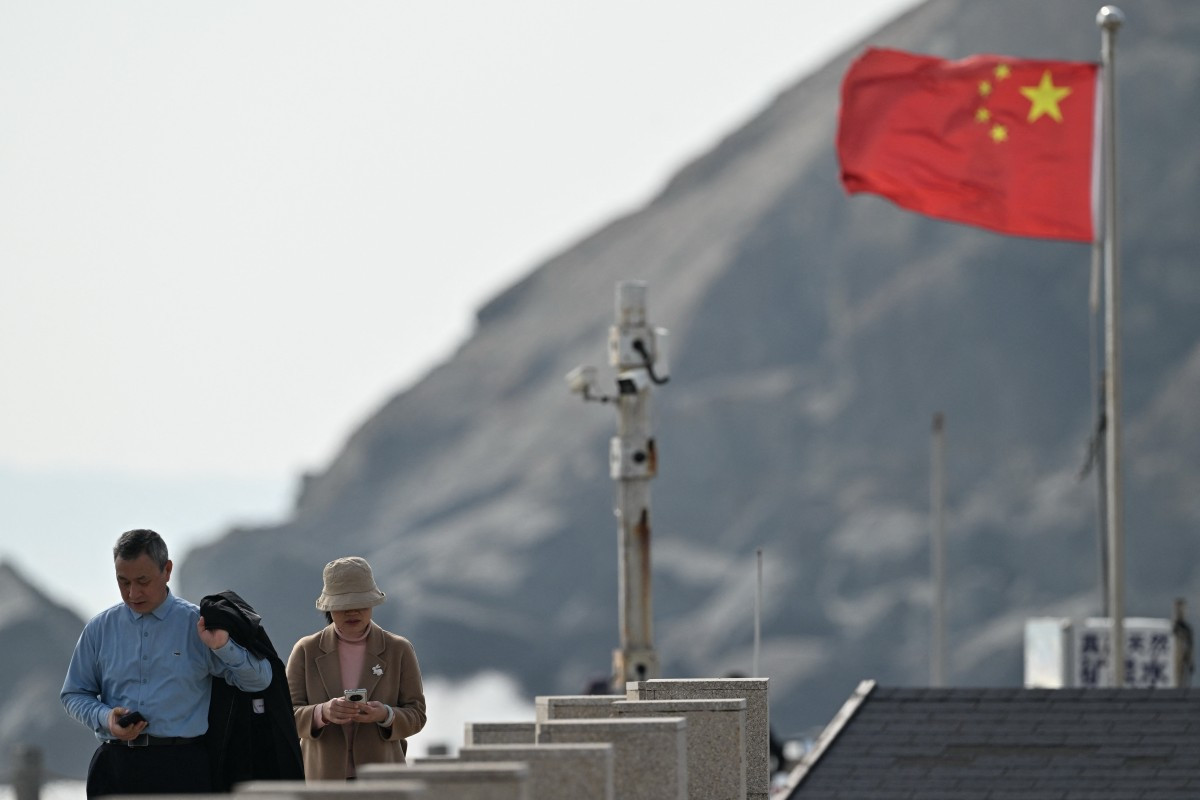 Visitors walk past a surveillance camera post (center) and a Chinese flag (right) on Pingtan Island, the closest point to Taiwan, on Dec. 30, 2025, in eastern China's Fujian province. (AFP/Adek Berry)
R
ecently, Japanese Prime Minister Sanae Takaichi made dangerous remarks at the Japanese Diet, claiming that a so-called “Taiwan contingency” could constitute an “existential crisis” enabling Japan to exercise the right of collective self-defense, implicitly suggesting that Japan might intervene in the Taiwan Strait by military means. This is the first time since Japan’s defeat in 1945 that a Japanese leader has openly revealed ambitions to militarily intervene in the Taiwan question and sent an explicit signal of coercive intent toward China.
Such remarks constitute a blatant interference in China’s internal affairs, violate the one-China principle and challenge the post-World War II international order. Such wrong behavior will bring extreme negative impact. The Chinese government and the Chinese people express strong indignation and firm opposition.
History must not be forgotten. Japanese militarism once brought profound disasters to all of Asia, and the trauma it inflicted remains deeply etched in the collective memory of the region.
Japan did not only launch brutal wars of aggression against China, but also trampled much of Southeast Asia. From 1942 to 1945, Japanese forces occupied vast areas, including Indonesia, imposed ruthless military rule, plundered resources, forcibly conscripted labor, created famine and brutally suppressed resistance movements, inflicting indelible suffering on local populations.
In China, the crimes of Japanese militarism are too numerous to recount. In 1895, Japan forcibly seized Taiwan from China through the unequal Treaty of Shimonoseki and imposed nearly half a century of colonial rule, oppressing the people of Taiwan, plundering resources on a massive scale and severely undermining Taiwan’s social development.
In 1945, after 14 years of arduous struggle, the Chinese people won the great victory in the War of Resistance Against Japanese Aggression. Japan surrendered unconditionally and formally accepted international legal instruments such as the Cairo Declaration and the Potsdam Proclamation. They unequivocally affirmed that Taiwan should be returned to China. China thus resumed the exercise of sovereignty over Taiwan. This was not only a major outcome of the Chinese people’s victory in the war, but also a cornerstone of the postwar international order.

Yet today, the Japanese government openly attempts to forcibly link the China Taiwan question with Japan’s so-called “security concerns” seeking to manufacture a pretext for military intervention in the Taiwan Strait. Such actions seriously violate the political foundation of Japan’s explicit commitments to the one-China principle as set out in the four political documents between China and Japan, including the China–Japan Joint Statement. They also openly depart from the important consensus between the two countries that “they should be cooperative partners rather than threats to each other”, severely erode the foundations of China–Japan relations, and send extremely dangerous and erroneous signals to “Taiwan independence” separatist forces.