TheJakartaPost
Please Update your browser
Your browser is out of date, and may not be compatible with our website. A list of the most popular web browsers can be found below.
Just click on the icons to get to the download page.


Popular Reads
Top Results
No results found. Please check your search term and try again
Can't find what you're looking for?
View all search results
Popular Reads
Top Results
No results found. Please check your search term and try again
Can't find what you're looking for?
View all search resultsEnergy will decide the AI race
Soon, if not already, reliable, affordable electricity will confer the decisive advantage in the sector.
Change text size
Gift Premium Articles
to Anyone
Share the best of The Jakarta Post with friends, family, or colleagues. As a subscriber, you can gift 3 to 5 articles each month that anyone can read—no subscription needed!
 Words reading “Artificial intelligence AI“ and miniature toys of a robot and a hand are pictured in this illustration created on Dec. 14, 2023. (Reuters/Dado Ruvic)
D
ata-center investments hint at a coming shift in the AI race. Soon, if not already, reliable, affordable electricity will confer the decisive advantage in the sector.
As Albert O. Hirschman argued in National Power and the Structure of Foreign Trade, an economy’s true power lies in its ability to manage the choke points that affect its industries. In the AI ecosystem, the United States has been leveraging its dominance in chip design by strategically limiting exports to China, while China has exerted pressure on the US through its control of rare-earth materials needed to manufacture chips, magnets and other components of advanced technology.
But as the scale of the AI industry and its reliance on computing power grows, the bottleneck will move from chips to electricity, because all the data centers in the world will not help you if they lack a continuous supply of affordable energy. The International Energy Agency estimates that roughly 20 percent of planned global data-center capacity will be at risk by 2030, owing to grid bottlenecks and interconnection queues. And as energy supplies are constrained, costs will rise, eventually trickling down to households and firms.
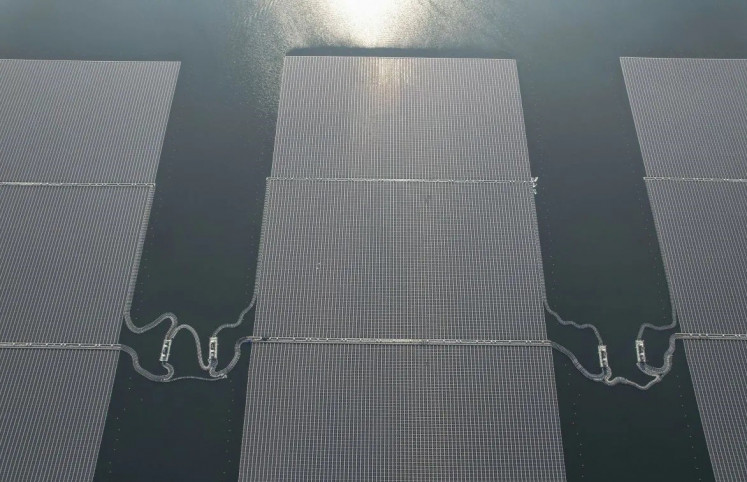
Which country will dominate this next leg of the race? China has certainly made a statement with its massive build-out of energy supply and distribution infrastructure, much of which focuses on renewables. According to the Financial Times, Chinese investments in clean energy cover everything from solar and hydropower to the hardware needed to move cheaper inland power to coastal demand centers, thus lowering costs and improving reliability. China has also invested massively in manufacturing, driving down the price of a solar panel by a factor of 20. All told, it is now capable of adding between 500 gigawatts and one terawatt of capacity per year.
Moreover, China has matched its carefully planned industrial policy with equally strong local execution. To offset the higher cost of using domestic chips, for example, local governments offer electricity subsidies for data centers under their jurisdiction. If these facilities are powered by domestic chips, they can cut their power bill by as much as 50 percent.
The US effort is rather unimpressive by comparison. According to the Financial Times, “China installed 429 GW of new power generation capacity in 2024, more than six times the net capacity added in the US during that time.” Even as the US' locally planned grids face enormous around-the-clock demand from data centers, US industrial policy is failing to give electricity the attention it deserves.

For example, OpenAI and its partners are planning to build data centers that will require ten GW of capacity, which is on the order of New York City’s summer peak load electricity usage. But, while data centers can be built in a couple of years, researchers at the Deloitte Research Center for Energy & Industrials point out that completing the transmission infrastructure needed to move energy takes almost a decade.