TheJakartaPost
Please Update your browser
Your browser is out of date, and may not be compatible with our website. A list of the most popular web browsers can be found below.
Just click on the icons to get to the download page.


Popular Reads
Top Results
No results found. Please check your search term and try again
Can't find what you're looking for?
View all search results
Popular Reads
Top Results
No results found. Please check your search term and try again
Can't find what you're looking for?
View all search resultsHedging Indonesia’s clean mobility risk
Indonesia faces exposure to global battery minerals it does not control and a domestic strategy that is increasingly centered on a single mineral at a time of rapid technological change.
Change text size
Gift Premium Articles
to Anyone
Share the best of The Jakarta Post with friends, family, or colleagues. As a subscriber, you can gift 3 to 5 articles each month that anyone can read—no subscription needed!
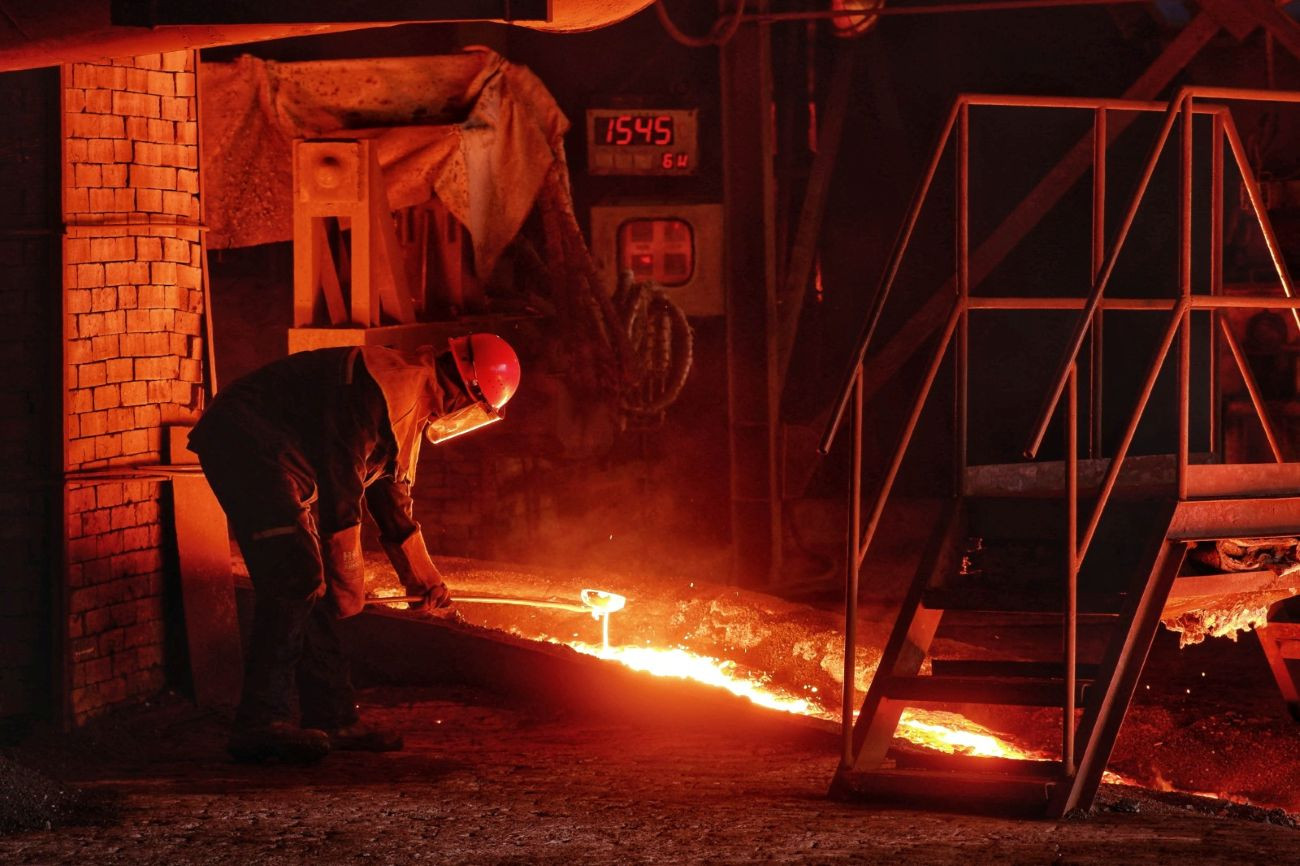 A worker in protective gear uses a tool to scoop molten metal on Sept. 16, 2025, at Harita Nickel’s smelting facility on Obi Island in South Halmahera, North Maluku. (AFP/Daeng Mansur)
I
ndonesia has placed electric vehicles at the center of its climate and industrial strategy. EVs are meant to deliver cleaner transportation, lower emissions and a stronger domestic manufacturing base. But as EV adoption accelerates, it is clear that electrification brings new forms of dependency and risk. The challenge is not to slow the transition, but to hedge it against economic, technological and geopolitical risk.
Battery-based Electric Vehicles (BEVs) rely on lithium, cobalt and nickel, minerals that are geographically concentrated and exposed to geopolitical and trade disruptions. This dependence increasingly resembles the energy security risks once associated with oil. For Indonesia, which relies on BEVs to meet its 2030 emissions reduction targets, these risks carry direct economic consequences.
Over the past few years, the government has rolled out a wide range of incentives to accelerate BEV adoption. These include purchase subsidies, lower annual vehicle taxes, import duty exemptions, manufacturing incentives and heavy investment in downstream nickel processing. The strategy is ambitious and economically compelling. It seeks to position Indonesia not just as a BEV user, but as a central player in the global BEV supply chain.
Nickel sits at the heart of this approach. Indonesia has rapidly expanded production and now accounts for roughly 60 percent of global nickel supply. This has helped attract foreign investment and anchor plans for a full BEV ecosystem. Yet this success also concentrates risk.
Indonesia faces two overlapping risks. The first is exposure to global battery minerals it does not control. The second is a domestic strategy that is increasingly centered on a single mineral at a time of rapid technological change.
The first risk is external. While Indonesia dominates nickel supply, it has limited lithium and cobalt resources, both of which remain critical for many battery chemistries. Disruptions in global supply could quickly create bottlenecks. Even with abundant nickel, Indonesia’s BEV ambitions remain tied to minerals largely produced elsewhere.

The second risk is technological. Battery innovation is moving fast, and not always in Indonesia’s favor. Lithium iron phosphate, or LFP, batteries are gaining ground because they are cheaper, safer and more durable. They now account for close to half of global BEV sales. LFP batteries use little to no nickel, weakening Indonesia’s mineral advantage even as it controls a large share of global supply. Chinese automakers, Indonesia’s main BEV partners, are leading this shift.