The Jakarta Post
Please Update your browser
Your browser is out of date, and may not be compatible with our website. A list of the most popular web browsers can be found below.
Just click on the icons to get to the download page.


Popular Reads
Top Results
No results found. Please check your search term and try again
Can't find what you're looking for?
View all search results
Popular Reads
Top Results
No results found. Please check your search term and try again
Can't find what you're looking for?
View all search resultsState terrorism: The criminalization of dissent and the failure of governance
As the Indonesian state weaponizes the stigma of "terrorism" to mask its failures of governance, a systematic campaign of criminalization is silencing public voices demanding accountability: a chilling descent into neo-authoritarianism revealing a regime that would rather trade democratic values for elite consolidation than address the people's economic grievances.
Change text size
Gift Premium Articles
to Anyone
Share the best of The Jakarta Post with friends, family, or colleagues. As a subscriber, you can gift 3 to 5 articles each month that anyone can read—no subscription needed!
 Set as preferred source
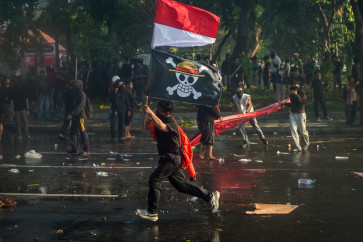
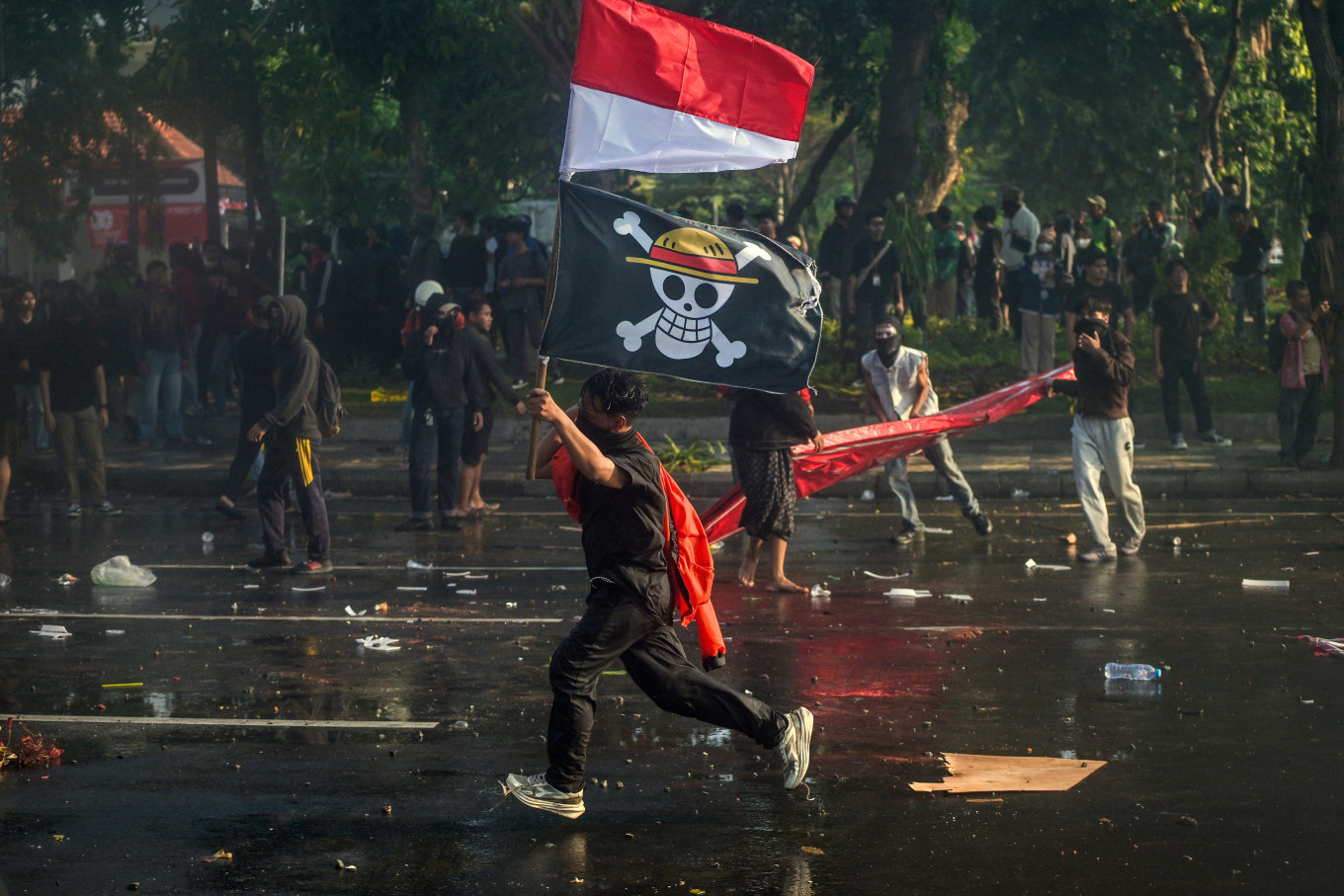 A demonstrator carries a pole bearing the Red and White national flag and the Straw Hat Pirates flag from the Japanese manga ‘One Piece’ on Aug. 29, 2025, during a rally outside the East Java governor’s residence in provincial capital Surabaya. (AFP/Juni Kriswanto)
T
he state’s refusal to transparently investigate the violent unrest that gripped Indonesia from Aug. 28 to Sept. 1, 2025, is more than a procedural oversight. It is a signal of systematic negligence. As political tensions simmer among the elite, students and pro-democracy activists have been transformed into legal scapegoats, masking a deeper reality of state-sponsored violence and human rights violations.
In its investigative report, the Civil Society Coalition’s fact-finding commission (KPF) concludes that last year’s widespread unrest across nearly all regions of the country was not instigated by democratic activists. Instead, the volatility was triggered by the death of Affan Kurniawan, an online motorcycle transportation driver who was struck and killed by a police armored vehicle on Aug. 28.
Prior to this tragedy, the demonstrations between Aug. 25 and 27 across dozens of cities were overwhelmingly peaceful. Violence only erupted when protesters, cornered by police barricades and subjected to water cannons and tear gas, were forced into desperate confrontations. By framing these events as "subversion", the state deliberately ignored the reality that public anger was a direct reaction to its own coercive tactics.
The KPF report notes that while 23 cities saw peaceful protests on the first day, the state’s decision to meet dialogue with armor transformed a civic movement into a national crisis.
The unrest did not emerge in a vacuum. Since assuming the presidency in October 2024, Prabowo Subianto has aggressively pursued a priority agenda that emphasizes the defense, food and energy sectors, often at the direct expense of regional transfers and social welfare. This fiscal pivot created a triple crisis that has fundamentally dismantled the safety net for the lower middle class.
First, the population faced a severe economic strangulation characterized by surging university tuition, value-added tax hikes and property tax increases. These burdens collided with the hollow promise of Golden Indonesia 2045, leaving the youth to navigate a labor vacuum defined by manufacturing layoffs and rising unemployment.

Second, the redirection of the state budget toward signature programs like the free nutritious meal and Red and White Cooperatives stripped local administration of their efficacy, leaving the most vulnerable citizens without a buffer against inflation.