TheJakartaPost
Please Update your browser
Your browser is out of date, and may not be compatible with our website. A list of the most popular web browsers can be found below.
Just click on the icons to get to the download page.


Popular Reads
Top Results
No results found. Please check your search term and try again
Can't find what you're looking for?
View all search results
Popular Reads
Top Results
No results found. Please check your search term and try again
Can't find what you're looking for?
View all search resultsPrabowo leans into history on visit to the US
In Washington last week, amid headlines about trade agreements and institutional initiatives, a quieter but unmistakable theme ran through Indonesia’s February 2026 diplomatic mission: history.
Change text size
Gift Premium Articles
to Anyone
Share the best of The Jakarta Post with friends, family, or colleagues. As a subscriber, you can gift 3 to 5 articles each month that anyone can read—no subscription needed!
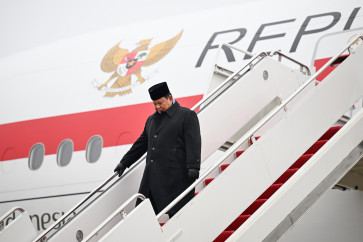
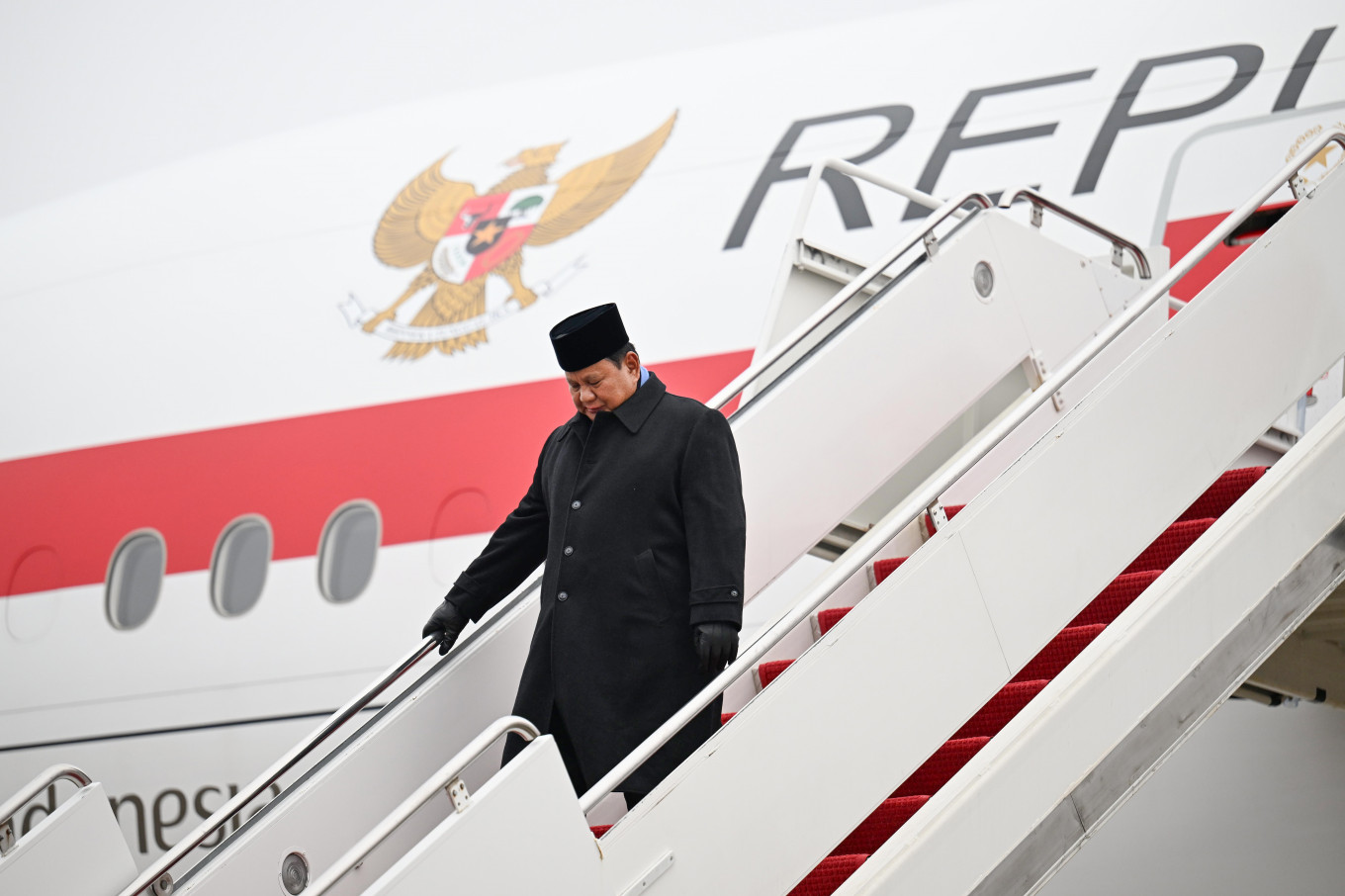 President Prabowo Subianto disembarks from the presidential aircraft on Feb. 17, 2026, upon arrival at Joint Base Andrews near Washington, DC. (Antara/Hafidz Mubarak A)
I
n Washington, DC, last week, amid headlines about trade agreements and institutional initiatives, a quieter but unmistakable theme ran through Indonesia’s February 2026 diplomatic mission: history.
President Prabowo Subianto returned to a single refrain, the United States’ role in Indonesia’s struggle for independence. It was not incidental rhetoric. It was a leitmotif.
At a Washington gathering, Prabowo declared: “Indonesia will never forget the role the US played in our history. Your nation provided vital support during our struggle for sovereignty, which remains the moral foundation of our ties today.” At another he noted, “At that time, we were fighting a war of independence to free ourselves from Dutch colonialism, and the US played a significant role in supporting us. Throughout the early history of our nation, we have always seen America assisting us in critical times.”
There were additional, unscripted references to that partnership and representatives from the delegation even visited a private collection of US-Indonesian historical artifacts. On one such trip last week, Special Assistant to the President Dirgayuza Setiawan stated, “President Prabowo and this administration understands the increasingly important role Indonesia is set to play in the world today, and that comes with recognition of our own deep historical relationship with the United States.”
By invoking 1945–1949, Prabowo situates contemporary cooperation within a longer moral narrative: The US stood with Indonesia at a decisive moment; Indonesia remembers; the partnership today has historical depth. Of course, Indonesian independence was not fought and won in Washington. It was forged in Surabaya, Yogyakarta, Sumatra and countless villages where Republican fighters resisted a determined Dutch military return. The armed and political struggle during the Indonesian National Revolution was sustained by Indonesian sacrifice, organizational ingenuity and battlefield persistence.
Without the determination of Indonesian fighters, and the resilience of the Republic’s leadership under extraordinary pressure, there would have been no diplomatic endgame to influence. It was their success in making colonial restoration costly and politically untenable that created the conditions in which international pressure became decisive.

Following the August 1945 Proclamation of Independence, the Republic faced Dutch “police actions” aimed at reasserting colonial control. By 1947–1948, the conflict had escalated into a protracted war that drew international scrutiny. The United Nations intervened. Global opinion shifted.