TheJakartaPost
Please Update your browser
Your browser is out of date, and may not be compatible with our website. A list of the most popular web browsers can be found below.
Just click on the icons to get to the download page.


Popular Reads
Top Results
No results found. Please check your search term and try again
Can't find what you're looking for?
View all search results
Popular Reads
Top Results
No results found. Please check your search term and try again
Can't find what you're looking for?
View all search resultsThe unapologetic American empire strikes back
Washington's attack and continuing discourse on Venezuela has stripped the neocolonial rhetoric of its pretenses, openly signaling the revival of unapologetic empire to the US under Trump.
Change text size
Gift Premium Articles
to Anyone
Share the best of The Jakarta Post with friends, family, or colleagues. As a subscriber, you can gift 3 to 5 articles each month that anyone can read—no subscription needed!
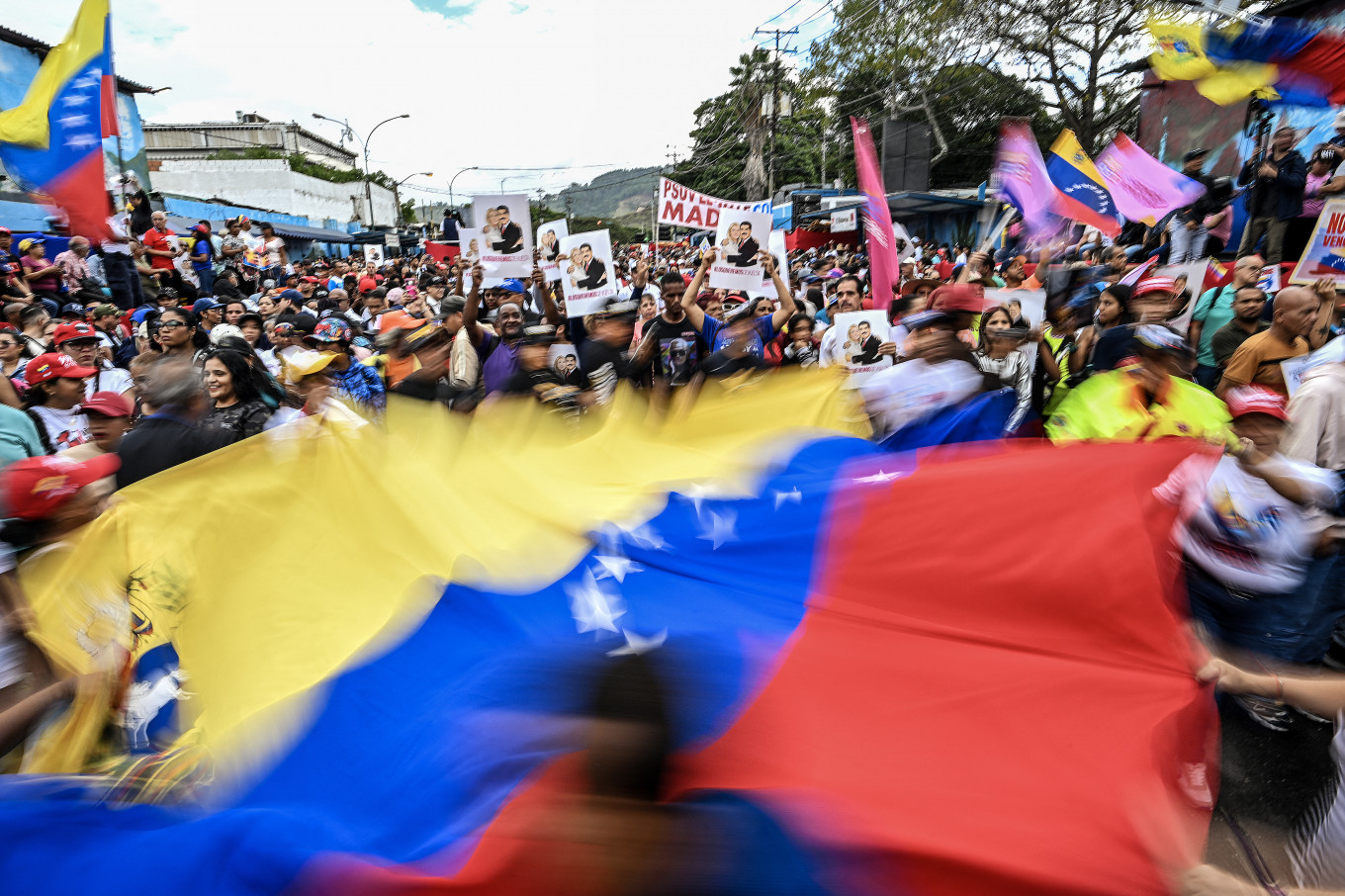 Demonstrators wave a giant national flag on Jan. 10, 2026, during a rally in Caracas to support Venezuelan President Nicolas Maduro, who was seized along with First Lady Cilia Flores in a United States military operation on Jan. 3 and flown to New York. (AFP/Juan Barreto)
S
omething in the global atmosphere has changed. For most of the post-World War II era, great powers understood that domination required discretion. Resources could be controlled, governments destabilized and economies bent to external interests, but only if these actions were denied, disguised or morally reframed. What is striking about the present moment is not that the United States is pursuing power in familiar ways, but that it is increasingly doing so without embarrassment.
When a sitting president openly discusses taking another country’s oil or threatening territorial acquisition, it signals a collapse of the rhetorical restraints that have governed imperial behavior since 1945. The best glimpse of what this means for our future may lay in understanding our past.
When Donald Trump openly speaks of claiming Venezuela’s oil or muses about taking Greenland, he is not merely being provocative or reckless. He is articulating, without embarrassment or euphemism, an imperial logic that the post-1945 world order was built to suppress, disguise and deny.
The United States has long sought to shape the control of resources abroad, but only this administration no longer feels the need to pretend otherwise.
As a historian of colonialism who regularly teaches the history of the CIA and the use of subversion as foreign policy in the postwar US, what I am witnessing feels genuinely unprecedented. Since 1945, American power has depended not on innocence but on plausible deniability. Empire survived not by disappearing but by learning how to speak the language of anti-imperialism. That language is now being abandoned.
To see how unusual this moment is, it helps to step back into the longer history of empire itself. Consider Dutch imperialism in Indonesia. In the 17th and 18th centuries, the Dutch felt no need to moralize conquest. As I argue in my book Wives, Slaves, and Concubines: A History of Dutch Asia, before 1800, the Dutch pursued empire with startling candor. Violence, coercion and extraction were not cloaked in humanitarian rhetoric; they were justified by profit.

The Dutch East India Company (VOC), the world’s first joint-stock company and first multinational corporation, was explicit about its purpose. It existed to generate returns, and it used sovereign violence to do so. There was no apology, because none was required. Let’s call it imperialism 1.0.