TheJakartaPost
Please Update your browser
Your browser is out of date, and may not be compatible with our website. A list of the most popular web browsers can be found below.
Just click on the icons to get to the download page.


Popular Reads
Top Results
No results found. Please check your search term and try again
Can't find what you're looking for?
View all search results
Popular Reads
Top Results
No results found. Please check your search term and try again
Can't find what you're looking for?
View all search resultsWhy Indonesia is descending into legal darkness
The everyday legal landscape of the country is rife with violence, torture, extrajudicial killings and criminalization through investigations intended to perpetuate wrongdoing.
Change text size
Gift Premium Articles
to Anyone
Share the best of The Jakarta Post with friends, family, or colleagues. As a subscriber, you can gift 3 to 5 articles each month that anyone can read—no subscription needed!
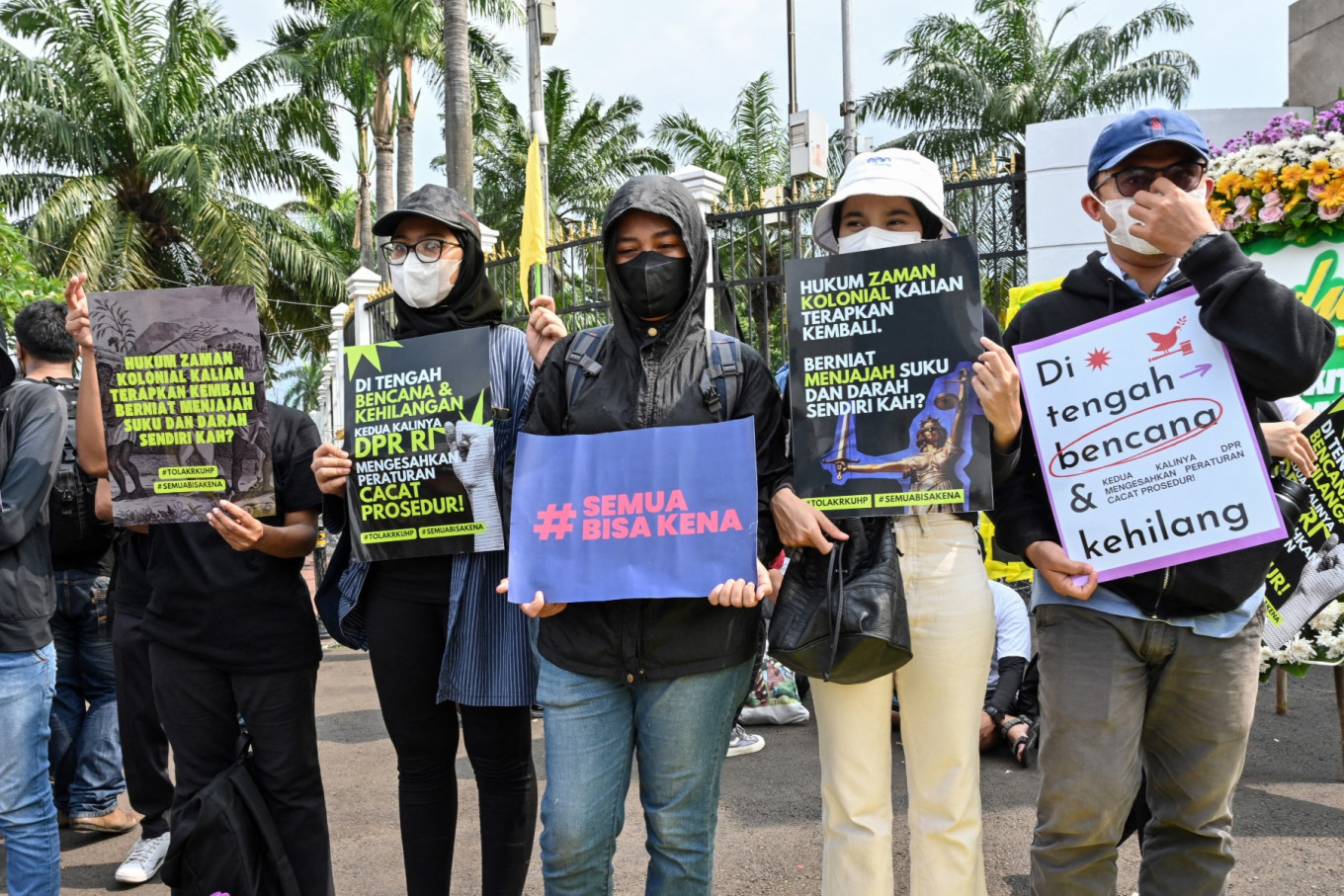 Activists hold a protest against the new Criminal Code (KUHP) on Dec. 5, 2022, outside the Senayan legislative complex in Central Jakarta. The House of Representatives passed on Dec. 6 a revision to the Criminal Code that would outlaw pre-marital sex aside from other sweeping changes to the criminal code, a move critics deemed as a setback to the country's freedoms. (AFP/Adek Berry)
T
he enactment of Law No. 1/2023 concerning the Criminal Code (KUHP) and Law No. 20/2025 concerning the Criminal Law Procedure Code (KUHAP) on Jan. 2 marks Indonesia's entry into a disastrous phase of law enforcement. These two laws have effectively dismantled the last fundamental pillar protecting citizens from state arbitrariness.
The KUHAP has been controversial since its approval by the House of Representatives in November last year due to its problematic provisions. Crucially, it grants law enforcement officers the discretion to take repressive actions against the public based on subjective interpretations without adequate oversight.
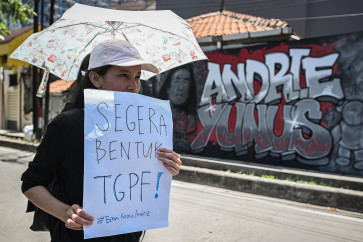
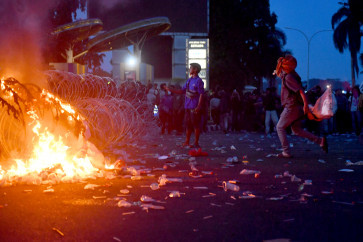
More concerning, the implementation of these laws occurs while many individuals remain behind bars for expressing critical thoughts, calling out abuses of power and mobilizing community protests against perceived injustices. These individuals are primarily young people who participated in large-scale demonstrations in August 2025 to protest tone-deaf politicians.
As of this month, over 600 demonstrators have remained in the police detention centers across the country. Reports indicate that many of them experience injustices, including torture and other abuses of power, qualifying as human rights violations. This situation suggests that the arrests are not merely about police authority but reflect the strategy of the political establishment to silence critical voices.
More recently, intimidation has been directed at influencers for criticizing the government’s sluggish response to flash floods in Sumatra. These acts of terror range from the delivery of animal entrails and rotten eggs to vandalism of property and demands to remove critical recordings from social media.
Even before the new KUHP and KUHAP came into effect, Indonesia's criminal law had already demonstrated a pattern of vicious enforcement. Impartial enforcement of the laws was unlikely, particularly given the entrenched corruption within judicial loopholes.

According to the World Justice Project (WJP) Rule of Law Index, Indonesia's law enforcement performance ranks quite low, at 92 out of 142 countries. This finding is not surprising, as the everyday legal landscape is rife with violence, torture, extrajudicial killings and criminalization through investigations intended to perpetuate wrongdoing.