TheJakartaPost
Please Update your browser
Your browser is out of date, and may not be compatible with our website. A list of the most popular web browsers can be found below.
Just click on the icons to get to the download page.


Popular Reads
Top Results
No results found. Please check your search term and try again
Can't find what you're looking for?
View all search results
Popular Reads
Top Results
No results found. Please check your search term and try again
Can't find what you're looking for?
View all search resultsWill Prabowo be more ‘daring’ or more realistic in his fiscal policy in 2026?
The decision to push through a massive budget for the free nutritious meal program reflects misplaced priorities, as the program has yet to show clear benefits in its first year while other critical policies remain underfunded.
Change text size
Gift Premium Articles
to Anyone
Share the best of The Jakarta Post with friends, family, or colleagues. As a subscriber, you can gift 3 to 5 articles each month that anyone can read—no subscription needed!
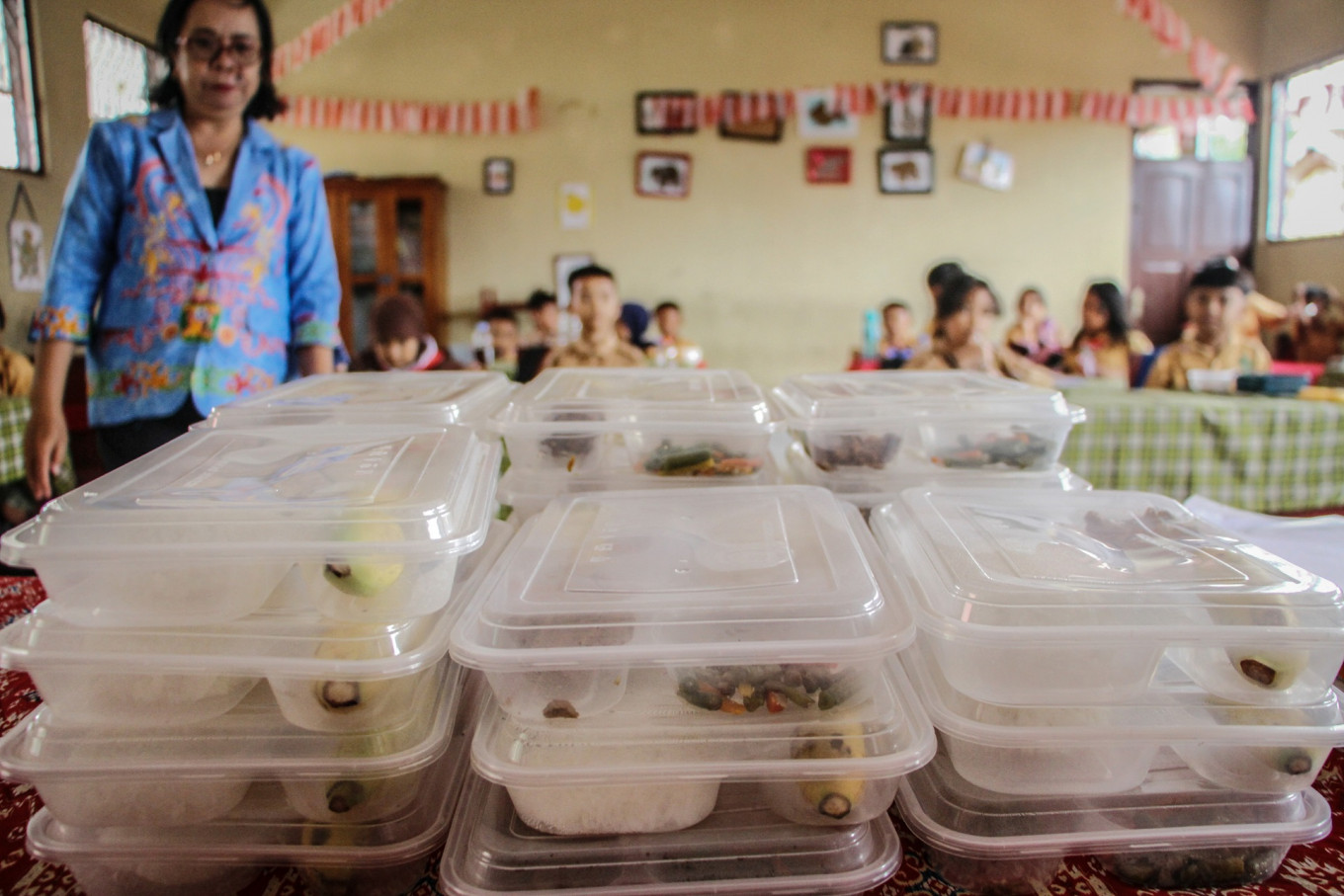 Meals are arranged on Jan. 16, 2025, before being distributed to students of SDN 10 Palangka Raya state elementary school in Central Kalimantan. The Central Kalimantan provincial administration allocated Rp 70 billion (US$4.3 million) of its budget for the free meals program. (Antara/Auliya Rahman)
I
ndonesia’s weak 2025 fiscal performance, marked by a fall in revenue and deficits nearing the legal limit, has put the 2026 budget in the spotlight. Given the current fiscal reality, the budget’s ambitious targets deserve further scrutiny.
On the back of a 3.3 percent revenue decline in 2025, and sluggish growth of 5.6 percent and 2.4 percent in 2023 and 2024 respectively, the 2026 target of 15 percent revenue growth is becoming increasingly elusive. In the past, such high targets were achievable only during commodity booms.
Tax revenue growth has consistently trailed nominal gross domestic product growth, indicating declining tax buoyancy. Several factors contributed to the weak revenue performance in 2025. Apart from easing commodity prices, the government canceled the planned VAT rate increase to 12 percent in January 2025. The rollout of the Core Tax Administration System faced technical hurdles, contributing to the shortfall in collection. Furthermore, dividends from state-owned banks, estimated at Rp 116 trillion (US$8.9 billion), were transferred to new state asset fund Danantara rather than the state treasury.
There are significant challenges to achieving higher revenue growth in 2026. As the government has ruled out tax rate increases, it must rely on expanding the tax base. This includes measures such as raising royalties for coal and minerals, taxing digital transactions, improving tax administration and utilizing big data for better enforcement.
Reducing the threshold for VAT imposition would also expand the tax base. According to the World Bank, Indonesia’s threshold for VAT registration is among the highest in the world and should be lowered to capture more businesses.
Widespread tax evasion resulting from weak compliance remains a major hurdle. Broadening the tax base through adjusted thresholds and enhanced compliance could create the necessary fiscal space to finance growth programs in infrastructure, human capital and climate resilience.

However, external factors may not help. Except for palm oil, prices of major Indonesian commodities like coal, oil, and nickel are still falling - with nickel prices dropping by 30 percent - as supply outpaces demand from importing countries. A potential upside remains: if geopolitical conflicts escalate, driven by United States President Donald Trump’s more aggressive foreign policy, commodity prices could rise.