TheJakartaPost
Please Update your browser
Your browser is out of date, and may not be compatible with our website. A list of the most popular web browsers can be found below.
Just click on the icons to get to the download page.


Popular Reads
Top Results
No results found. Please check your search term and try again
Can't find what you're looking for?
View all search results
Popular Reads
Top Results
No results found. Please check your search term and try again
Can't find what you're looking for?
View all search resultsAnalysis: Policy U-turn raises questions over fiscal coherence
Change text size
Gift Premium Articles
to Anyone
Share the best of The Jakarta Post with friends, family, or colleagues. As a subscriber, you can gift 3 to 5 articles each month that anyone can read—no subscription needed!
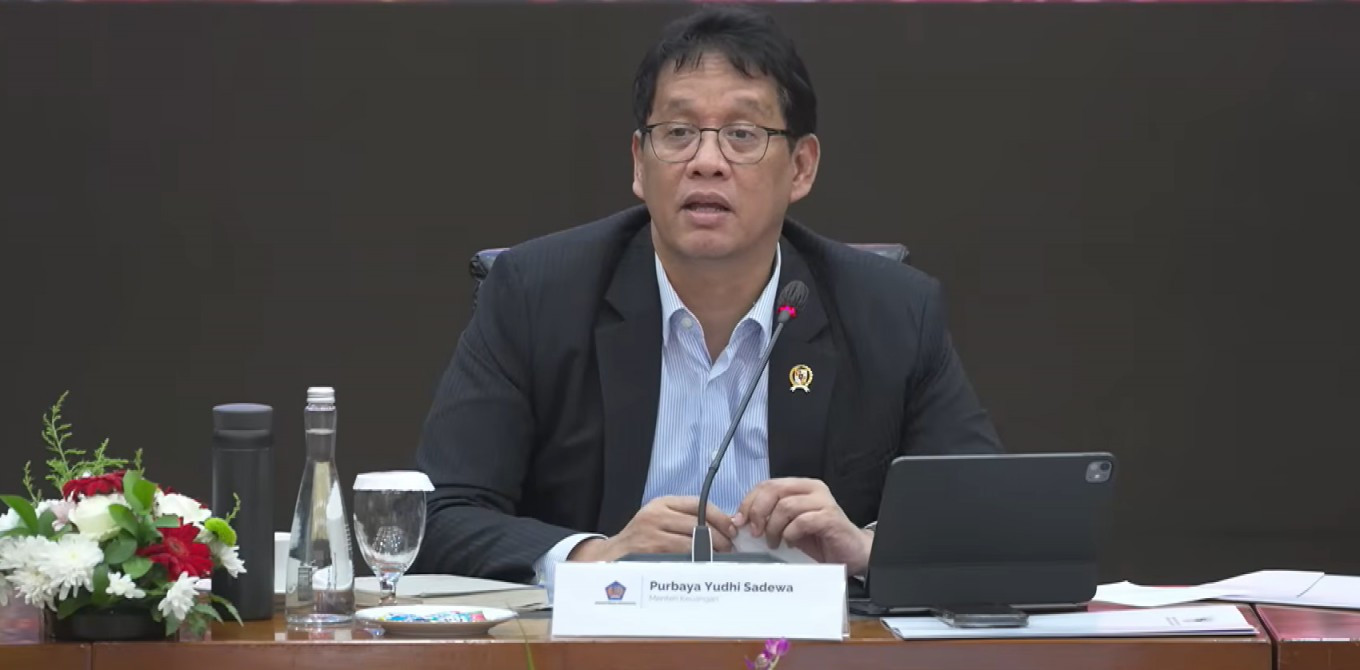 Finance Minister Purbaya Yudhi Sadewa speaks on Dec. 18, 2025, during the monthly state budget press conference. (Finance Ministry Official YouTube/-) (Finance Ministry Official YouTube/-)
F
inance Minister Purbaya Yudhi Sadewa's recent decision to withdraw Rp 75 trillion (US$4.5 billion) from state-owned banks has reignited concerns over the coherence and consistency of Indonesia's fiscal strategy.
Purbaya last year placed surplus state funds in state-owned lenders, initially amounting to Rp 200 trillion before being expanded to Rp 276 trillion. The policy had been intended to accelerate credit distribution to the real sector by boosting banks' liquidity. However, in January, the finance minister reversed course, pulling back Rp 75 trillion from the banking system.
The abrupt shift has prompted questions over whether fiscal policy is being guided by a clear, coordinated strategy or adjusted through rapid trial and error.
Part of the initial fund placement took place on Nov. 10, 2025, when Rp 76 trillion in excess budget balance (SAL) funds previously held at Bank Indonesia were transferred to Bank Mandiri, BRI, BNI and BTN. The Finance Ministry framed the move as a continuation of earlier placements that it said had achieved absorption rates of more than 94 percent, equivalent to around Rp 188 trillion.
Taken together, the policy reflected the minister's belief that aggressively injecting liquidity into state-owned banks would accelerate financial intermediation and translate fiscal resources more quickly into economic growth.
Yet the results fell short of expectations. Bank Indonesia data show that credit growth stood at just 7.36 percent year-on-year around two months after the initial placement, a modest outcome given the scale of funds injected into the banking system. The lackluster performance reinforced concerns that the policy had limited impact on stimulating lending.

Borrowing costs also remained stubbornly high. Average bank lending rates stood at 8.96 percent as of November 2025, despite Bank Indonesia's benchmark policy rate being set at 4.75 percent. High lending rates continue to weigh on business expansion, constraining firms' ability to invest. An internal survey by the Indonesian Employers' Association (Apindo) found that 43.05 percent of business owners cited high bank lending rates as a key obstacle to scaling up their operations.