The Jakarta Post
Please Update your browser
Your browser is out of date, and may not be compatible with our website. A list of the most popular web browsers can be found below.
Just click on the icons to get to the download page.


Popular Reads
Top Results
No results found. Please check your search term and try again
Can't find what you're looking for?
View all search results
Popular Reads
Top Results
No results found. Please check your search term and try again
Can't find what you're looking for?
View all search resultsPolicing morality at the expense of women’s rights
The implementation of KUHP and KUHAP risks reframing complex issues of health, protection and recovery as matters of moral compliance, rather than rights, evidence and public health.
Change text size
Gift Premium Articles
to Anyone
Share the best of The Jakarta Post with friends, family, or colleagues. As a subscriber, you can gift 3 to 5 articles each month that anyone can read—no subscription needed!
 Set as preferred source
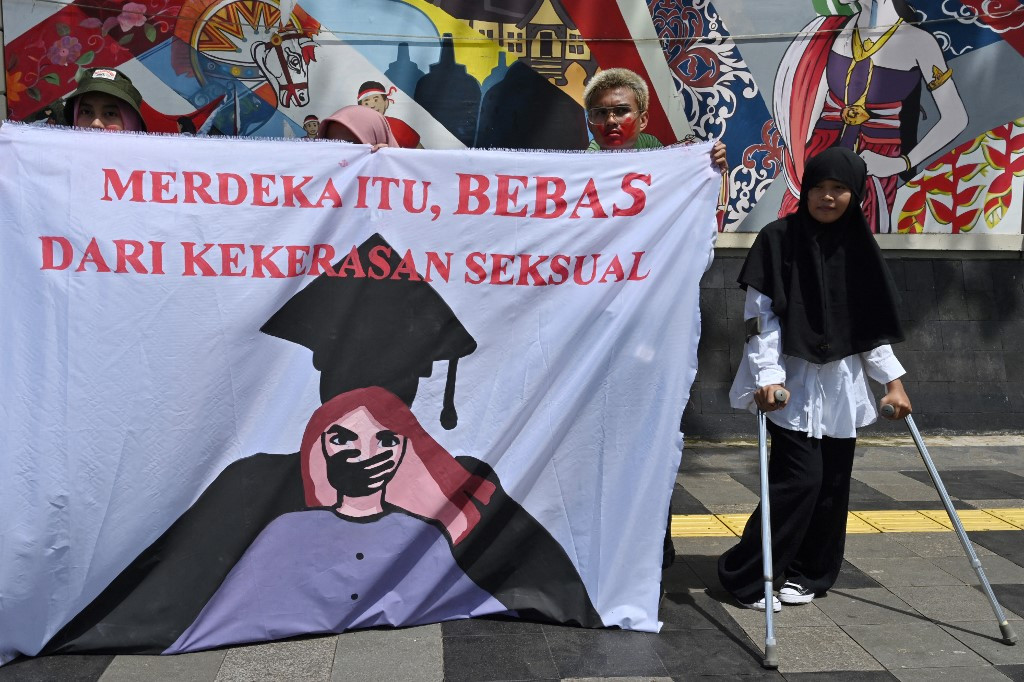 Activists from a women's anti-violence movement hold a banner that reads “Independence is free from sexual violence“ during a protest against sexual harassment and violence against women in campuses outside the then-education and culture ministry in Jakarta on Feb. 10, 2020. (AFP/Adek Berry)
I
ndonesia entered a new phase of criminal law reform at the beginning of 2026 with the implementation of the new Criminal Code (KUHP) and Criminal Law Procedures Code (KUHAP).
This moment is widely presented as a milestone in legal modernization and national sovereignty. Yet the true measure of reform lies not in replacing statutes, but in a more fundamental question: does the law protect citizens’ safety and dignity, or does it extend the state’s power to police private morality, often at the expense of women’s rights, health and bodily autonomy?
From the perspective of reproductive health and gender equality, several provisions in the new KUHP and KUHAP raise serious concerns. A legal approach that leans heavily on criminalization risks reframing complex issues of health, protection and recovery as matters of moral compliance, rather than rights, evidence and public health.
One of the most critical areas is the regulation of abortion. In practice, this reflects a familiar pattern: the state responding to reproductive health through moral judgment rather than health protection, with women’s bodies becoming the primary site of regulation.
The KUHP continues to criminalize abortion, allowing only limited exceptions for rape survivors and medical emergencies. Normatively, these exceptions may appear sufficient. However, decades of public-health evidence tell a different story.
The World Health Organization has consistently emphasized that legal restrictions do not reduce the incidence of abortion; instead, they push women toward unsafe practices, increasing the risk of death and serious health complications.

Indonesia’s context makes this risk particularly acute. Maternal mortality remains at around 140 deaths per 100,000 live births (2023), far above global targets and unacceptably high for a country with Indonesia’s development capacity. At the same time, research estimates that approximately 1.7 million abortions occur annually, most of them outside the formal health system.