TheJakartaPost
Please Update your browser
Your browser is out of date, and may not be compatible with our website. A list of the most popular web browsers can be found below.
Just click on the icons to get to the download page.


Popular Reads
Top Results
No results found. Please check your search term and try again
Can't find what you're looking for?
View all search results
Popular Reads
Top Results
No results found. Please check your search term and try again
Can't find what you're looking for?
View all search resultsTobacco harm reduction: Challenges and opportunities
More partnerships and collaborations should be formed between academic institutions in Indonesia and the region, focusing on the prevalence, economics and health impacts of alternative tobacco products use.
Change text size
Gift Premium Articles
to Anyone
Share the best of The Jakarta Post with friends, family, or colleagues. As a subscriber, you can gift 3 to 5 articles each month that anyone can read—no subscription needed!
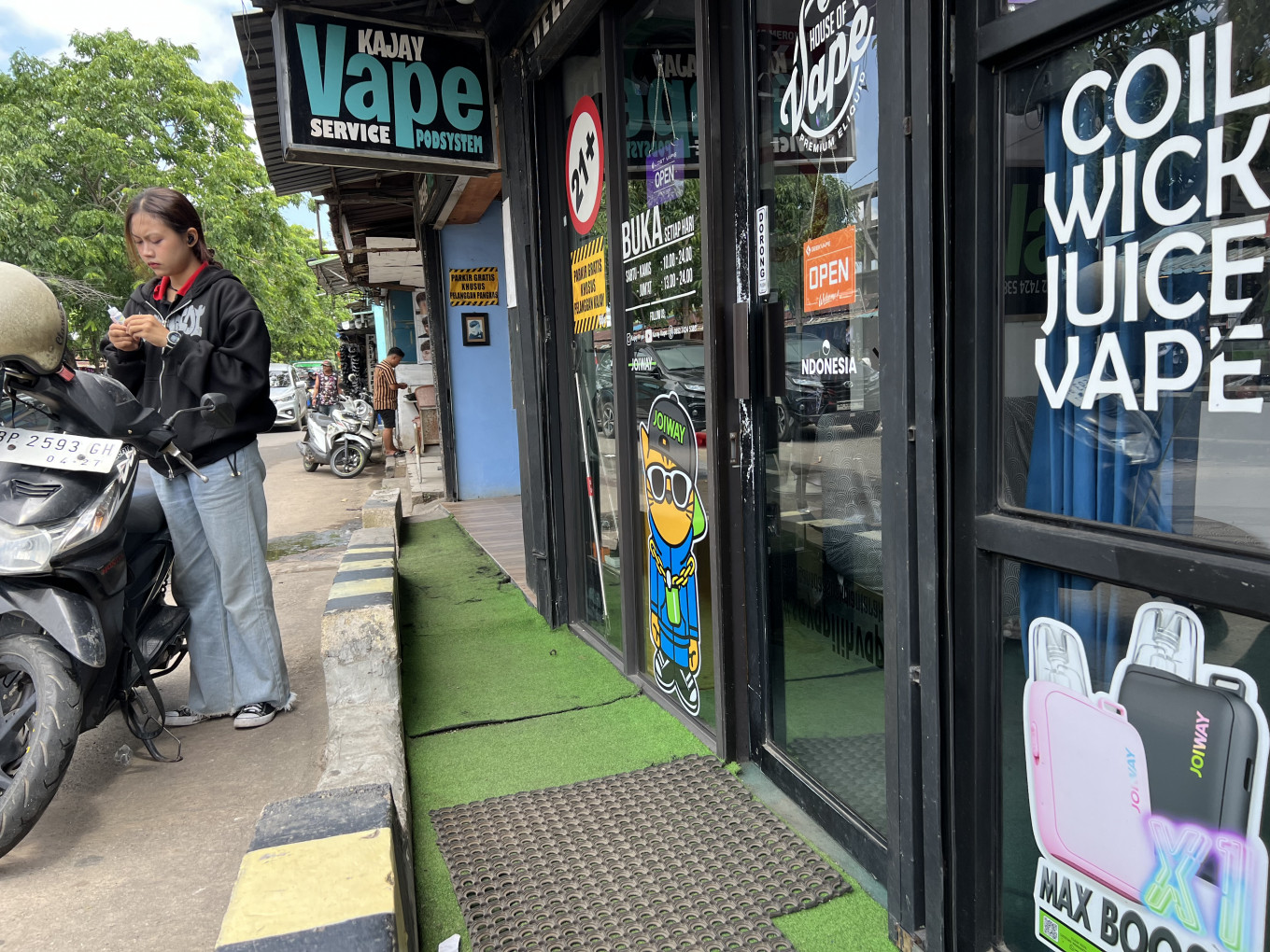 A women checks her vaping pod after buying an e-liquid pod , on Aug. 26, 2025, at Vape Kajay store in Jodoh, Batam city, Riau Islands. Batam is set to benefit after neighboring Singapore declared on Aug. 17, 2025, restrictions and bans on vaping. (JP/Fadli)
S
moking remains a major public health problem in Southeast Asia, particularly in Indonesia. Nearly 25 percent of the world’s tobacco users live in the region, and the health and economic impacts of smoking-related diseases constitute a major developmental barrier for these countries.
While tobacco use in Southeast Asia has shown a downward trend in the past two decades, with smoking prevalence dropping to around 37 percent among adult men and 9 percent among women, the region remains one of the world’s largest consumers of tobacco. Indonesia, for example, is home to 70 million adult smokers, resulting in 270,000 annual deaths and a shocking 72 percent smoking prevalence among adult males.
So, what can be done to deal with the smoking epidemic in the region?
While government policies are in place to address both demand and supply, such as taxation, health warnings, prohibitions in public areas and cessation programs, one underutilized approach is Tobacco Harm Reduction (THR). This strategy aims to help adults quit smoking through innovations in Alternative Tobacco Products (ATPs) such as vapes/electronic cigarettes, Heated Tobacco Products (HTPs) and, more recently, nicotine pouches.
There is now robust scientific evidence that ATPs are both safe and effective in helping adults who want to quit smoking, allowing them to lead healthier lives and avoid premature death. It is estimated that 20,000 to 30,000 smokers quit annually in the United Kingdom after switching to vapes. Similarly, Japan saw a historic 52 percent drop in cigarette sales after HTPs entered the market. In many other countries, a rise in vaping has been accompanied by a drop in smoking prevalence and, importantly, a reduction in lung cancer incidence.
Indonesia reported an estimated 2.3 million users of ATPs in 2021. Furthermore, a recent article in The Economist reported that the global vaping market is expected to grow to US$47.5 billion in 2028, up from $22.5 billion in 2022.

Despite the potential and promise of ATPs, their widespread adoption in the region remains difficult. What are the challenges moving forward? Three primary barriers stand out.