TheJakartaPost
Please Update your browser
Your browser is out of date, and may not be compatible with our website. A list of the most popular web browsers can be found below.
Just click on the icons to get to the download page.


Popular Reads
Top Results
No results found. Please check your search term and try again
Can't find what you're looking for?
View all search results
Popular Reads
Top Results
No results found. Please check your search term and try again
Can't find what you're looking for?
View all search resultsAnalysis: Judicial review surge: A verdict on flawed lawmaking
Change text size
Gift Premium Articles
to Anyone
Share the best of The Jakarta Post with friends, family, or colleagues. As a subscriber, you can gift 3 to 5 articles each month that anyone can read—no subscription needed!
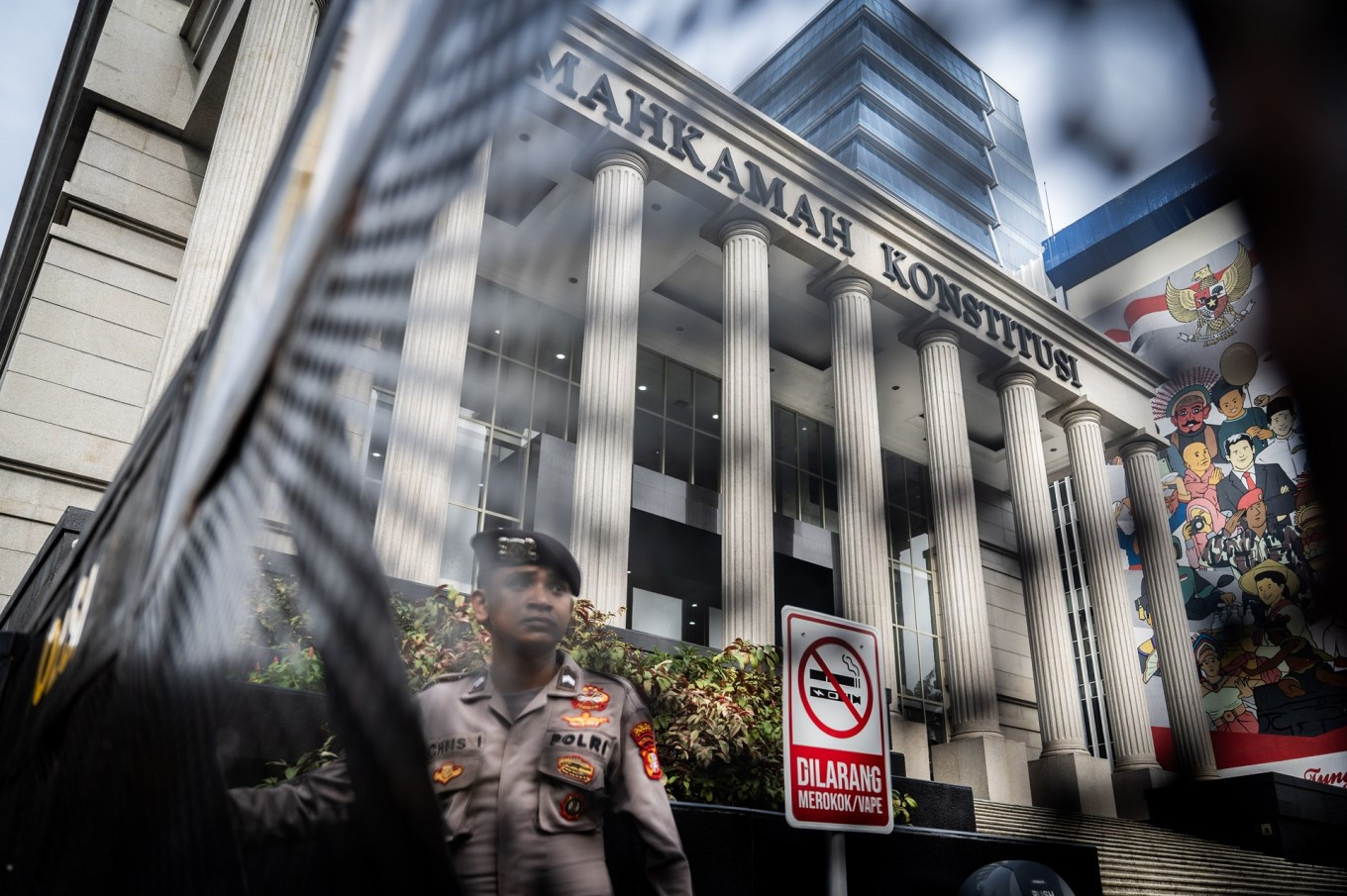 A police officer stands guard in front of the Constitutional Court building on Feb. 4, 2025, in Jakarta.
(Antara/Bayu Pratama S)
A police officer stands guard in front of the Constitutional Court building on Feb. 4, 2025, in Jakarta.
(Antara/Bayu Pratama S)
T
he quality of Indonesia’s lawmaking is under growing scrutiny. The skyrocketing number of judicial review petitions should serve as a wake-up call to reform the legislative process. Meaningful public participation, in particular, remains a crucial element that must be strengthened to ensure laws are drafted with prudence, accountability and constitutional soundness.
Judicial reviews have long dominated the Constitutional Court’s workload. Over its 22 years of operation, the court has issued 4,644 rulings from 4,747 registered cases, with nearly half involving judicial review motions.
This trend has intensified. In 2025 alone, the court received 284 judicial review petitions, marking a 50.3 percent increase from the previous year. This figure has nearly tripled compared with five years ago. Several major laws account for a large share of these challenges, including the Indonesian Military (TNI) Law, the National Police Law and the Elections Law.
The surge shows no sign of slowing. Between Jan. 1 and Jan. 14 of this year, at least 29 new motions were filed, including high-profile challenges against the amended Criminal Law Procedures Code (KUHAP) and the Criminal Code (KUHP).
This spike carries two important implications. On one hand, it reflects stronger constitutional engagement. Citizens are no longer limiting themselves to political criticism but are increasingly turning to legal avenues to challenge state policies. This shift has been reinforced by simpler filing procedures and the expanded use of digital platforms.
As Constitutional Court Chief Justice Suhartoyo noted earlier this month, the rise in petitions signals growing public awareness of constitutional rights, supported by streamlined procedures and advances in information technology.

On the other hand, the trend exposes a deeper structural rot in how laws are produced by the House of Representatives and the government. Many laws are widely perceived as legally fragile and democratically questionable, largely due to limited public participation and an imbalanced concentration of power.