TheJakartaPost
Please Update your browser
Your browser is out of date, and may not be compatible with our website. A list of the most popular web browsers can be found below.
Just click on the icons to get to the download page.


Popular Reads
Top Results
No results found. Please check your search term and try again
Can't find what you're looking for?
View all search results
Popular Reads
Top Results
No results found. Please check your search term and try again
Can't find what you're looking for?
View all search resultsFragmented lives: The reason young people turn to extremism
Radicalization has evolved today from an issue of ideology to one of morals, offering answers and guidance to disenfranchised youths that are constantly exposed to volumes of decontextualized information online.
Change text size
Gift Premium Articles
to Anyone
Share the best of The Jakarta Post with friends, family, or colleagues. As a subscriber, you can gift 3 to 5 articles each month that anyone can read—no subscription needed!
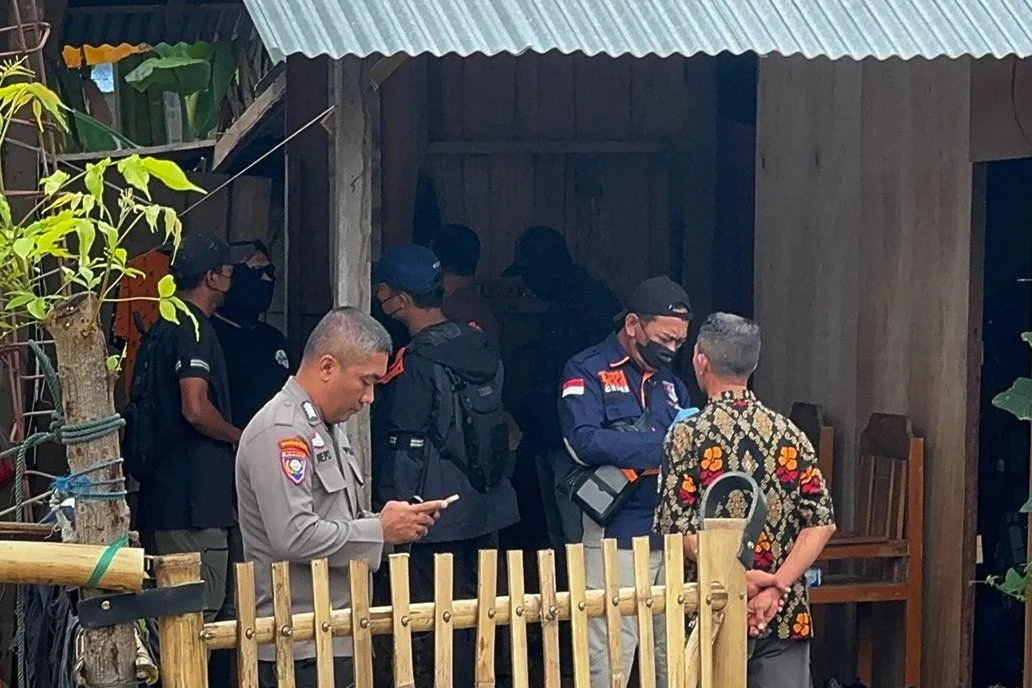 Police officers swarm a house during the arrest of a terrorism suspect on Dec. 19, 2024, in Baiya subdistrict, Palu, Central Sulawesi, after they had been on the run for 11 months. (Antara/Badruz)
W
hen an Indonesian teenager was arrested in Jordan last year for allegedly supporting Islamic State (IS) online, the initial reaction was familiar: concern about terrorism, questions about security loopholes and anxiety over digital radicalization. But beneath the headlines lay a deeper, more uncomfortable question: Why would a young person, far from any battlefield and without contact with an extremist organization, be drawn to such ideas in the first place?
The answer has less to do with ideology and far more to do with identity, dignity and meaning.
Across the world, young people today are growing up in a reality that is fragmented in ways previous generations never experienced. Their lives are digitally connected but emotionally disjointed, globally aware but locally uncertain. For many, the search for who they are and where they belong has become difficult, and urgent.
For much of history, identity was inherited. People were shaped by family, faith, community and nation. Today, young people are told they can be anything but are rarely shown how to become someone.
Online spaces offer endless identities to try on. A young person can be a student by day, a gamer by night and a political activist on social media, often without any coherence between these roles. Algorithms then amplify whichever version of the self generates the strongest emotional reaction.
For diaspora youth, this fragmentation is even sharper. Young Indonesians studying or living abroad often feel caught between cultures, never fully at home in either.

In my engagement with Indonesian communities in Pakistan and Afghanistan last year, many young participants admitted that their understanding of global conflicts came almost entirely from social media. Images of war, suffering and injustice felt deeply personal, even when the historical context was unclear.