The Jakarta Post
Please Update your browser
Your browser is out of date, and may not be compatible with our website. A list of the most popular web browsers can be found below.
Just click on the icons to get to the download page.


Popular Reads
Top Results
No results found. Please check your search term and try again
Can't find what you're looking for?
View all search results
Popular Reads
Top Results
No results found. Please check your search term and try again
Can't find what you're looking for?
View all search resultsIndonesia turns to post-normative diplomacy
The change in Indonesia's foreign policy from its long-standing "free and active" doctrine to resilience signals a paradigm shift in the country's worldview amid the current global leaning toward hegemonic power.
Change text size
Gift Premium Articles
to Anyone
Share the best of The Jakarta Post with friends, family, or colleagues. As a subscriber, you can gift 3 to 5 articles each month that anyone can read—no subscription needed!
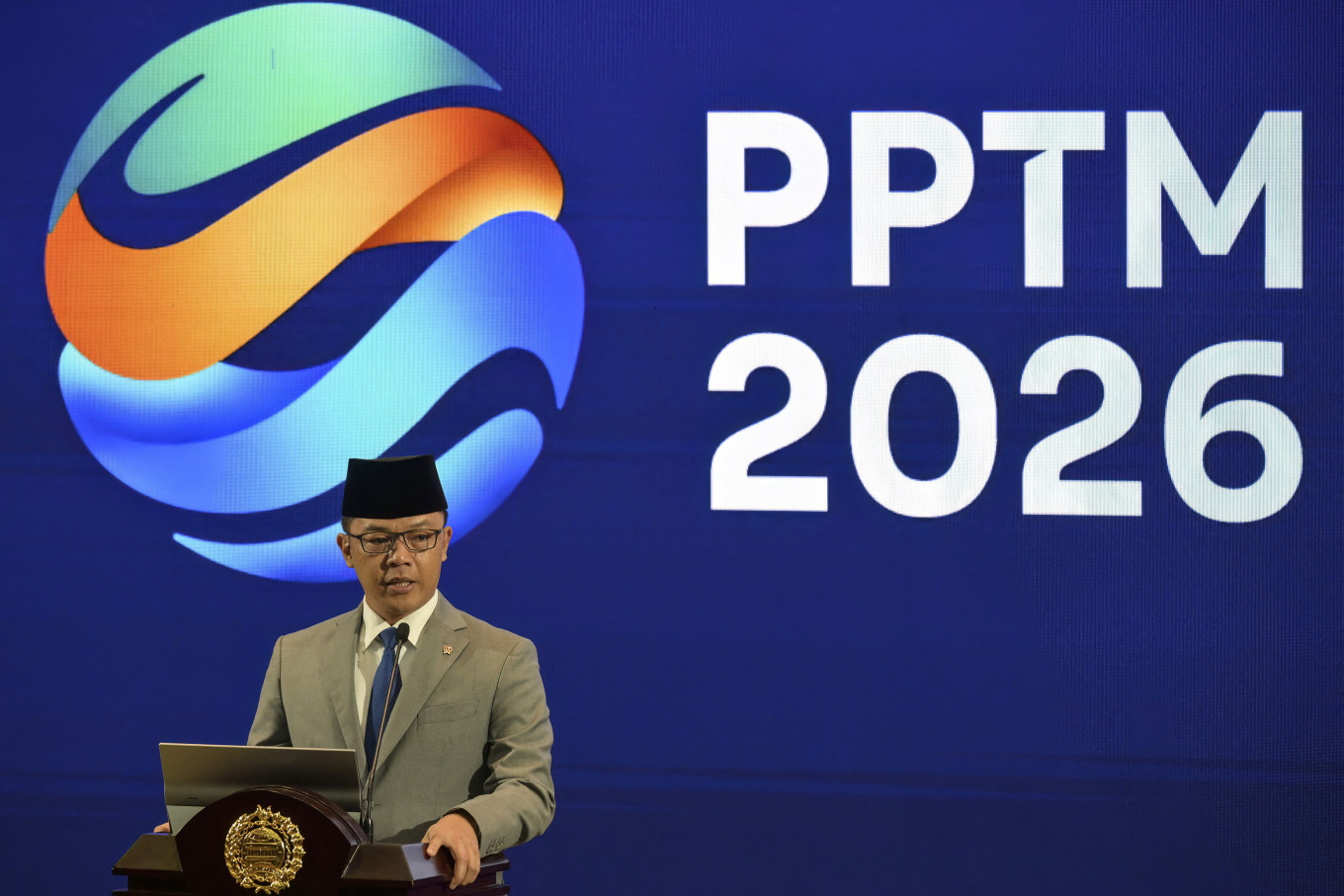 Foreign Minister Sugiono delivers his annual policy address statement on Jan. 14, 2026, at the Foreign Ministry in Central Jakarta. (AFP/Bay Ismoyo)
F
oreign Minister Sugiono did not say it explicitly, but the specter of the United States’ action to seize Venezuelan President Nicolas Maduro pervaded the atmosphere during his foreign policy speech on Jan. 14, when he turned Indonesia’s worldview on its head and by extension, its foreign policy.
By declaring, “Indonesia will not hang its national interests on multilateralism that does not work,” he signaled an apparent shift toward what can only be described as post-normative diplomacy, where resilience and self-help replace the assumption that international rules will reliably protect sovereign states.
Indonesia’s diplomatic turn thus reflects a Thucydidean recognition that power, not principle, determines whose sovereignty is respected.
Framed as a sober response to a harsher, more fragmented world, this doctrine of diplomasi ketahanan (resilience diplomacy) strengthens and institutionalizes President Prabowo Subianto’s approach to foreign policy, embedding a security-centric logic at the heart of the country’s strategic outlook.
After all, if a major power such as the US can, when it sees fit, act unilaterally against a sitting head of state like it did with Maduro, then it is no longer unimaginable that a similar action could be directed at Prabowo or the leader of any other country whose interests diverge from that of dominant powers.
What Indonesia is undergoing is therefore best understood as a paradigmatic shift, not as regards alignment but in the underlying assumptions of its foreign policy. This policy direction moves away from norm-trusting diplomacy toward a post-normative, survival-oriented framework, in which international law is treated as contingent and multilateralism as instrumental rather than foundational, and resilience is the primary currency of security.

This fusion of post-normative realism, resilience diplomacy and personalized security calculus marks a fundamental departure from the previous doctrine of bebas-aktif (free and active) foreign policy, redefining this post-reform stance for an era that is no longer anchored in trust in global norms.