TheJakartaPost
Please Update your browser
Your browser is out of date, and may not be compatible with our website. A list of the most popular web browsers can be found below.
Just click on the icons to get to the download page.


Popular Reads
Top Results
No results found. Please check your search term and try again
Can't find what you're looking for?
View all search results
Popular Reads
Top Results
No results found. Please check your search term and try again
Can't find what you're looking for?
View all search resultsJakarta’s roads are rewriting the global infrastructure playbook
The Asian model of infrastructure financing and development blends both public and private players in a layered, nuanced and more flexible system.
Change text size
Gift Premium Articles
to Anyone
Share the best of The Jakarta Post with friends, family, or colleagues. As a subscriber, you can gift 3 to 5 articles each month that anyone can read—no subscription needed!
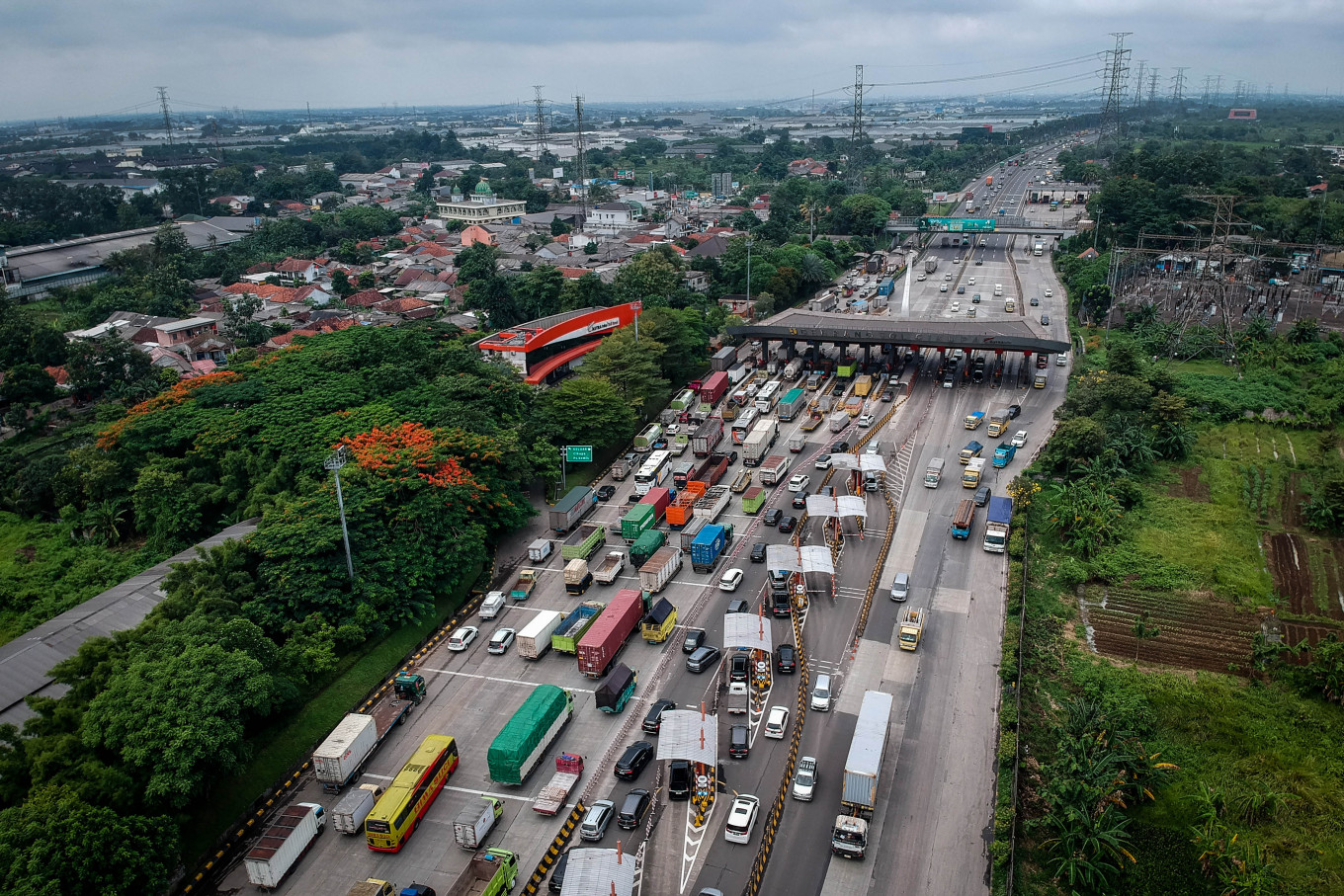 A variety of vehicles, including buses and freight trucks, stand in line on Dec. 24, 2025, at the Cikupa Tollgate in Tangerang regency, Banten. (Antara/Putra M. Akbar)
A
t rush hour in Jakarta, infrastructure becomes visible in motion. Trains fill before reaching Manggarai Station in South Jakarta. Toll roads ease some journeys while bottlenecking others. New flyovers and rail lines signal progress, even as they reveal the limits of existing systems.
Each project reflects planning and decisions made years before construction began. These projects are not just physical structures; they are the outcome of institutional choices that determine who builds, who pays and who carries risk.
For decades, public-private partnerships (PPPs) have been one of the preferred frameworks for infrastructure financing and development. Originating in the United Kingdom in the 1990s, PPPs were widely adopted in emerging markets, including Indonesia, as a way to mobilize private capital while limiting direct public expenditure. Governments were expected to regulate while private actors financed, built and operated projects.
Today, however, infrastructure financing and development is more nuanced, and in Asia, state-owned enterprises (SOEs) have taken on a more prominent role in delivering large-scale projects. This development does not reflect a reversal of earlier reforms, nor does it suggest a uniform regional strategy. Rather, it points to a gradual adjustment driven by the particular economic characteristics of infrastructure.
Infrastructure projects share features that often make them difficult to finance under conventional commercial arrangements. They require substantial upfront capital, involve long construction timelines and face regulatory, demand and operational uncertainty. Financial returns, where they exist, often follow broader economic benefits rather than precede them.
China, Indonesia and Vietnam have created and advanced their own model, the Asian model. In China, SOEs have long been central to infrastructure projects, operating within a system that emphasizes coordination between corporate entities, financial institutions and regulators. This has enabled rapid delivery of large projects, while concentrating financial exposure within firms.

In Indonesia, SOEs have played leading roles in toll roads, railways and urban transport systems, often working with private or foreign partners. Vietnam has followed a similar path.