TheJakartaPost
Please Update your browser
Your browser is out of date, and may not be compatible with our website. A list of the most popular web browsers can be found below.
Just click on the icons to get to the download page.


Popular Reads
Top Results
No results found. Please check your search term and try again
Can't find what you're looking for?
View all search results
Popular Reads
Top Results
No results found. Please check your search term and try again
Can't find what you're looking for?
View all search resultsNeighborhood First: How India is shaping regional prosperity
India’s foreign policy is guided by the philosophy of Vasudhaiva Kutumbakam (The World Is One Family), which prioritizes strong, mutually beneficial ties with immediate neighbors through cooperation.
Change text size
Gift Premium Articles
to Anyone
Share the best of The Jakarta Post with friends, family, or colleagues. As a subscriber, you can gift 3 to 5 articles each month that anyone can read—no subscription needed!
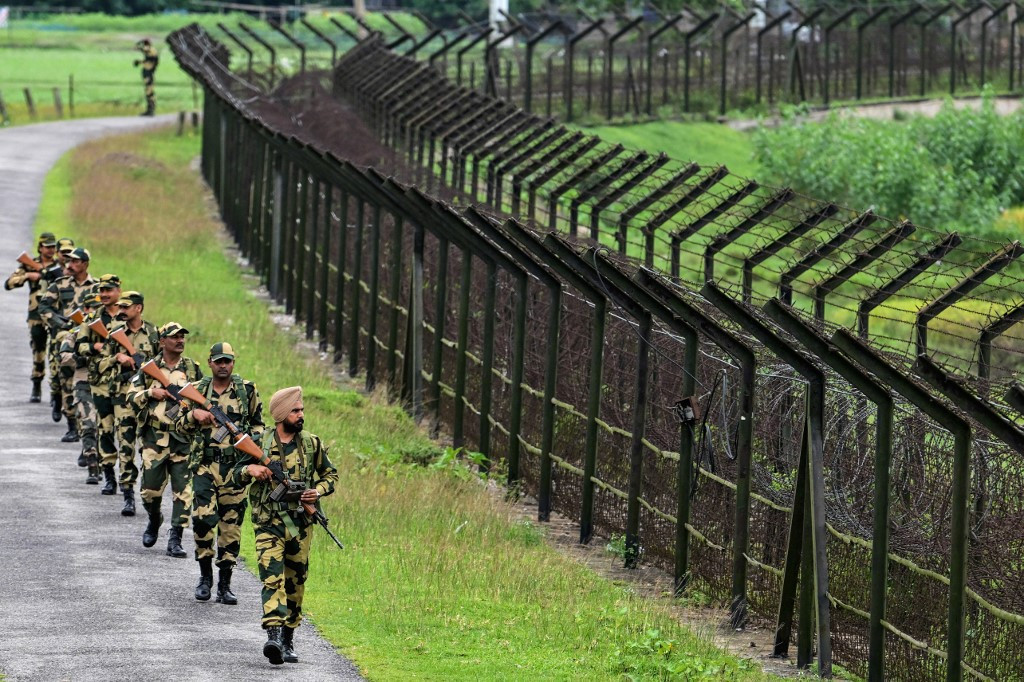 Border Security Force (BSF) personnel patrol on May 26, 2025, along the borderline fence at the India-Bangladesh border in Golakganj, Dhubri district in India's Assam State. (AFP/Biju Boro)
A
s Nepal, Bangladesh and Myanmar navigate crucial elections to chart their future political courses, the ripples will undoubtedly be felt across regional dynamics. Amid this turbulence and competing influences, India stands as a significant factor for stability, providing economic aid, crisis response and connectivity.
India’s ability to project stability outward is rooted in its internal resilience. Its diverse democratic system, independent judiciary and robust civil-military relations provide a solid foundation. The armed forces' focus on national security rather than political power is evident, particularly in their crucial humanitarian role during natural disasters.
This democracy is anchored in a comprehensive Constitution and a federal system that allows for power distribution and regional autonomy, crucial for managing such a diverse nation. Furthermore, a dynamic civil society and media landscape actively participate in democratic discourse.
Economically, reforms since 1991 have fostered a growing middle class, estimated to be 350 million strong, which acts as a stabilizing force. Recent growth, boosted by a vibrant start-up culture and digital public infrastructure, has enabled India to extend a helping hand to its neighbors. The goal is clear: to link the economies of South Asia with India’s growth engine for mutual benefit.
India’s foreign policy is guided by the philosophy of Vasudhaiva Kutumbakam (The World Is One Family). This "Neighborhood First" policy prioritizes strong, mutually beneficial ties with immediate neighbors through enhanced connectivity, trade and security cooperation.
For decades, New Delhi has moved from reactive to proactive engagement. This was most visible during the COVID-19 pandemic when India employed vaccine diplomacy to support the region. In the post-pandemic era, India has stepped in quickly during economic crises, most notably in Sri Lanka, offering food, medicine and fuel when they were needed most.

To reduce dependence on single powers, New Delhi has offered substantial loans, grants and credit lines for energy, transport and social projects. Through initiatives like BIMSTEC, India is promoting infrastructure integration, roads, railways and energy grids, to build shared economic interests.