The Jakarta Post
Please Update your browser
Your browser is out of date, and may not be compatible with our website. A list of the most popular web browsers can be found below.
Just click on the icons to get to the download page.


Popular Reads
Top Results
No results found. Please check your search term and try again
Can't find what you're looking for?
View all search results
Popular Reads
Top Results
No results found. Please check your search term and try again
Can't find what you're looking for?
View all search resultsIndonesia does not need more SOEs, but better rules
SOEs are often defended rhetorically as a counterweight to large, ethnic-Chinese-owned conglomerates, the “taipan”.
Change text size
Gift Premium Articles
to Anyone
Share the best of The Jakarta Post with friends, family, or colleagues. As a subscriber, you can gift 3 to 5 articles each month that anyone can read—no subscription needed!
 Set as preferred source
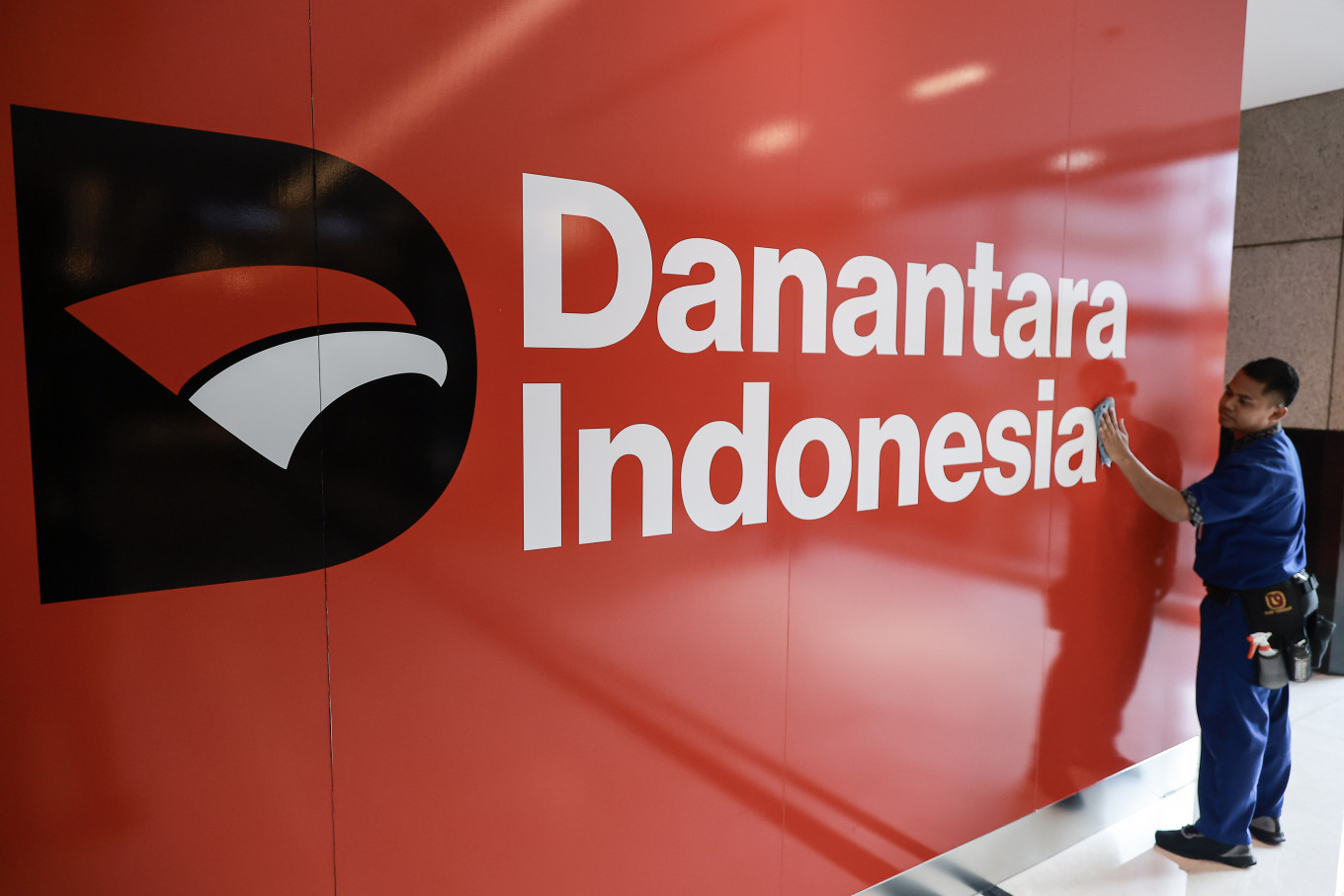 A worker cleans a room on Sept. 8, 2025, at the Wisma Danantara Indonesia office in Central Jakarta. In its first six months of operation, Danantara recorded several important achievements, including securing US$10 billion in funding, equivalent to Rp 163.18 trillion, from a consortium of 12 foreign banks. (Antara/Dhemas Reviyanto)
E
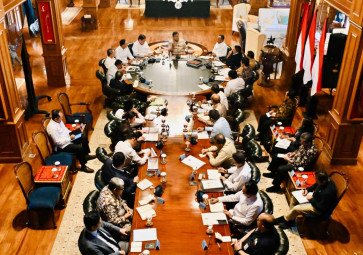
arly this month President Prabowo Subianto organized a limited meeting with cabinet ministers to discuss Indonesia’s industrial strategy, from reviving textiles to building a domestic semiconductor sector. Soon after, Coordinating Economic Minister Airlangga Hartarto, after the economic outlook gathering organized by the Indonesian Business Council, said the government is preparing about US$6 billion to strengthen textiles, including the creation of a new state-owned enterprise (BUMN), and is exploring strategic semiconductor investments.
This renewed emphasis on state ownership has revived the idea that Indonesia should adopt “state capitalism”, following the footsteps of China or South Korea. The appeal is understandable. But the evidence points elsewhere: sustainable industrialization depends on rules, competition and discipline, not on how many firms the state owns.
China is often cited as the archetype. SOEs there contribute roughly 23–28 percent of GDP and control about 40 percent of corporate assets, dominating finance, energy, transport and telecoms. This reflects deliberate political choices to control credit and infrastructure.
It also comes with costs, preferential finance, regulatory protection, repeated bailouts and large hidden fiscal liabilities. Even China has spent decades privatizing, corporatizing and imposing internal competition to contain inefficiency.
South Korea’s story is different. Its transformation, from textiles to steel, autos, ships and semiconductors, was led by private conglomerates disciplined by export performance. Firms that failed lost support. Public enterprises remained largely in utilities and infrastructure.
After the 1997–1998 financial crisis, Korea privatized further and strengthened competition. Ownership was secondary; discipline was primary.

Indonesia today looks like neither. My new working paper shows that SOEs contribute only about 6 percent of GDP and about 5 percent of growth; over 90 percent of growth comes from the private sector. SOE activity is also concentrated: roughly 70 percent of value added comes from mining, finance and electricity: capital-intensive, regulated sectors rather than competitive manufacturing or technology.