TheJakartaPost
Please Update your browser
Your browser is out of date, and may not be compatible with our website. A list of the most popular web browsers can be found below.
Just click on the icons to get to the download page.


Popular Reads
Top Results
No results found. Please check your search term and try again
Can't find what you're looking for?
View all search results
Popular Reads
Top Results
No results found. Please check your search term and try again
Can't find what you're looking for?
View all search resultsWalking the human rights talk
Democracy in Indonesia has been on the retreat in the last 10 years or so, freedom of speech and other types of freedoms are being undermined, and activists and civil society groups warn of a shrinking civic space.
Change text size
Gift Premium Articles
to Anyone
Share the best of The Jakarta Post with friends, family, or colleagues. As a subscriber, you can gift 3 to 5 articles each month that anyone can read—no subscription needed!
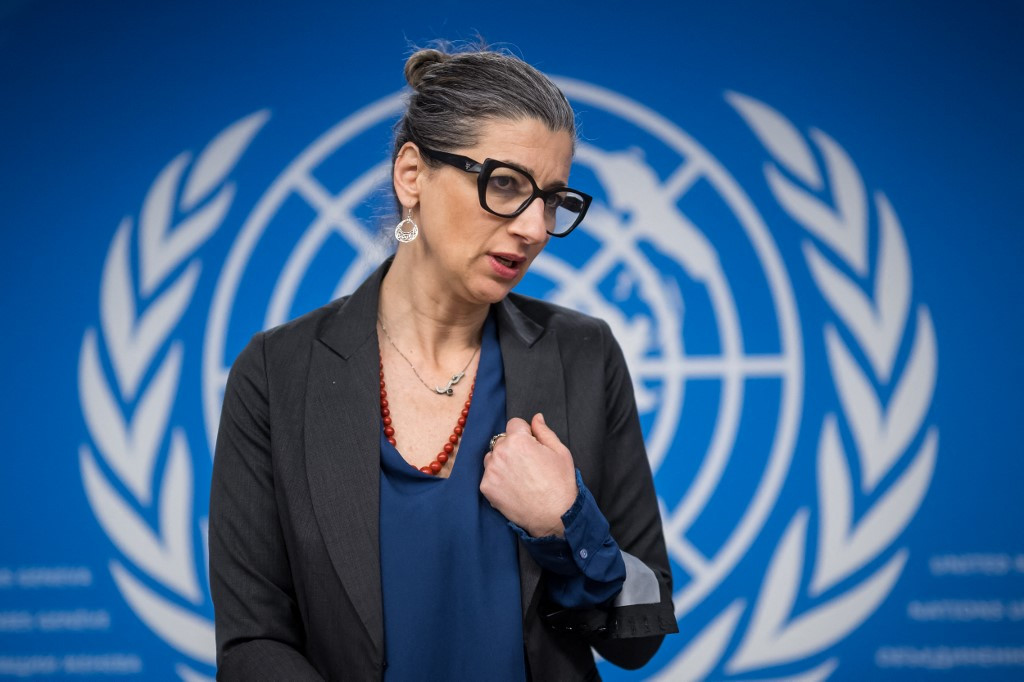 United Nations Special Rapporteur on the Rights Situation in the Palestinian Territories Francesca Albanese gestures after a press conference during a session of the UN Human Rights Council, in Geneva, on March 27, 2024. (AFP/Fabrice Coffrini)
N
o doubt Indonesia’s appointment as president of the United Nations Human Rights Council brings with it a lot of prestige. It also complements its ambition as a middle power to play a bigger role in global affairs.
Foreign Minister Sugiono in his annual press statement last week referred to the appointment, and a handful of others in which Indonesia is assuming leadership positions, as a “mandate” that the country will carry out constructively with impartiality and transparency.
But other than the prestige, leading the Geneva-based council for the coming year does not confer much power or influence, beyond procedural and administrative matters. Let us not get our hopes high about what the presidency means for Indonesia’s diplomatic standing. Since this is the first time that Indonesia has taken the leadership position, it at least gives our diplomats the benefit of experience in dealing with the challenges of leading an important UN agency.
If this position is going to be truly beneficial for the country, as president of the council we should aim to become the primus inter pares among the 47 members in upholding the values and principles enshrined in the Universal Declaration of Human Rights.
We are not doing so at the moment, but we should at least give it a try, or be seen to be trying. Nothing less than this is expected of the job. That we have some way to go yet is demonstrated by the skepticism expressed by human rights organizations at home as to whether Indonesia is a fit role model to lead the council.
Freedom House rates Indonesia as “partly free” ranking it at 57 out of 100 countries surveyed in 2024; V-Dem Institute put us fourth in Southeast Asia in its Human Rights Index in 2025; Human Rights Watch in its 2025 report highlights the suppression of minority religions, land conflicts and inadequate protection for rural communities in Indonesia.

We have, however, seen worse, much worse. Indonesia consistently counted among the world’s worst human rights violators during the Soeharto dictatorship. We have come a long way since then. We have signed and ratified the International Covenant on Civil and Political Rights (ICCPR) and regularly submit a universal periodic review to the Human Rights Council for scrutiny. And we have been scolded for our many shortcomings each time.