TheJakartaPost
Please Update your browser
Your browser is out of date, and may not be compatible with our website. A list of the most popular web browsers can be found below.
Just click on the icons to get to the download page.


Popular Reads
Top Results
No results found. Please check your search term and try again
Can't find what you're looking for?
View all search results
Popular Reads
Top Results
No results found. Please check your search term and try again
Can't find what you're looking for?
View all search resultsProtecting Indonesia’s youth from long-term vulnerability
Youth education that aims to build digital financial capability must be an integral part of national strategic policies on economic resilience.
Change text size
Gift Premium Articles
to Anyone
Share the best of The Jakarta Post with friends, family, or colleagues. As a subscriber, you can gift 3 to 5 articles each month that anyone can read—no subscription needed!
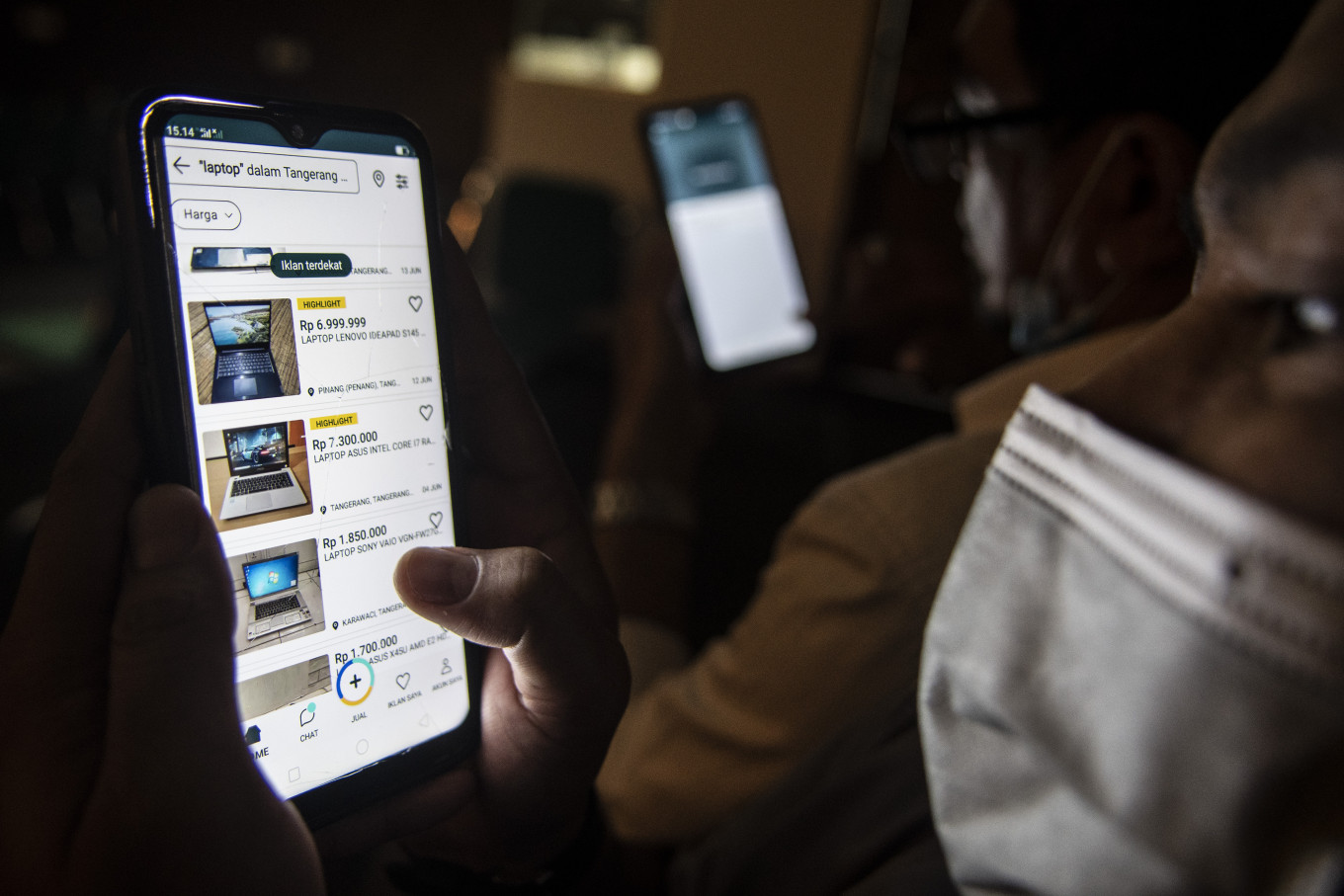 A man browses products on an online shopping app on June 16, 2022, in Jakarta. (Antara/Muhammad Adimaja)
A
s the host of a recent discussion with Queen Máxima of the Netherlands, in her role as the United Nations Secretary-General’s Special Advocate for Financial Health (UNSGSA), we learned firsthand how young Indonesians navigate money in an increasingly digital economy as they spoke candidly about this issue. While access to digital financial services has expanded rapidly, many shared concerns about their ability to use these tools safely and confidently.
The discussion highlighted a widening gap between opportunity and capability, one that now poses a national economic risk and underscores why digital financial capability (DFC) must become a strategic priority.
The study by Women’s World Banking shows that while access to digital financial services in Indonesia is expanding rapidly, many young adults still struggle with the behavioral and practical skills needed to use these services safely.
The data is telling: 40 percent of students reported misusing emergency funds for impulsive spending and using their emergency savings for nonessential spending; 20 percent said they relied on TikTok or YouTube as their primary source of financial learning; and many take on digital credit without fully understanding repayment risk.
The question is simple, yet critical: Will Indonesia’s youth become informed, resilient financial decision-makers or be swept into cycles of debt, misjudgment and long-term vulnerability?
To become informed and resilient financial decision-makers, young people need strong DFC: the ability to make sound financial decisions when using digital tools such as mobile banking, e-wallets, digital credit and investment platforms. Unlike financial literacy, which focuses on knowledge about money, DFC emphasizes the practical skills needed to apply that knowledge safely and confidently in a digitized financial system.

These capabilities are fundamental to long-term financial health. For this reason, DFC must be embedded systematically across education, policy and financial sector practices. It cannot be left to informal learning or personal trial and error, especially when the financial landscape is evolving faster than most young people can keep up. A structured, system-wide approach is needed so that every young Indonesian has the practical skills, behavioral readiness and confidence to navigate digital financial services safely.