The Jakarta Post
Please Update your browser
Your browser is out of date, and may not be compatible with our website. A list of the most popular web browsers can be found below.
Just click on the icons to get to the download page.


Popular Reads
Top Results
No results found. Please check your search term and try again
Can't find what you're looking for?
View all search results
Popular Reads
Top Results
No results found. Please check your search term and try again
Can't find what you're looking for?
View all search resultsThe Purbaya gambit: Can optimism alone revive Indonesia’s economy?
While Purbaya's strategy of optimistic communication is rooted in macroeconomic theory, it would do well to remember that self-fulfilling prophecies can go either way.
Change text size
Gift Premium Articles
to Anyone
Share the best of The Jakarta Post with friends, family, or colleagues. As a subscriber, you can gift 3 to 5 articles each month that anyone can read—no subscription needed!
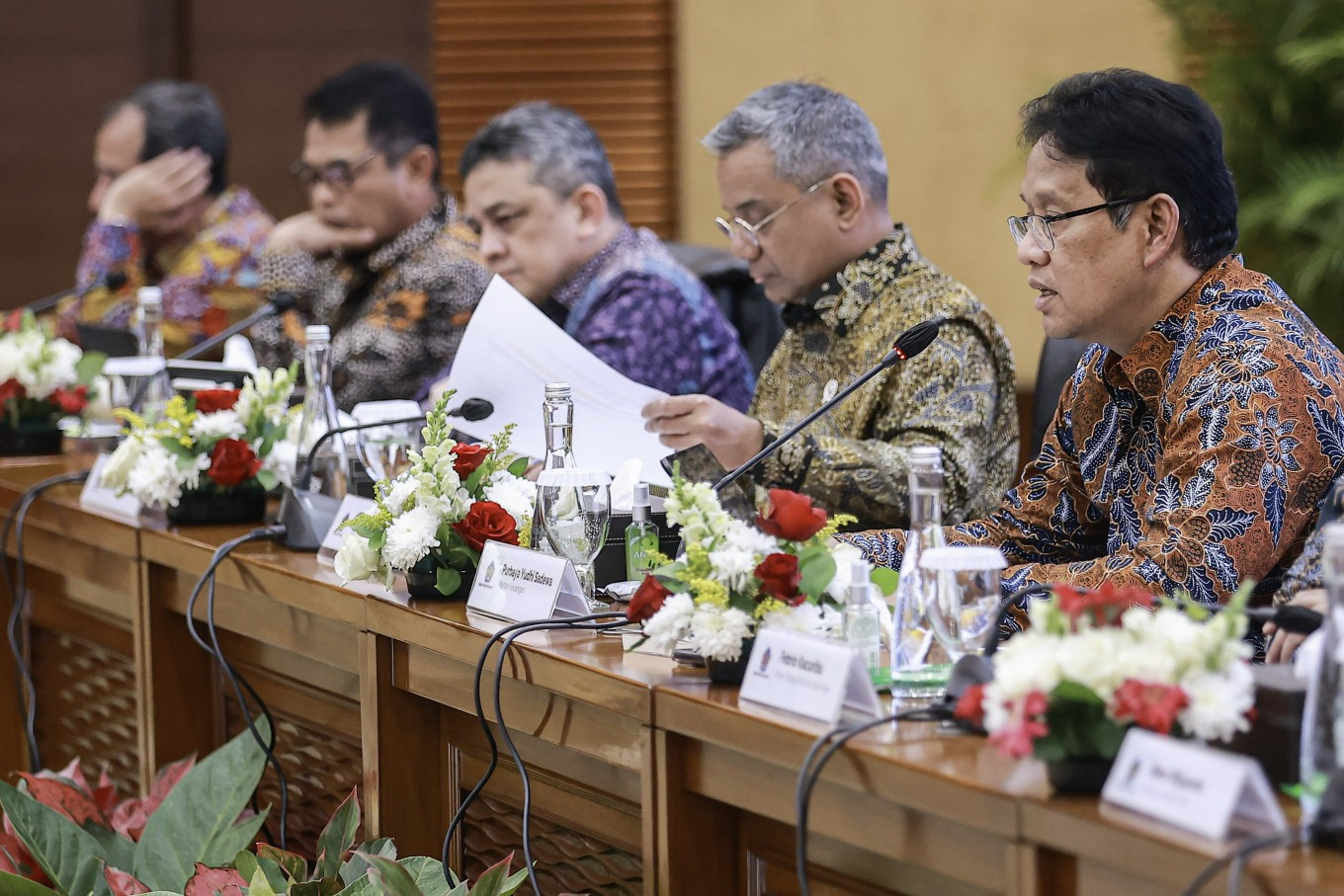 Finance Minister Purbaya Yudhi Sadewa (right) delivers a presentation on Oct. 14, 2025, during a monthly press briefing on the state budget at the Finance Ministry in Central Jakarta. (Antara/Dhemas Reviyanto)
W
hen Purbaya Yudhi Sadewa was sworn in as finance minister on Sept. 8, 2025, he arrived with bold promises and an even bolder communication strategy. His approach was not merely political theater, it was grounded in economic theory; specifically the concept of self-fulfilling prophecies drawn from Roger E.A. Farmer’s seminal work, The Macroeconomics of Self-fulfilling Prophecies (MIT Press, 1993).
As we enter the first quarter of 2026, the question now is whether theoretical optimism can overcome structural economic realities.
Purbaya’s tenure began with ambitious targets that captured public attention. He pledged to achieve 6 percent economic growth in 2026, significantly above the official state budget target of 5.4 percent, and famously declared that he was “ready to be fired” if he failed. He also promised that the economy would show marked improvement within two to three months of his taking office.
To achieve this, he orchestrated the transfer of Rp 200 trillion (US$12 billion) in government funds from Bank Indonesia (BI) to state-owned banks, intending to flood the market with liquidity and stimulate lending. Additional promises included pursuing 200 major tax delinquents with potential revenue of Rp 5.06 quadrillion and writing off debts under Rp 1 million for ordinary citizens to restore their access to banking services. These were not incremental policy adjustments: They were shock therapy designed to jolt Indonesia’s economy out of lethargy.
Yet by mid-January 2026, the gap between promise and performance has become evident.
Economic growth projections from institutions like CORE Indonesia and the Institute for Development of Economics and Finance (INDEF) remain stubbornly anchored between 4.9 percent and 5.1 percent, well below Purbaya’s target. Furthermore, the Sumatra disaster in late November dealt a big blow to the country’s gross domestic product. Purbaya himself acknowledged that fourth-quarter 2025 growth fell short of his initial 5.7 percent projection.

The much-touted liquidity injection has encountered what economists call transmission problems. While bank liquidity has increased, the flow of credit to the real economy has been sluggish due to undisbursed loans: credit approvals that businesses have not yet drawn down. The pursuit of tax delinquents continues, but comprehensive collection results remain unreported. Meanwhile, the debt forgiveness program for small borrowers is still being finalized through interagency coordination.