TheJakartaPost
Please Update your browser
Your browser is out of date, and may not be compatible with our website. A list of the most popular web browsers can be found below.
Just click on the icons to get to the download page.


Popular Reads
Top Results
No results found. Please check your search term and try again
Can't find what you're looking for?
View all search results
Popular Reads
Top Results
No results found. Please check your search term and try again
Can't find what you're looking for?
View all search resultsDeliberation and consensus needed in captive elephant debate
The recent ban on elephant rides highlights the critical need for consensual deliberation in managing a balance between the various dimensions of contemporary conservation, including animal, community and environmental welfare.
Change text size
Gift Premium Articles
to Anyone
Share the best of The Jakarta Post with friends, family, or colleagues. As a subscriber, you can gift 3 to 5 articles each month that anyone can read—no subscription needed!
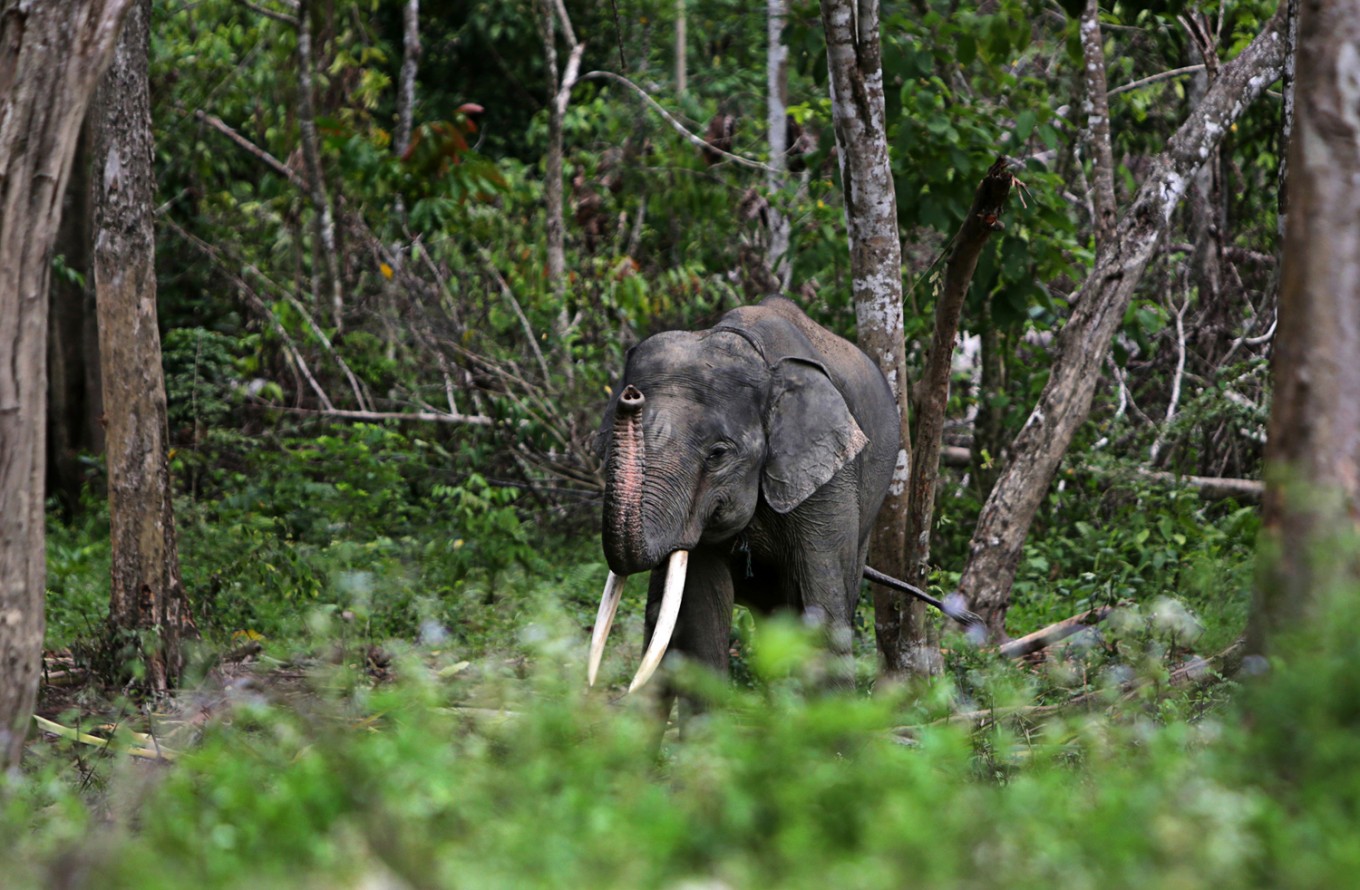 A tame Sumatran elephant under the care of the Sampoiniet Conservation Response Unit roams a forest on Sept. 3, 2017, in Le Jeurneh village, Aceh Jaya regency, Aceh. (Antara/Irwansyah Putra)
O
n Dec. 18, 2025, the Natural Resources Conservation Office (KSDA) issued a circular banning elephant rides at animal parks and conservation facilities across Indonesia. The directive applies nationwide and has immediate consequences for five elephant facilities in Bali that are together responsible for the care of 83 critically endangered Sumatran elephants.
Although presented as an animal welfare initiative, the decision carries significant implications for Asian elephant conservation efforts. The abrupt loss of a primary income source threatens the financial sustainability of Bali Safari Park, Mason Elephant Park, Bakas Adventure Elephant Park, Bali Zoo and Tasta Zoo in Tabanan, Bali.
Beyond the operational risks to these facilities, the ban jeopardizes hundreds of local jobs and raises serious concerns about how long-term care, including food provision, veterinary treatment and daily management, will be funded for elephants that can no longer be returned to the wild, because there is effectively no longer a “wild” to return them to.
The situation underscores a broader issue within conservation policy: The protection of Asian elephants cannot rely on a single, uniform strategy. Large-scale habitat destruction, particularly deforestation across the island of Sumatra, remains the dominant threat to dwindling wild populations.
At the same time, well-regulated captive facilities continue to play an important role in rescuing displaced elephants, supporting managed breeding programs, ensuring lifelong care and, perhaps most importantly, maintaining positive public engagement with conservation outcomes.
One of the most prominent voices responding to the KSDA ruling is Nigel Mason, founder of Mason Elephant Park in Taro village and a longtime proponent of regulated, best management practices for captive elephants. Mason’s perspective reflects the view that captive conservation should be recognized as part of a broader, integrated conservation framework rather than treated in isolation.

Mason notes that his facility has cared for rescued elephants since 1997, following widespread abandonment linked to habitat loss in Sumatra. Indeed, for nearly 30 years the Taro herd has remained stable and even produced six healthy calves. This illustrates the conservation potential of consistent, well-funded captive management.