TheJakartaPost
Please Update your browser
Your browser is out of date, and may not be compatible with our website. A list of the most popular web browsers can be found below.
Just click on the icons to get to the download page.


Popular Reads
Top Results
No results found. Please check your search term and try again
Can't find what you're looking for?
View all search results
Popular Reads
Top Results
No results found. Please check your search term and try again
Can't find what you're looking for?
View all search resultsPowering the energy transition for development
We must move away from the narrow perception of the energy transition as simply a move away from fossil fuels to renewables and instead embrace its broader, transformative aim of powering sustainable economic and social development through the delivery of secure and affordable energy for all.
Change text size
Gift Premium Articles
to Anyone
Share the best of The Jakarta Post with friends, family, or colleagues. As a subscriber, you can gift 3 to 5 articles each month that anyone can read—no subscription needed!
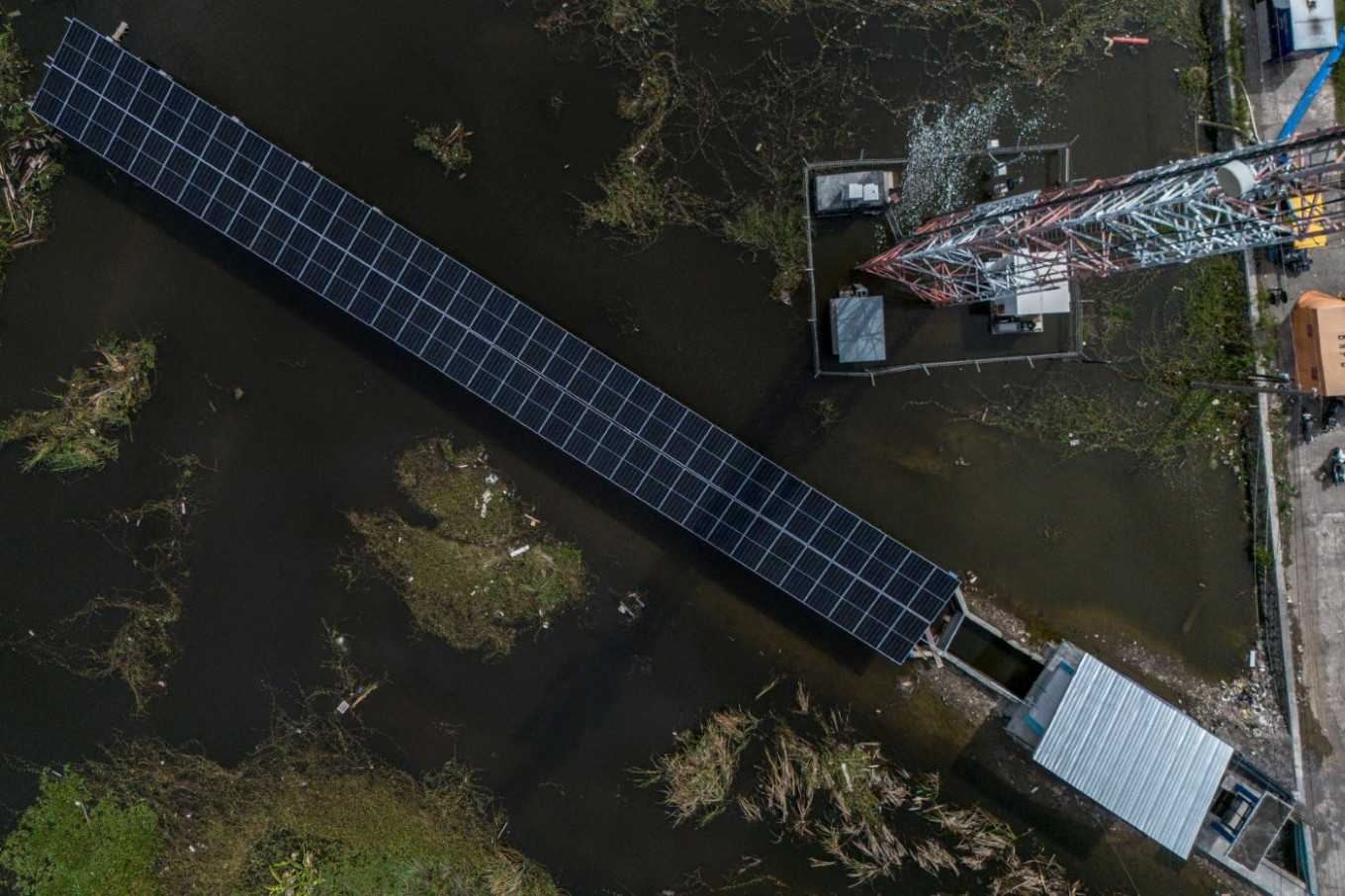 Solar solution: A Central Java government-owned solar-powered water pump operates on Jan. 2 in Sayung area in Demak regency. The facility was built to prevent flooding in Java’s north coast route. (Antara/Aprillio Akbar)
I
ndonesia's energy transition is undoubtedly a herculean task that often sparks controversial public discourses. On the one hand, ensuring universal access to electricity is imperative, especially in remote areas, while on the other, improving power quality and grid resilience is tantamount to ensuring sustainable industrial and economic growth.
The 2019 Java blackout is a reminder that one failure in such a critical infrastructure is one too many. When it affects major economic hubs and other critical infrastructures, such as telecommunications, transportation and the internet, the impact is magnified. Despite the evidence that no foul play was involved in the 2019 incident, pundits ask: How easy is it for a malignant actor to cause similar damage?
On top of these challenges, there is also a pressing demand to replace fossil fuel power generators, which made up 84 percent of our energy mix in 2025, with cleaner, renewable alternatives. Surely this can be a secondary priority to improving the livelihood of hundreds of millions, or not? What if they don’t have to compete in priorities but instead go hand in hand?
We should shed away the prevalent but hyper-simplistic narrative that the energy transition is a shift toward renewable energy. Instead, the energy transition should be about transforming our energy services to provide secure, reliable and affordable energy for everyone that fuels sustainable economic and social development; it is about building the power system of the future.
Global experts agree that such a system would consist of a power network with a mesh-like topology mixed with a variety of energy generation technologies and utilizing both distributed energy generators and storage units. When including integrated information technology systems, these are called "smart grids".
Smart grids offer high reliability and resilience to disruption while enabling the integration of a large share of renewable energy sources. Such a system can be costly, but Indonesia is ideally positioned to benefit significantly from this renewable energy boom due to solar, nickel and the tech boom in the 2010s.

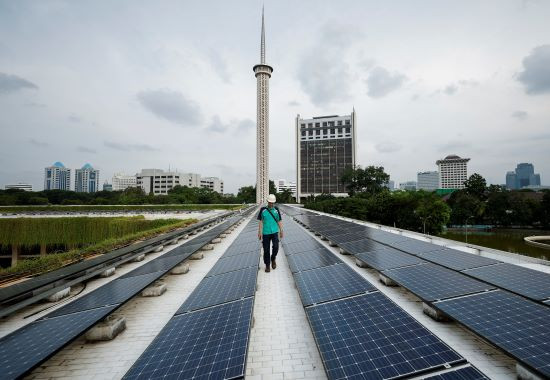
According to the Energy and Mineral Resources Ministry, Indonesia’s solar energy potential is vast, 3 terawatts (TW). That’s 10 times our total energy generation capacity in 2024. Further, our equatorial location means that solar availability is relatively unaffected by seasonal fluctuations, which is a major hurdle in subtropical regions. Additionally, solar power offers many advantages for a tropical country with thousands of islands such as ours: simple, flexible sizing, remote deployment and very low maintenance.