TheJakartaPost
Please Update your browser
Your browser is out of date, and may not be compatible with our website. A list of the most popular web browsers can be found below.
Just click on the icons to get to the download page.


Popular Reads
Top Results
No results found. Please check your search term and try again
Can't find what you're looking for?
View all search results
Popular Reads
Top Results
No results found. Please check your search term and try again
Can't find what you're looking for?
View all search resultsSafety, first and foremost
Two recent air and land transport incidents have again pointed out that, regardless of the vast improvements over the past decade, safety requires continuous, consistent maintenance nationwide.
Change text size
Gift Premium Articles
to Anyone
Share the best of The Jakarta Post with friends, family, or colleagues. As a subscriber, you can gift 3 to 5 articles each month that anyone can read—no subscription needed!
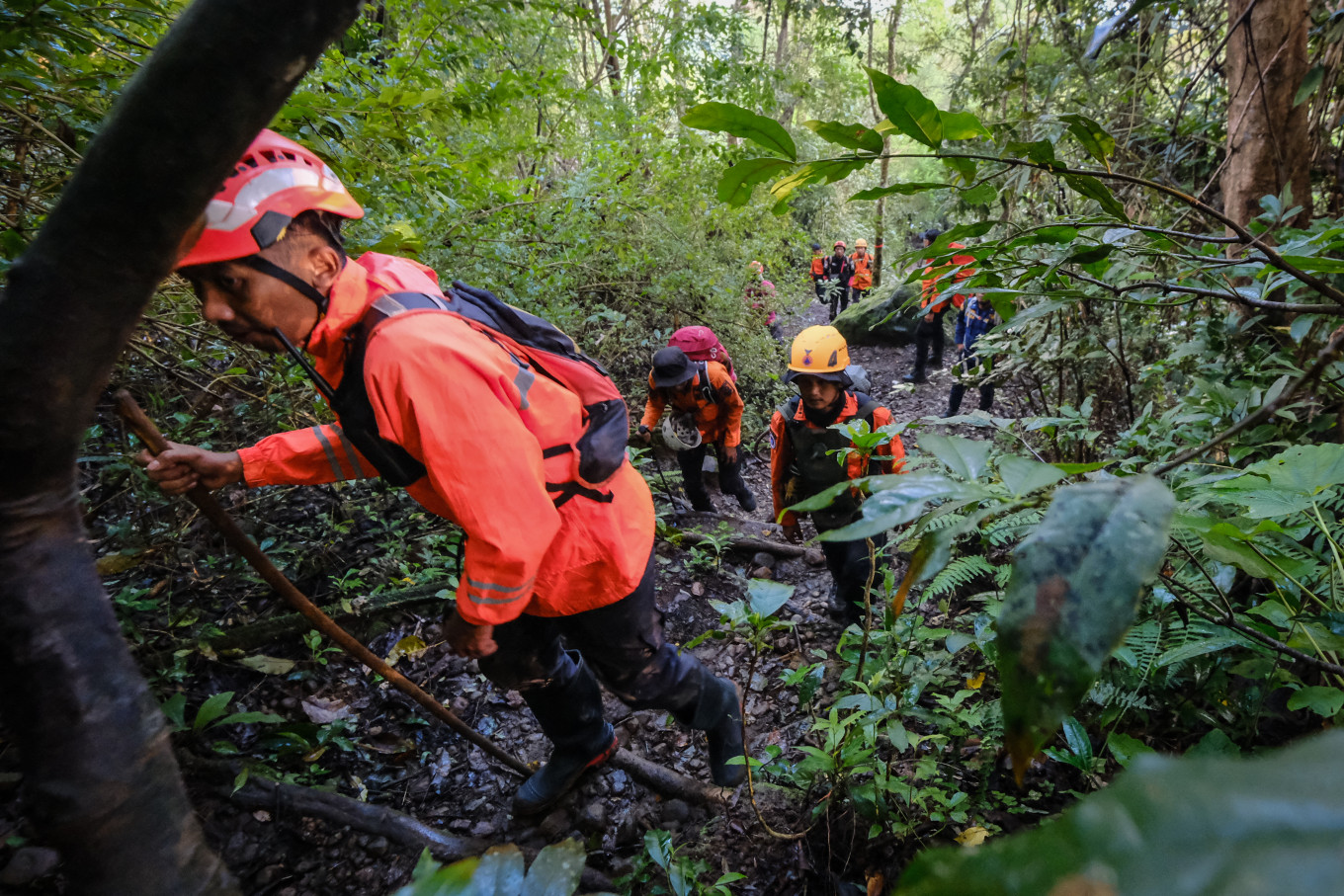 Search and rescue personnel negotiate a trail along the slopes of Mount Bulusaraung in South Sulawesi on Jan. 18, 2026, toward the suspected crash site of an Indonesia Air Transport turboprop plane that lost contact a day earlier while flying from Yogyakarta to provincial capital Makassar. (AFP/Muchtamir)
A
s the search concluded on Friday for all 10 people aboard the Indonesia Air Transport (IAT) plane that crashed last week in South Sulawesi, we are reminded of the irreplaceableness and invaluableness of safety in our air, land and sea transportation industry. Our deepest condolences go to the families of those who perished in the accident.
We call on the National Transportation Safety Committee (KNKT) to conduct a rigorous, transparent and unflinching investigation, so its findings can help prevent a similar crash.
As of Thursday, rescuers had evacuated the remains of one female flight attendant and a man, who was later identified as an employee of the maritime affairs ministry. The remains of the seven crew and three ministry employees who were aboard the small aircraft when it crashed into Mount Bulusaraung on Jan. 17 have now been located after a weeklong search.
Both black boxes were recovered on Wednesday, so it is only a matter of time before many questions are answered. These include how the controlled flight into terrain (CFIT) occurred, why the aircraft was operating in such perilous conditions and whether pressure to complete the mission overrode the safety parameters for navigating rugged terrain in severe weather.
Over the last decade, the national aviation industry has made undeniable strides, shedding the "unsafe" reputation that once led Europe to issue a blanket ban on Indonesian airlines. Yet the data reveals that although major commercial carriers have stabilized, regional risks and weather hazards remain a deadly constant.
The 2014 Air Asia crash that killed 162 people was attributed to loss of control due to weather, while the 2015 Trigana Air Service accident that claimed 54 lives was determined to be a CFIT due to pilot error. A series of incidents involving smaller aircraft between 2023 and 2026, including the IAT crash, were also linked to issues related to visibility and terrain.

While we have reduced the number of accidents due to systemic airline mismanagement, lives are still being lost to the hazards of sudden tropical storms and the difficult geography characterizing many parts of the archipelago. The government must enforce stricter no-go protocols for carriers when meteorological data suggest poor visibility, ensuring that a pilot’s decision to divert is supported rather than penalized.