TheJakartaPost
Please Update your browser
Your browser is out of date, and may not be compatible with our website. A list of the most popular web browsers can be found below.
Just click on the icons to get to the download page.


Popular Reads
Top Results
No results found. Please check your search term and try again
Can't find what you're looking for?
View all search results
Popular Reads
Top Results
No results found. Please check your search term and try again
Can't find what you're looking for?
View all search resultsWe are starving the people who prevent stunting
The government spends a lot on free nutritious meals to fight stunting in children, but is not willing to guarantee a living wage for the volunteers who prevent it.
Change text size
Gift Premium Articles
to Anyone
Share the best of The Jakarta Post with friends, family, or colleagues. As a subscriber, you can gift 3 to 5 articles each month that anyone can read—no subscription needed!
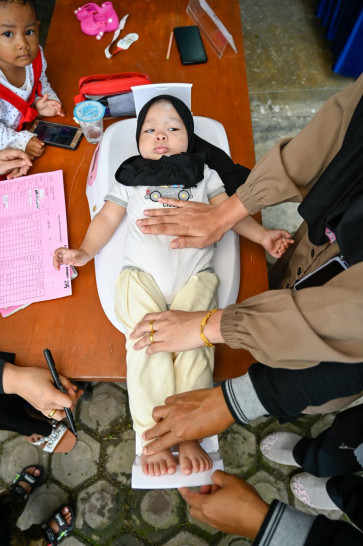
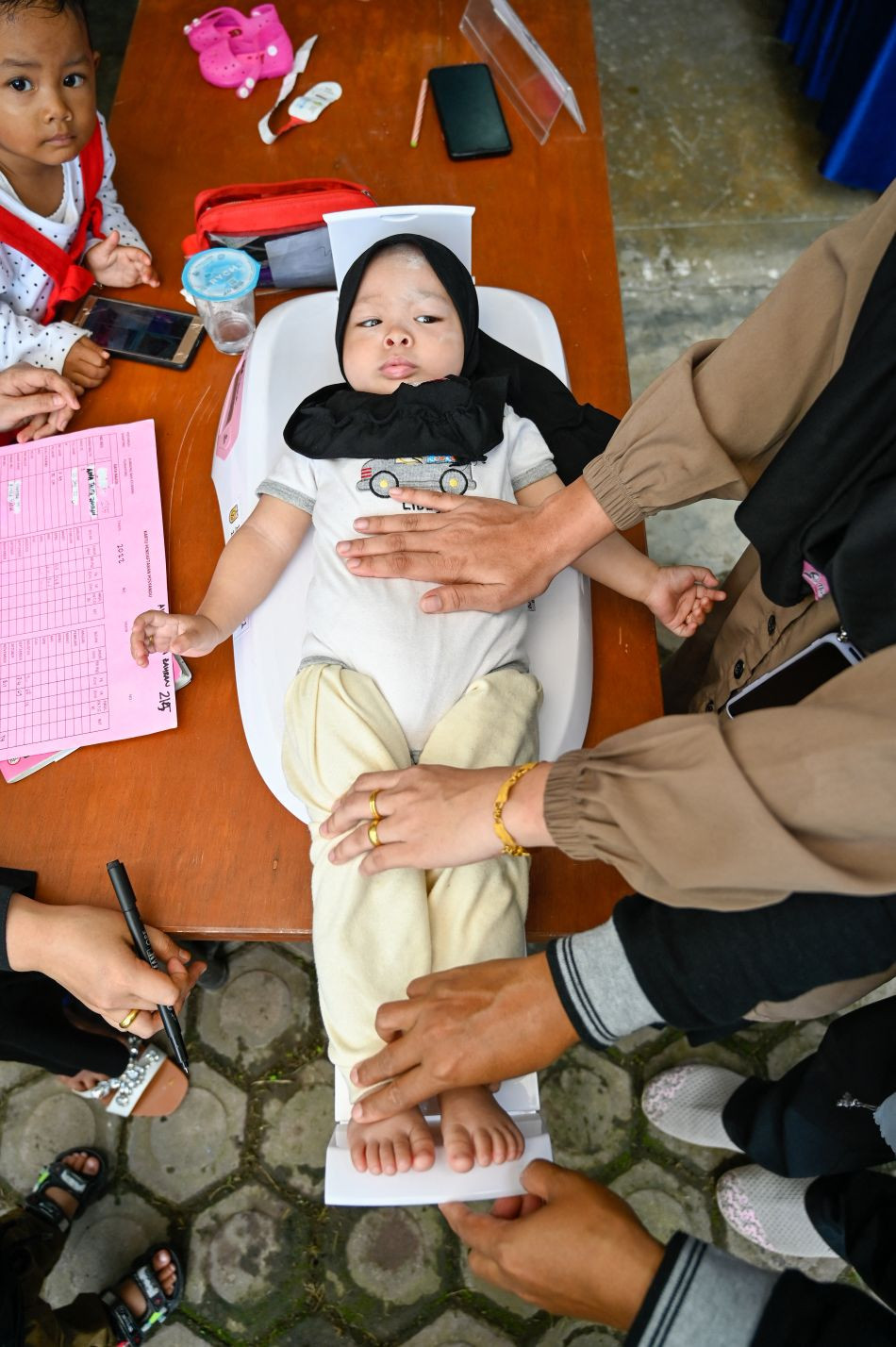 In good hands: Volunteers weigh a child before she receives a polio inoculation during a child stunting prevention program at an integrated services post in Banda Aceh, Aceh, on Nov. 14, 2022. (AFP/Chaideer Mahyuddin)
Indonesia likes to tell itself a comforting story about stunting.
The numbers are coming down. The national rate now hovers just under 20 percent. We have crossed the World Health Organization (WHO) threshold. There are banners, dashboards, presidential programs and a torrent of policy papers declaring progress.
But in large parts of eastern Indonesia, that story collapses on contact with reality. In provinces like East Nusa Tenggara, West Sulawesi and Southwest Papua, stunting still affects more than one in three children. This is not a rounding error. It is a structural failure we have learned to tolerate.
And the most glaring contradiction sits in plain sight.
Indonesia’s entire stunting strategy rests on the shoulders of community health workers (kader). More than 1 million of them. Mostly women, mostly volunteers and largely invisible.
This vast network, one of the largest in the world, forms the backbone of primary healthcare in rural and underserved areas.

They are the ones weighing babies under tin roofs. They are the ones persuading exhausted mothers to take iron tablets. Not only that, but they are the ones explaining breastfeeding, sanitation and growth charts in kitchens with no running water.