TheJakartaPost
Please Update your browser
Your browser is out of date, and may not be compatible with our website. A list of the most popular web browsers can be found below.
Just click on the icons to get to the download page.


Popular Reads
Top Results
No results found. Please check your search term and try again
Can't find what you're looking for?
View all search results
Popular Reads
Top Results
No results found. Please check your search term and try again
Can't find what you're looking for?
View all search resultsIs Trump facing a familiar ‘Washington Post’ playbook?
The Washington Post article quoting a US diplomat in Dhaka invites closer scrutiny as a civic duty, not as regards the content of the reported statements but rather the timing and purposeo f the allegedly leaked recordings.
Change text size
Gift Premium Articles
to Anyone
Share the best of The Jakarta Post with friends, family, or colleagues. As a subscriber, you can gift 3 to 5 articles each month that anyone can read—no subscription needed!
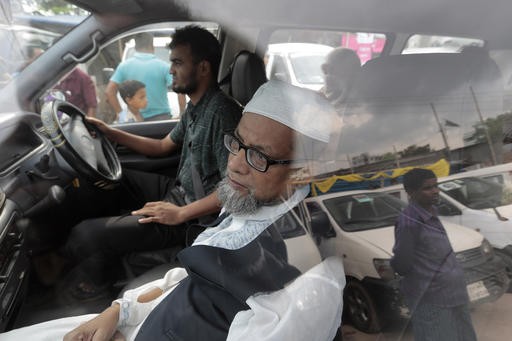 Relatives of Mir Quasem Ali, senior leader of Bangladesh's largest Islamic party Jamaat-e-Islami, arrive on Sept. 3, 2016, to visit him at the Kashimpur Central Jail in Gazipur, on the outskirts of Dhaka. (Associated Press/-)
T
here is something faintly performative about The Washington Post’s recent report, claiming that a United States diplomat in Dhaka openly informed Bangladeshi journalists that Washington intended to cultivate relations with Jamaat-e-Islami and viewed Hefazat-e-Islam through a pragmatic lens.
The report centers on alleged audio recordings from a closed-door meeting, presented with the authority of a direct quotation and the confidence of a newspaper that built its reputation by puncturing the hulls of power. Yet the story collapses the moment one asks a basic question: If a seasoned American diplomat had truly uttered these words, why would the audio see the light of day?
Diplomacy, particularly the American variety, is not conducted with the recklessness of an open microphone. It is governed by layers of institutional discipline, rigorous training and a healthy degree of professional paranoia. US diplomats are acutely aware that every word they utter in politically sensitive environments can be weaponized.
This is especially true in countries like Bangladesh, where Islamist politics, secular-nationalist anxieties and great power rivalries intersect in combustible ways. To suggest a US diplomat would casually muse about befriending Jamaat-e-Islami, an organization with a deeply controversial past, while knowing journalists were present defies belief.
The Washington Post claims to have obtained recordings from a meeting held on Dec. 1, 2025. The alleged remarks are striking in their bluntness: The diplomat reportedly said Bangladesh had “shifted Islamic” and Jamaat-e-Islami would “do better than it’s ever done before” in the February 2026 election.
The audio allegedly captures the diplomat stating, “We want them to be our friends,” and suggesting that if the party crosses "red lines", the US could simply slap “100 percent tariffs” on them the next day. These are not offhand remarks; they are policy-laden statements with enormous diplomatic consequences.

The fundamental problem with this narrative is that statements of such magnitude do not leak by accident. When damaging audio emerges, it is usually because a specific actor intended for it to surface.