TheJakartaPost
Please Update your browser
Your browser is out of date, and may not be compatible with our website. A list of the most popular web browsers can be found below.
Just click on the icons to get to the download page.


Popular Reads
Top Results
No results found. Please check your search term and try again
Can't find what you're looking for?
View all search results
Popular Reads
Top Results
No results found. Please check your search term and try again
Can't find what you're looking for?
View all search resultsAn unwavering pledge for peace
Peace and stability in the Taiwan Strait are extremely important for the stability of the region, including Indonesia, and the entire international community.
Change text size
Gift Premium Articles
to Anyone
Share the best of The Jakarta Post with friends, family, or colleagues. As a subscriber, you can gift 3 to 5 articles each month that anyone can read—no subscription needed!
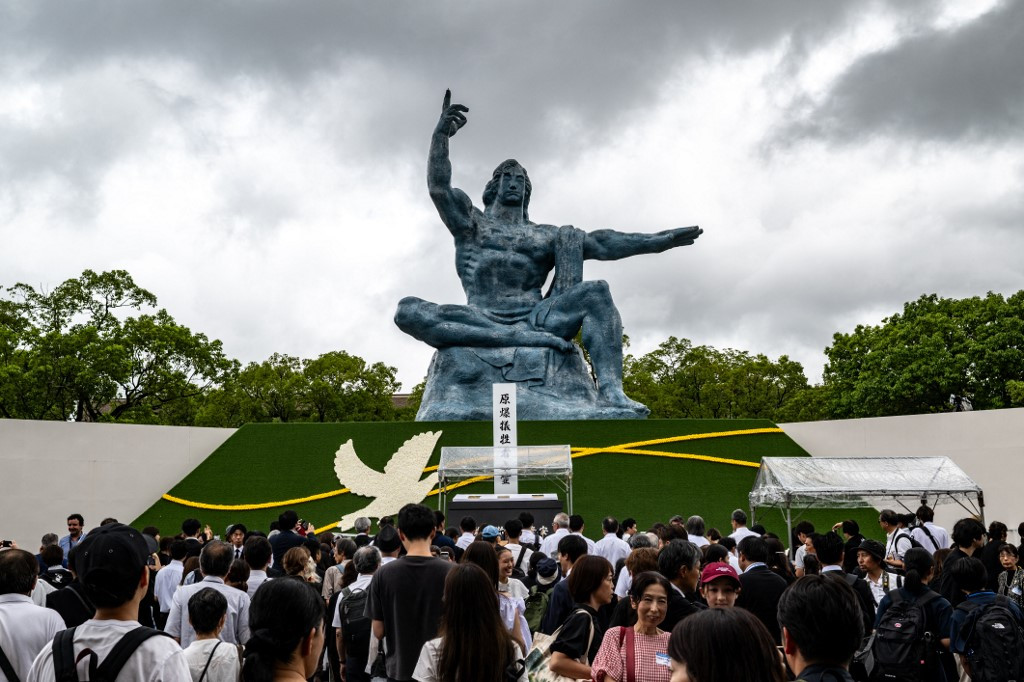 People stand in front of the Peace statue on Aug. 9, 2025 after the annual memorial ceremony that marked the 80th anniversary of the World War II atomic bombing in Nagasaki, Japan. (AFP/Philip Fong)
A
n opinion piece about Japan alleging a “resurgence of militarism” published in The Jakarta Post on Jan. 14 has prompted me to respectfully explain Japan’s postwar efforts and its position on peace and stability in the Indo-Pacific.
As enshrined in our Constitution, Japan forever renounces war as a sovereign right of the nation as well as the threat or use of force as a means of settling international disputes. Since the end of World War II, Japan has consistently contributed to the peace and prosperity of the international community, while respecting and adhering to international law, including the United Nations Charter.
We have actively contributed to maintaining and strengthening a free and open international order underpinned by the rule of law, as well as the sustainable development of the international community. I believe many of you would agree that Japan has been working unwaveringly and diligently for the peace and prosperity of the region.
As a nation, we have walked a path of steadfast commitment to never again repeat the devastation of war, and have forged a new legacy of consistently devoting ourselves to global peace and prosperity. This “desire for peace” has always been the foundation of our support and cooperation. This aspiration has been realized in various forms over the decades.
Our “desire for peace” comes from a place of deep remorse for the war. The history of the suffering of the people of Indonesia and elsewhere has been engraved into our collective conscience. As part of our efforts for reconciliation made after the war, we have manifested this through concrete economic and social support for the region.
The Sarinah department store in Jakarta, for example, was Indonesia’s first large-scale commercial facility built with Japanese post-war compensation. Japan and Indonesia have also worked together on infrastructure projects such as the Brantas River Basin development, the Sumatra Longitudinal Highway, toll roads in Jakarta and power plants across Indonesia. We are also honored to have supported the restoration of Borobudur, now a famous World Heritage site.

Alongside this government support, many Japanese companies have been operating in Indonesia for around 50 years. This process has resulted in a great deal of technology transfer and human resource development. In addition, cooperation in exchange programs and education, such as support for international students and technical training programs, has fostered deep friendships among the young people who have traveled back and forth between our two countries and will be leading the next generation.