The Jakarta Post
Please Update your browser
Your browser is out of date, and may not be compatible with our website. A list of the most popular web browsers can be found below.
Just click on the icons to get to the download page.


Popular Reads
Top Results
No results found. Please check your search term and try again
Can't find what you're looking for?
View all search results
Popular Reads
Top Results
No results found. Please check your search term and try again
Can't find what you're looking for?
View all search resultsBLBI and the test of central bank’s independence under Prabowo
The failure to settle the BLBI scandal beyond doubt shows that the state has opted for accommodation over confrontation, appearing more fearful of unsetting entrenched economic elites than of losing public funds.
Change text size
Gift Premium Articles
to Anyone
Share the best of The Jakarta Post with friends, family, or colleagues. As a subscriber, you can gift 3 to 5 articles each month that anyone can read—no subscription needed!
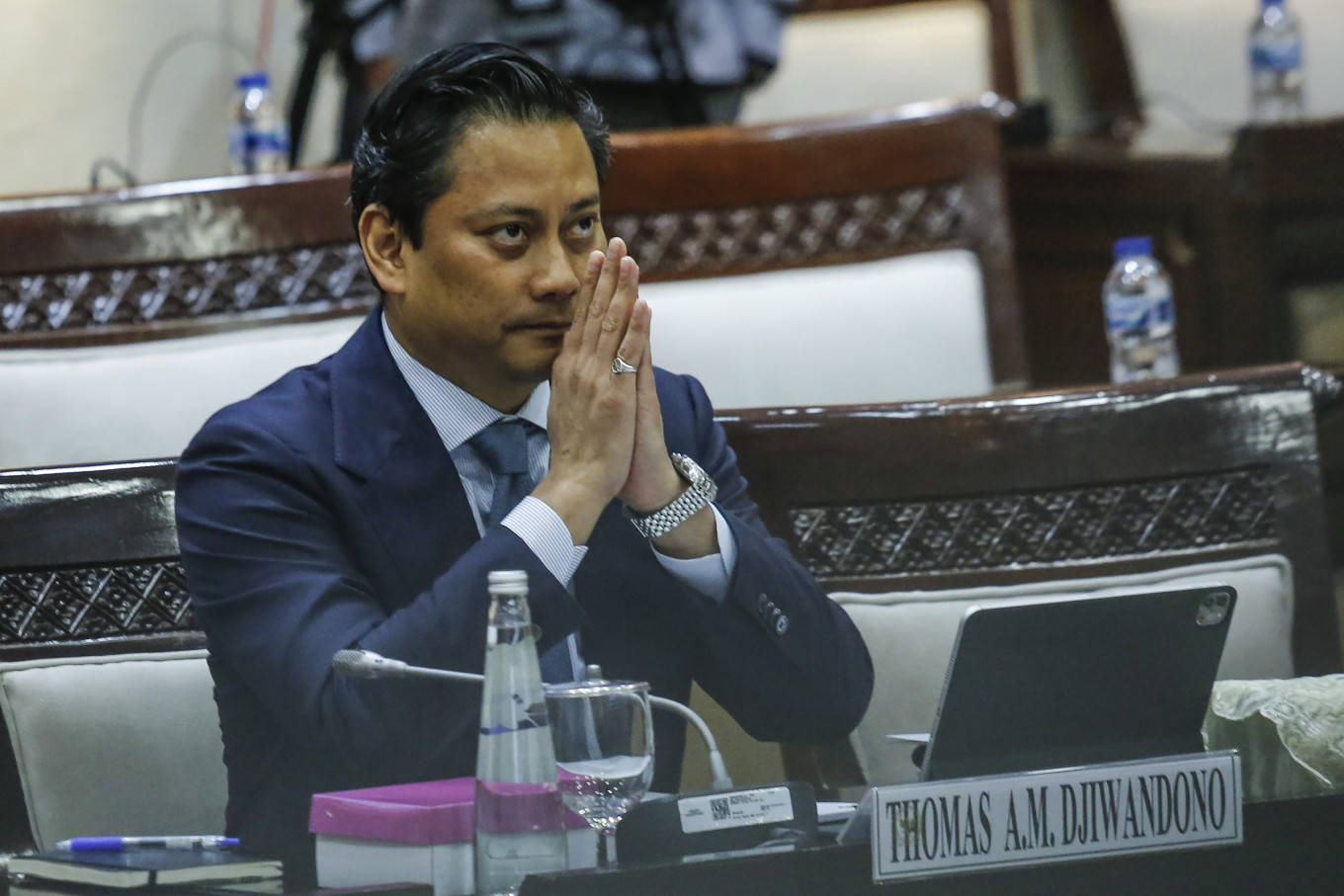 Prepared for it: Bank Indonesia (BI) deputy governor nominee Thomas “Tommy” Djiwandono attends a confirmation hearing on Jan. 26, 2026 at House of Representatives Commission XI overseeing financial affairs at the Senayan Legislative Complex in Central Jakarta. Tommy, who currently serves as deputy finance minister, was one of three candidates proposed by President Prabowo Subianto for the post. (Antara/Apsrilla Dwi Adha)
T
he Bank Indonesia Liquidity Assistance (BLBI) scandal remains a debt that has never truly been settled. This persistence is not due to a failure of calculation, but because the political will to enforce repayment has repeatedly collapsed when confronted by power.
Now, with the appointment of Thomas Djiwandono, President Prabowo Subianto’s nephew and former deputy finance minister, to a top post at the central bank, the promise of resolution has regained traction, yet the stakes for institutional independence have never been higher.
Since the 1997-1998 Asian financial crisis, what was initially framed as an emergency bailout has morphed into a lingering political inheritance, carefully passed from one presidential administration to the next. While the figures involved have been meticulously recorded, enforcement has remained selective. BLBI has become a monument to the Indonesian state’s chronic reluctance to confront its own economic elite.
This pattern of deferral began under former presidents B.J. Habibie and Abdurrahman Wahid, where the preservation of financial stability took precedence over immediate accountability. Megawati Soekarnoputri as president later opted for compromise, formalizing settlement agreements with controlling shareholders. In exchange for promises of compliance, the state effectively relinquished its coercive power, creating legal escape routes that later administrations found impossible to close.
Then, Susilo Bambang Yudhoyono as president eventually inherited the resulting debris: court rulings that were difficult to execute, assets that had already changed hands, and blurred lines of responsibility between the government and the central bank.
Joko “Jokowi” Widodo's presidency attempted to break this cycle by establishing the BLBI Task Force and identifying state receivables of approximately Rp 110 trillion (US$6.6 billion). However, the outcome remained limited. By the end of his term, recoveries only amounted to between Rp 35 trillion and Rp 38 trillion, largely in noncash assets with disputed valuations.

The remainder dissolved once again into the familiar cycle of litigation, negotiation and delay. Today, under President Prabowo, BLBI stands once more at the gates of power, waiting to see whether it will finally be enforced or quietly archived as a politically sensitive legacy.