TheJakartaPost
Please Update your browser
Your browser is out of date, and may not be compatible with our website. A list of the most popular web browsers can be found below.
Just click on the icons to get to the download page.


Popular Reads
Top Results
No results found. Please check your search term and try again
Can't find what you're looking for?
View all search results
Popular Reads
Top Results
No results found. Please check your search term and try again
Can't find what you're looking for?
View all search resultsDegraded lands matter for food, energy and climate goals
The use of degraded lands decouples economic development from deforestation, strengthens rural livelihoods and positions Indonesia as a global leader in nature-positive development.
Change text size
Gift Premium Articles
to Anyone
Share the best of The Jakarta Post with friends, family, or colleagues. As a subscriber, you can gift 3 to 5 articles each month that anyone can read—no subscription needed!
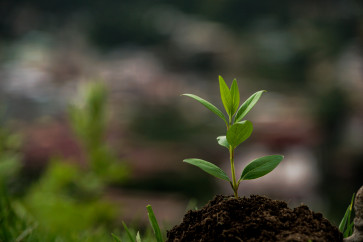
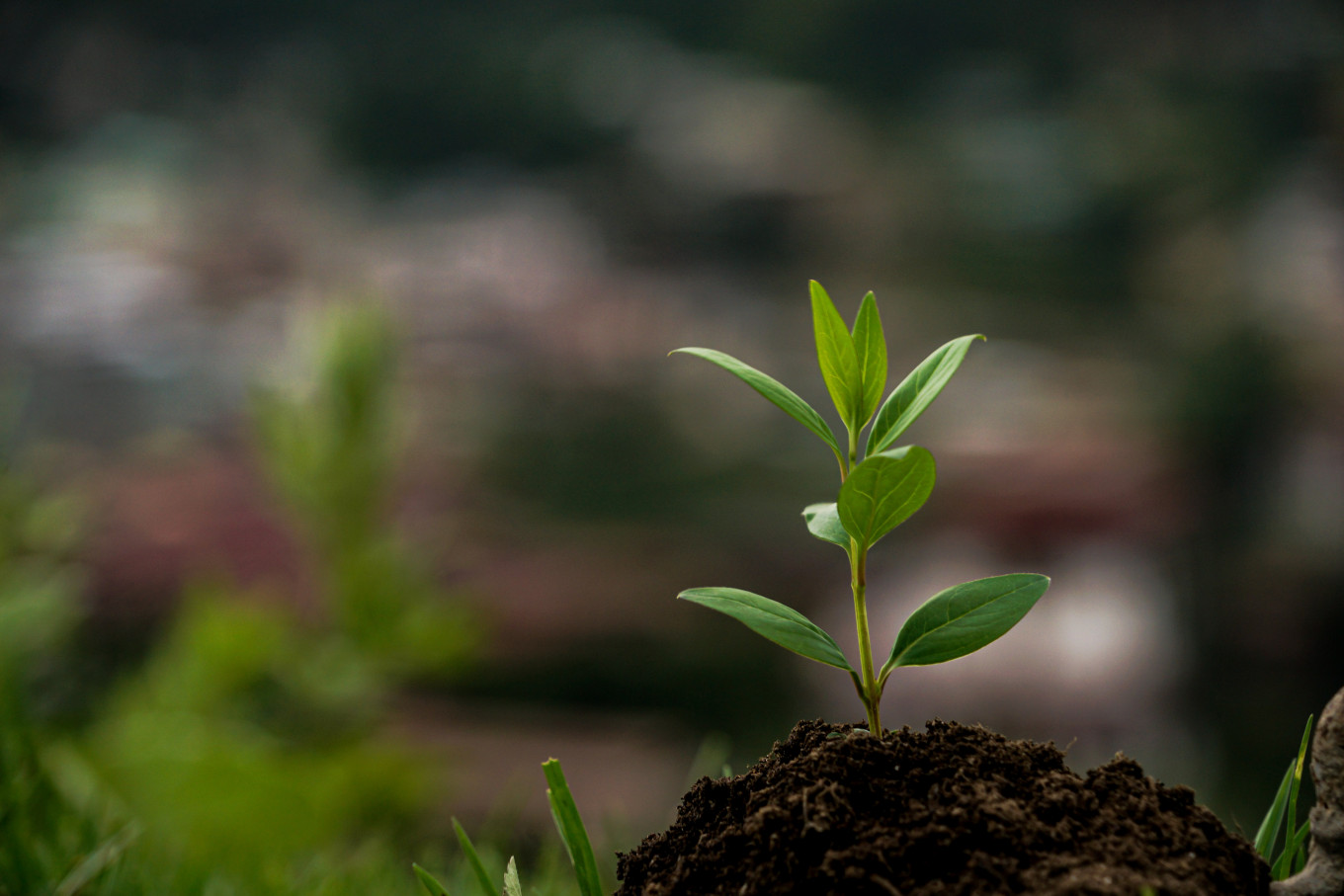 A green shoot sprouts from a patch of soil in this undated picture. Scientists say that planting trees are only part of the solution to overcoming land degradation. (Unsplash/Pema Gyamtsho)
I
ndonesia faces a critical juncture in its developmental trajectory. With its population projected to reach 295 million by 2030, annual demand for food and energy is expected to surge by 5 to 6 percent.
Simultaneously, the country has committed to ambitious climate targets, including absolute emissions ceilings under its Second Nationally Determined Contribution (SNDC) and a target of net-zero emissions by 2060.
Traditionally, meeting such rising demand has necessitated the expansion of agriculture and extractive industries into natural forests. However, as noted in a recent article in the Journal of Korean Society of Forest Science, this path risks undermining decades of progress in forest conservation.
The solution lies not in making trade-offs between economic growth and forest protection, but in a radical shift in land-use strategy toward the nation's vast reserves of degraded land.
Indonesia possesses between 22 million and 33 million hectares of degraded, critical and marginal lands, encompassing both peatland and mineral soils. While these areas currently provide negligible economic benefit, they hold enormous potential. Strategically redirecting investment toward these landscapes offers a triadic benefit: boosting food and energy production while fortifying climate and biodiversity outcomes.
The government’s intent to utilize over 20 million ha of state forest land for food and bioenergy production reflects legitimate development priorities. However, commentators warn that this approach may escalate deforestation and jeopardize the SNDC’s absolute emissions targets.

In October last year, Indonesia formally submitted its SNDC to the United Nations Framework Convention on Climate Change (UNFCCC), committing to peak national emissions at 1.34–1.49 gigatonnes of carbon dioxide equivalent by 2030. This shift from percentage-based pledges to absolute ceilings makes land-use decisions a matter of mathematical necessity. Choosing degraded lands over natural forests is essential if Indonesia is to meet its international climate obligations.