TheJakartaPost
Please Update your browser
Your browser is out of date, and may not be compatible with our website. A list of the most popular web browsers can be found below.
Just click on the icons to get to the download page.


Popular Reads
Top Results
No results found. Please check your search term and try again
Can't find what you're looking for?
View all search results
Popular Reads
Top Results
No results found. Please check your search term and try again
Can't find what you're looking for?
View all search resultsThe drawing's on the wall
The government and stakeholders must act now to protect archeological sites on Sulawesi from a growing list of threats, from climate change to mining.
Change text size
Gift Premium Articles
to Anyone
Share the best of The Jakarta Post with friends, family, or colleagues. As a subscriber, you can gift 3 to 5 articles each month that anyone can read—no subscription needed!
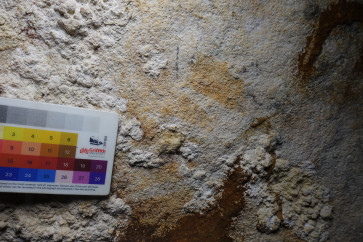
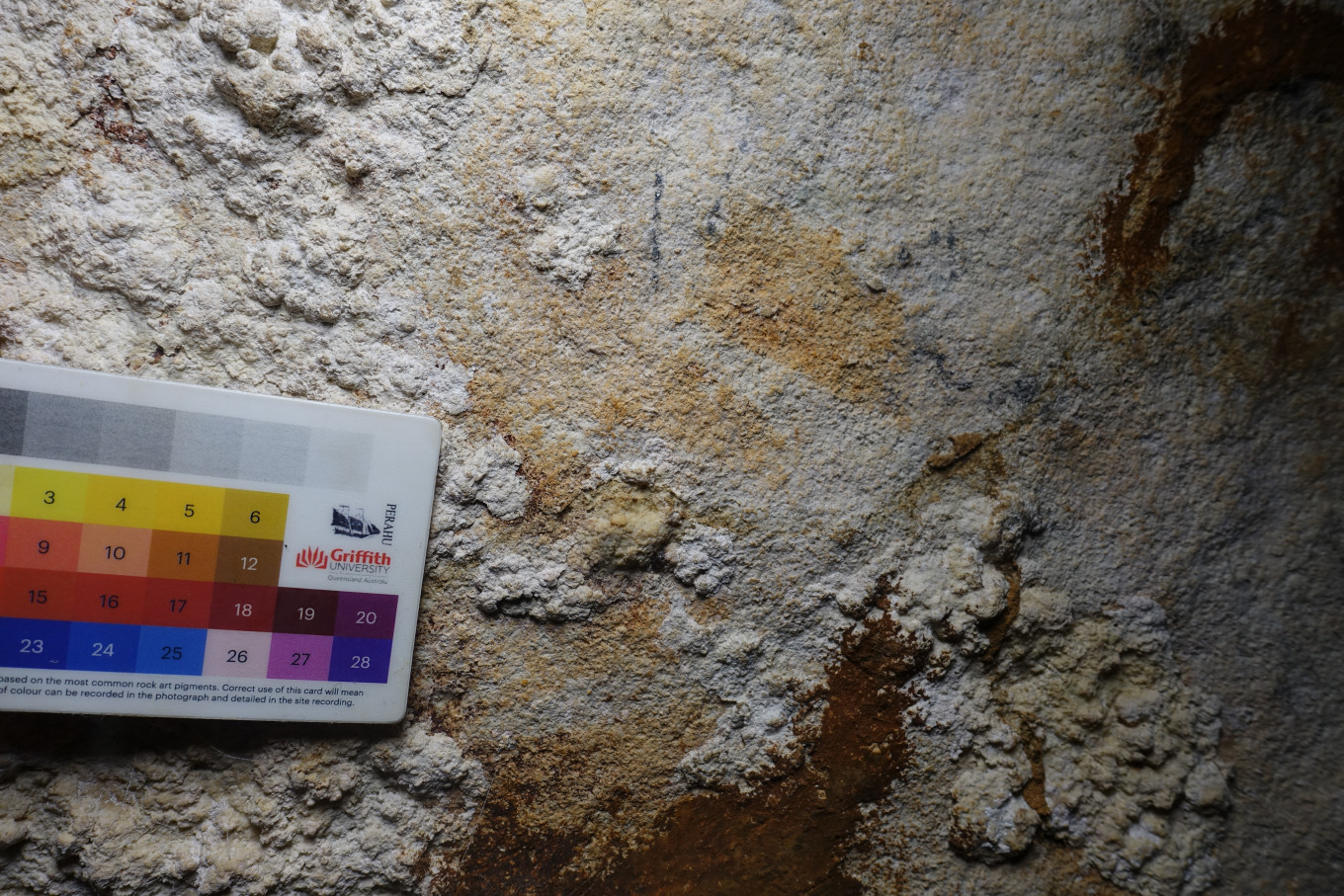 An archaeologist holds up a color chart next to a faded handprint that dates back at least 67,800 years during a May 2019 expedition to Liang Metanduno on Muna Island in Southeast Sulawesi. (Courtesy of Maxime Aubert/Courtesy of Maxime Aubert)
I
ndonesia recently made international headlines following archaeological discoveries that offer important clues to the history of humankind. In a study published in the scientific journal Nature, a team of Indonesian and Australian researchers identified a hand stencil in Liang Metanduno, a limestone cave on Muna Island in Southeast Sulawesi.
The rock art has been dated to approximately 67,800 years ago, meaning it was created during a timeframe marked by the migration of early Homo sapiens from Africa and the continued presence of Neanderthals in Eurasia.
While questions remain regarding the creators’ identity, the study has been commended for its rigorous and consistent methodology. By pinpointing the handprint’s approximate minimum age, researchers have confirmed it is the world’s oldest rock art found to date.
This is not the first time Sulawesi, the fourth-largest island in Indonesia and the 11th-largest in the world, has become renowned for prehistoric masterpieces. In 2024, archaeologists discovered a cave painting of a wild pig in the Maros-Pangkep karst formation in South Sulawesi. Estimated to have been created 51,200 years ago, it held the title of oldest rock art until the Liang Metanduno handprint eclipsed it by over 16 millennia.
These two findings, along with hundreds of others discovered across the island, have established Sulawesi as a prominent archaeological hot spot. However, these sites must be protected from a growing list of threats that could permanently erase the traces of the ancient humans who once inhabited the region.
The dangers facing these ancient galleries are immediate and multifaceted. As these sites gain fame, they may become crowded by tourists, heightening the risk of vandalism similar to the widely reported damage done to cave paintings in Australia in 2022 and in Spain in 2024.

Beyond human interference, climate change also presents a threat. According to a 2021 study, salt crystallization due to increasingly frequent and intense extreme weather events are accelerating the deterioration of ancient rock art.