TheJakartaPost
Please Update your browser
Your browser is out of date, and may not be compatible with our website. A list of the most popular web browsers can be found below.
Just click on the icons to get to the download page.


Popular Reads
Top Results
No results found. Please check your search term and try again
Can't find what you're looking for?
View all search results
Popular Reads
Top Results
No results found. Please check your search term and try again
Can't find what you're looking for?
View all search resultsBoard of Peace offers NU a chance to play a global role
The Board of Peace can become either a procedural pause before larger conflicts erupt or a genuine multilateral platform rooted in justice, inclusion and shared responsibility.
Change text size
Gift Premium Articles
to Anyone
Share the best of The Jakarta Post with friends, family, or colleagues. As a subscriber, you can gift 3 to 5 articles each month that anyone can read—no subscription needed!
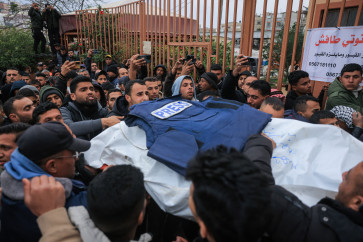
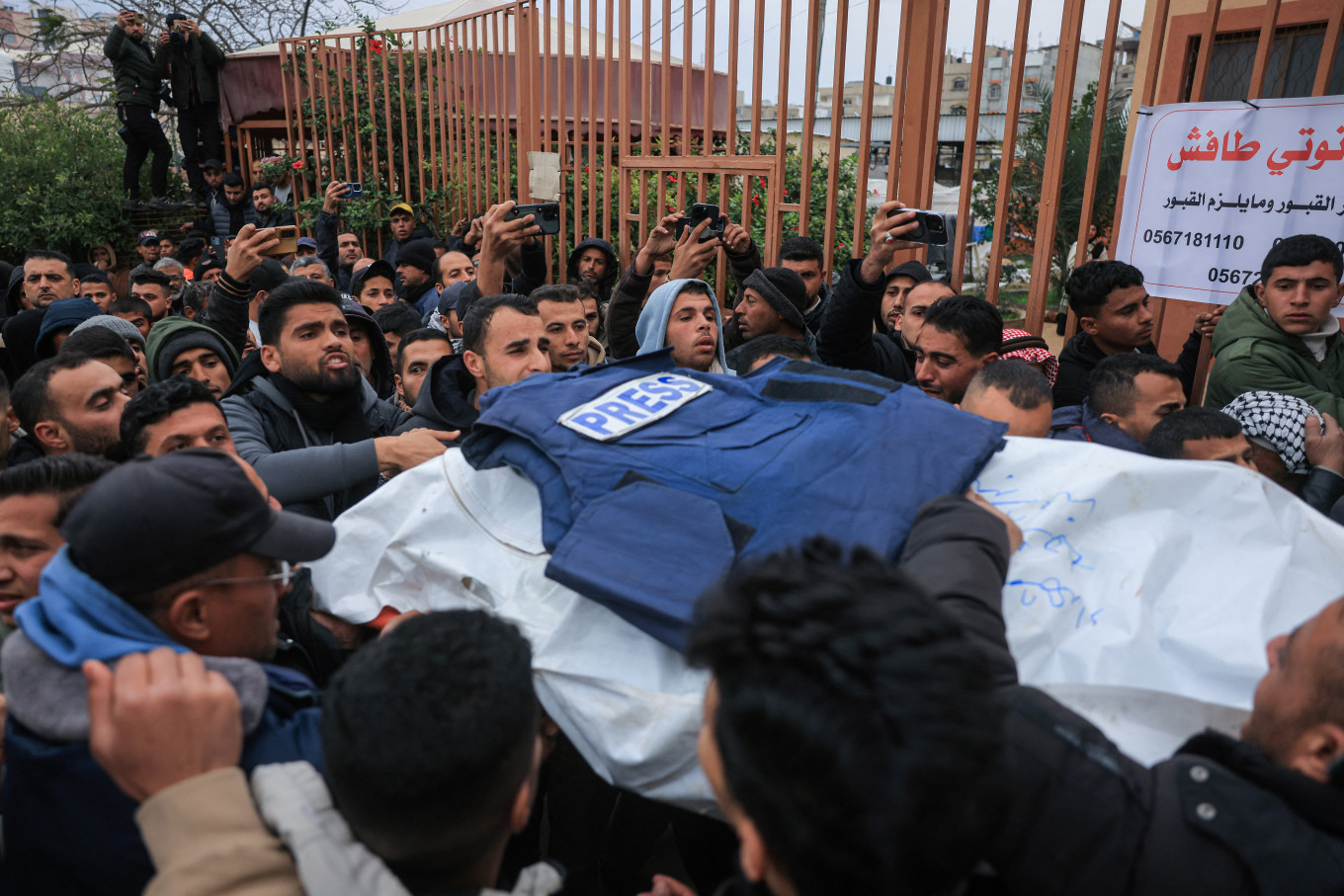 Family members and colleagues carry the bodies of Palestinian journalists killed in an Israeli strike, as they leave the Nasser Hospital for burial on Jan. 21, 2026, in Khan Yunis in the southern Gaza Strip. (AFP/Bashar Taleb)
I
ndonesia’s decision to join the Board of Peace for the rehabilitation of Gaza and the broader Palestinian question marks a significant diplomatic moment. It places Indonesia, long regarded as a moral voice of the Global South, inside a new and powerful multilateral forum dominated by global powers, including the United States.
This step should not be read simplistically as alignment or concession. Rather, it represents a strategic test: Can Indonesia transform elite multilateral platforms into instruments of just peace, rather than mere mechanisms of conflict management?
From the perspective of the New Awakening Movement of Nahdlatul Ulama (GKB-NU), the Board of Peace must be understood as an extension of the logic embedded in the Abraham Accords. While the accords succeeded in normalizing relations between Israel and several Arab states, scholars such as Marc Lynch have warned that normalization without justice risks stabilizing asymmetry rather than resolving conflict.
As Lynch notes in The New Arab Wars (2016), “regional order built on exclusion and inequality is unlikely to produce durable peace”.
At the same time, Indonesia’s participation aligns with its constitutional mandate, articulated in the 1945 Constitution, to actively contribute to world peace. In an era when unilateralism has repeatedly failed, multilateral engagement remains indispensable.
As John Ruggie, the architect of the concept of “embedded liberalism”, argues in Multilateralism: The Anatomy of an Institution (1992), multilateralism is most effective when it balances power with shared norms and moral legitimacy

Indonesia’s inclusion in the new forum provides a rare opportunity: not merely to advise, but to act as a voice for marginalized entities, particularly Palestine and the broader Global South, within a system historically shaped by Global North priorities.