TheJakartaPost
Please Update your browser
Your browser is out of date, and may not be compatible with our website. A list of the most popular web browsers can be found below.
Just click on the icons to get to the download page.


Popular Reads
Top Results
No results found. Please check your search term and try again
Can't find what you're looking for?
View all search results
Popular Reads
Top Results
No results found. Please check your search term and try again
Can't find what you're looking for?
View all search resultsWhy Whoosh and Malaysia’s ETS both make sense
Indonesia’s expensive bet may ultimately prove the more strategic choice for a nation building the infrastructure of its urban future.
Change text size
Gift Premium Articles
to Anyone
Share the best of The Jakarta Post with friends, family, or colleagues. As a subscriber, you can gift 3 to 5 articles each month that anyone can read—no subscription needed!
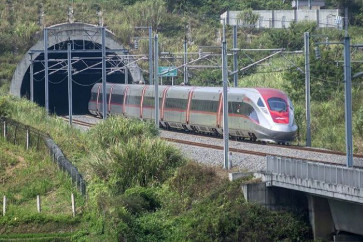
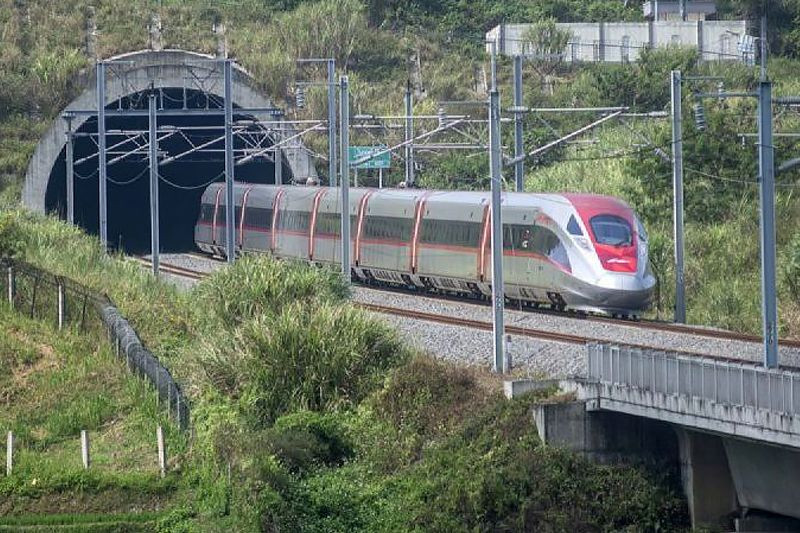 A Whoosh high-speed train passes through the Ngamprah tunnel in West Bandung regency, West Java, on July 31, 2025. (Antara/Abdan Syakura)
T
he recent launch of Malaysia’s Kuala Lumpur-Johor Baru electric train service invites inevitable comparisons with Indonesia’s Whoosh high-speed rail. On paper, the numbers seem damning for Jakarta’s choice.
Malaysia spent approximately US$14.6 million per kilometer on a sensible electric rail upgrade achieving 160 km/hour. Indonesia spent $51 million per kilometer, roughly 3.5 times more, for a true high-speed rail at 350 km/h. A Lamborghini versus a Toyota, critics might say. And with Whoosh now facing significant debt challenges, Malaysia’s pragmatism appears vindicated.
But step back from the spreadsheets, and a very different picture emerges, one where Indonesia’s expensive bet may ultimately prove the more strategic choice for a nation building the infrastructure of its urban future.
Yes, Indonesia paid roughly 3.5 times more per kilometer for roughly twice the speed. Yes, the $7.3 billion price tag has created serious debt obligations. And yes, Malaysia, with 2.4 times higher GDP per capita at $11,867 versus Indonesia’s $4,960, could better afford the premium option yet chose restraint.
The irony is real: the poorer country built the high-speed system while the richer one chose incremental improvement.
But raw construction costs miss the fundamental difference between what each country is building, and crucially, what urban futures they are enabling.

Malaysia’s ETS connects Kuala Lumpur (metro population 8.8 million) to Johor Bahru (2.4 million people) near the Singapore border. Including Singapore’s 6 million, the entire corridor serves roughly 17–18 million people. It is a meaningful transportation upgrade for a mid-sized economic corridor that crosses an international boundary, but one with inherent integration limits imposed by national borders and distinct policy frameworks.