The Jakarta Post
Please Update your browser
Your browser is out of date, and may not be compatible with our website. A list of the most popular web browsers can be found below.
Just click on the icons to get to the download page.


Popular Reads
Top Results
No results found. Please check your search term and try again
Can't find what you're looking for?
View all search results
Popular Reads
Top Results
No results found. Please check your search term and try again
Can't find what you're looking for?
View all search resultsMyanmar at 5: Regional responsibility and the price of impunity
Five years on, the 5PC has become a procedural shield rather than a protection mechanism, a failure reflected in consultations that multiply without delivering results.
Change text size
Gift Premium Articles
to Anyone
Share the best of The Jakarta Post with friends, family, or colleagues. As a subscriber, you can gift 3 to 5 articles each month that anyone can read—no subscription needed!
 Set as preferred source
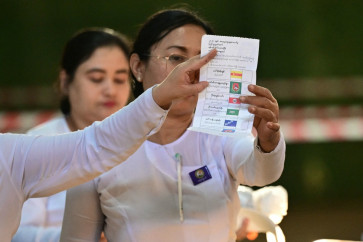
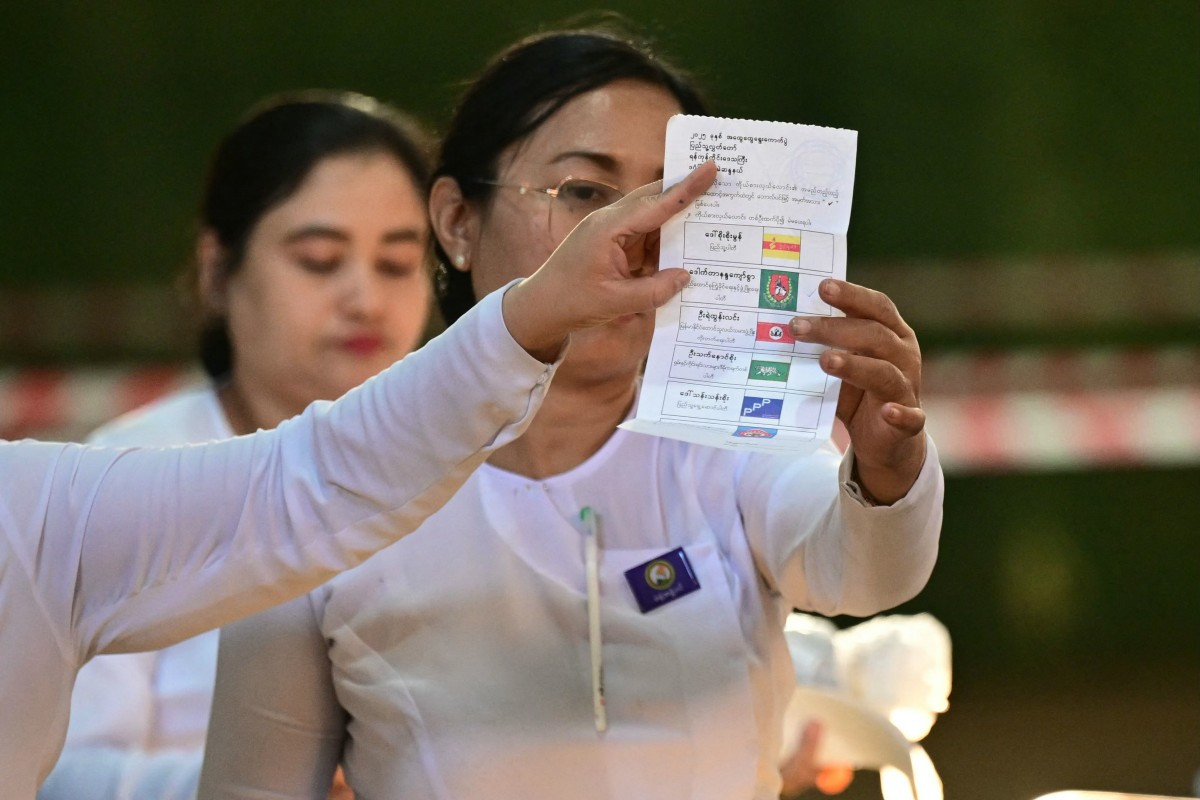 Members of Myanmar's Union Election Commission (UEC) count ballots on Jan. 25 at a polling station in Yangon after the closing of polls in the third phase of Myanmar's general election. (AFP/Sai Aung Main)
F
ive years after Myanmar’s military annulled the results of a democratic election, the country stands at a grim crossroads, not because its future is uncertain, but because the path being imposed has become unmistakably clear.
The junta’s latest electoral exercise, concluded on Jan. 25, was never intended to resolve Myanmar’s political crisis. It was designed to normalize military rule, extinguish democratic resistance and manufacture regional and international acceptance of a violent status quo. With the National League for Democracy (NLD) dissolved, its leaders imprisoned and dozens of opposition parties banned, the outcome was predetermined: a sweeping victory for the military’s proxy, the Union Solidarity and Development Party.
Since the coup on Feb. 1, 2021, more than 30,000 political prisoners have been detained. In January alone, the regime prosecuted hundreds under a new “election protection” law criminalizing criticism of the polls by banning speech, organizing and protest. Elections conducted under such conditions do not express popular consent; they codify repression.
That repression is inseparable from escalating violence. Throughout 2025, the military intensified its campaign of airstrikes, including deliberate and indiscriminate attacks on civilians and civilian infrastructure: schools, hospitals, religious sites and displacement camps. The expanded use of drones, paramotors and gyrocopters has widened the threat to civilian life.
Myanmar remains among the few countries still deploying cluster munitions and antipersonnel landmines. Forced conscription, abductions, collective punishment and the recruitment of child soldiers have become routine instruments of control.
Repression extends far beyond the battlefield. Since the coup, more than 2,200 people have reportedly died in custody amid torture, denial of medical care and systematic abuse. Sexual violence is widespread across prisons and military facilities.

Humanitarian suffering deepened further after the March 2025 earthquake, when the junta obstructed aid to opposition-held areas despite declaring, and immediately violating, a ceasefire. At least 3.6 million people are internally displaced, more than 15 million face acute food insecurity and millions who fled the country now confront growing risks of forced return.