The Jakarta Post
Please Update your browser
Your browser is out of date, and may not be compatible with our website. A list of the most popular web browsers can be found below.
Just click on the icons to get to the download page.


Popular Reads
Top Results
No results found. Please check your search term and try again
Can't find what you're looking for?
View all search results
Popular Reads
Top Results
No results found. Please check your search term and try again
Can't find what you're looking for?
View all search resultsTurning 80,000 new cooperatives into real engines of change
By adopting cooperatives as 'value-chain partners', corporate actors can provide the technical mentorship and quality standardizations that professionalize rural operations.
Change text size
Gift Premium Articles
to Anyone
Share the best of The Jakarta Post with friends, family, or colleagues. As a subscriber, you can gift 3 to 5 articles each month that anyone can read—no subscription needed!
 Set as preferred source
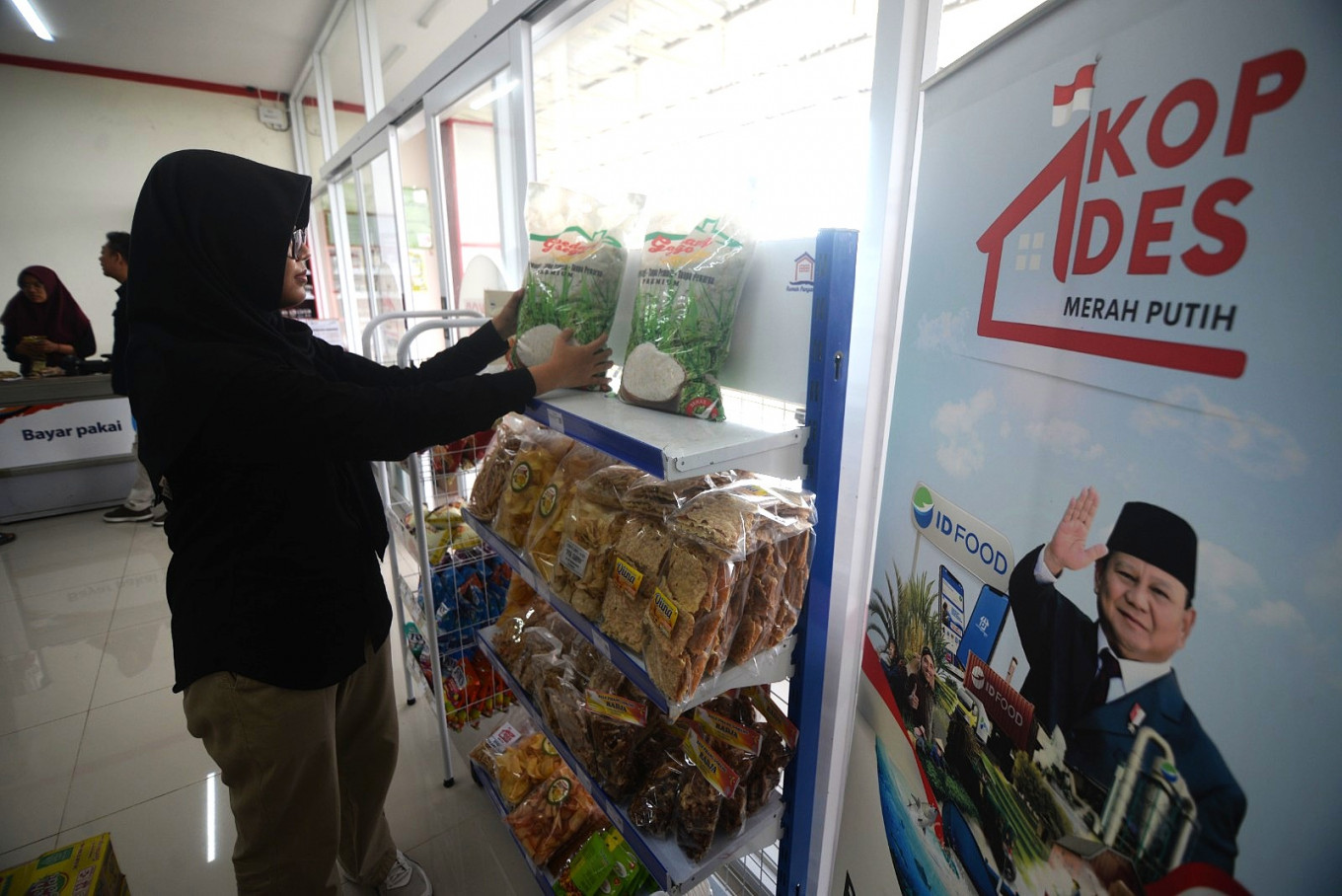 Business hours: An employee arranges on Jan. 22, 2026 premium rice products for sale at a Red and White rural cooperative in Metuk village, Boyolali regency, Central Java. (Antara/Aloysius Jarot Nugroho)
I
ndonesia has recently reached an extraordinary milestone with the establishment of more than 80,000 Red and White Rural Cooperatives (KDMP) in just four months. This unprecedented initiative, driven by President Prabowo Subianto, aspires to redefine the national economic architecture by rooting it firmly in community participation.
The program follows the mandate of Article 33 of the 1945 Constitution, which dictates that the economy should be structured as a joint venture based on the principle of kinship. No other country has attempted cooperative-building at such a staggering scale and speed. The ambition is clear: to shorten supply chains, reduce poverty, strengthen food security and build a more resilient economy from the grassroots up.
History serves as a necessary caution for such a monumental undertaking. Indonesia’s experience with the Village Unit Cooperatives (KUD) in the 1970s illustrates the inherent risks of state-driven institutionalization. While the KUDs were initially designed to support agricultural productivity, they eventually suffered from a lack of genuine grassroots ownership.
When institutions are perceived as "state commands" rather than "people’s trusts," they lose the social capital required for sustainability. As cooperative scholar Robby Tulus aptly observes, the vitality of a cooperative is determined by the participation of its members, not by administrative decree.
If the KDMP is to avoid the fate of the KUD, which often became a bureaucratic shell, it must transition from a symbolic political achievement into a system defined by institutional depth and local accountability. Speed may deliver headlines today, but only substance will determine the project's long-term legacy.
The rapid execution of this plan signals a powerful political commitment, yet this same pace magnifies significant economic vulnerabilities. The current health of Indonesia’s cooperative financial sector is a cause for concern.

According to the credit rating agency Pefindo, the sector faces a nonperforming loan ratio of 8.5 percent, a figure that indicates a high volume of loans at risk of default. This is notably higher than the 5 percent safety threshold established by the Financial Services Authority. Weak governance, limited financial literacy and inadequate risk management could quickly erode public trust in this new system.