TheJakartaPost
Please Update your browser
Your browser is out of date, and may not be compatible with our website. A list of the most popular web browsers can be found below.
Just click on the icons to get to the download page.


Popular Reads
Top Results
No results found. Please check your search term and try again
Can't find what you're looking for?
View all search results
Popular Reads
Top Results
No results found. Please check your search term and try again
Can't find what you're looking for?
View all search resultsMSCI, IDX and the long shadow of institutional credibility
Legibility is key to building the credibility of the Indonesian bourse so it can develop beyond a mere "conjecture" toward institutional maturity and certainty.
Change text size
Gift Premium Articles
to Anyone
Share the best of The Jakarta Post with friends, family, or colleagues. As a subscriber, you can gift 3 to 5 articles each month that anyone can read—no subscription needed!
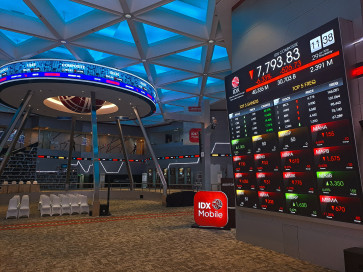
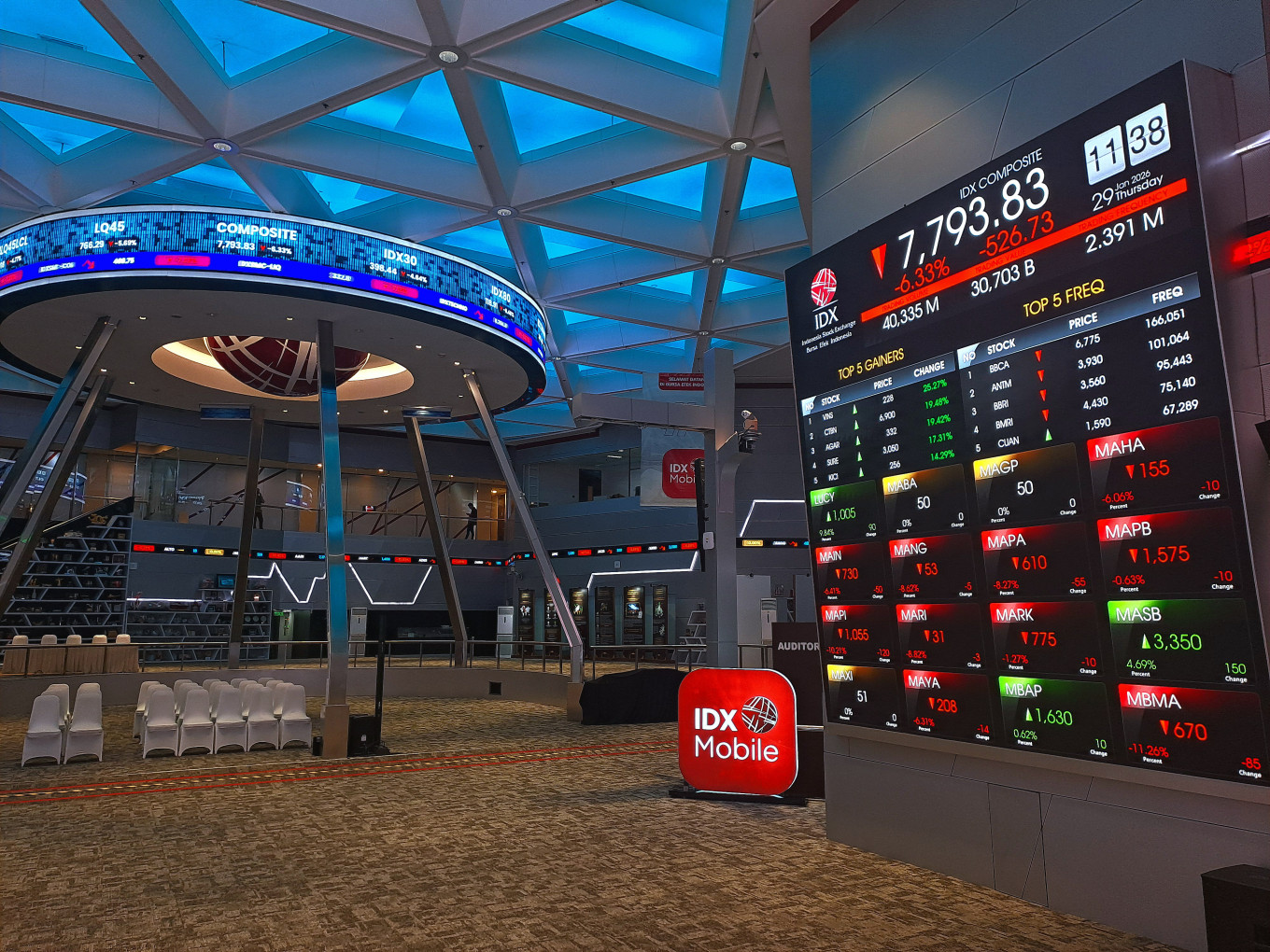 Red alert: An electronic display board inside the main hall of the Indonesia Stock Exchange (IDX) in South Jakarta shows an overall downward movement across most stocks during the lunch break on Jan. 29, 2026, when the IDX Composite index fell 6.3 percent after global investment firm MSCI raised concerns about free float and trading transparency. (TJP/Deni Ghifari)
M
ore than three decades ago in late 1993, a conversation unfolded that quietly shaped how global investors perceived Indonesia. Barton Biggs, then an influential global strategist at Morgan Stanley, asked George Soros whether Indonesia should be regarded as a “sure thing” or merely a “conjecture”. That reflected a deeper uncertainty about whether emerging economies could transform their promise into investable certainty.
At the time, structural reform was redefining parts of the developing world. Mexico had begun strengthening transparency and aligning its financial architecture with international standards, earning the confidence of institutional investors. Biggs hoped Indonesia might follow a similar trajectory and emerge as a new anchor in Asia.
Soros responded with characteristic restraint: “Mexico will be the next Mexico.” His message was clear: Credibility cannot be inherited through optimism alone. Indonesia, in his assessment, remained a conjecture, a country rich in potential but constrained by systems that were difficult for outsiders to read.
As 2026 begins, that decades-old skepticism feels unexpectedly relevant. Recent turbulence surrounding Indonesia’s stock market has revealed a persistent gap between domestic regulatory progress and the expectations of global capital.
The warning issued by index provider MSCI, whose benchmarks guide trillions of dollars in institutional portfolios, has once again reminded policymakers that modern markets operate on legibility. Investors do not simply evaluate growth; they evaluate whether a market can be interpreted with confidence.
The temporary trading halts that disrupted activity on the Indonesia Stock Exchange (IDX) last week underscored this vulnerability. Trading suspensions are rarely seen as isolated technical measures. Instead, they signal uncertainty about the resilience of market infrastructure. For global investors already attentive to information asymmetry, such events reinforce the perception that risks may not be fully measurable.

MSCI’s decision to review Indonesia’s classification, and the accompanying possibility of a downgrade from “emerging market” to “frontier market”, magnified these concerns. Even the prospect of reclassification triggered significant foreign selling pressure.