TheJakartaPost
Please Update your browser
Your browser is out of date, and may not be compatible with our website. A list of the most popular web browsers can be found below.
Just click on the icons to get to the download page.


Popular Reads
Top Results
No results found. Please check your search term and try again
Can't find what you're looking for?
View all search results
Popular Reads
Top Results
No results found. Please check your search term and try again
Can't find what you're looking for?
View all search resultsAnalysis: Beef prices rise as quota cuts and import costs collide
Change text size
Gift Premium Articles
to Anyone
Share the best of The Jakarta Post with friends, family, or colleagues. As a subscriber, you can gift 3 to 5 articles each month that anyone can read—no subscription needed!
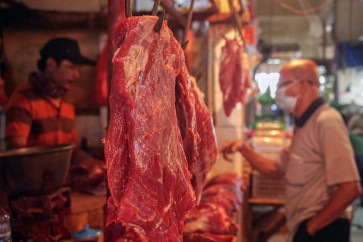
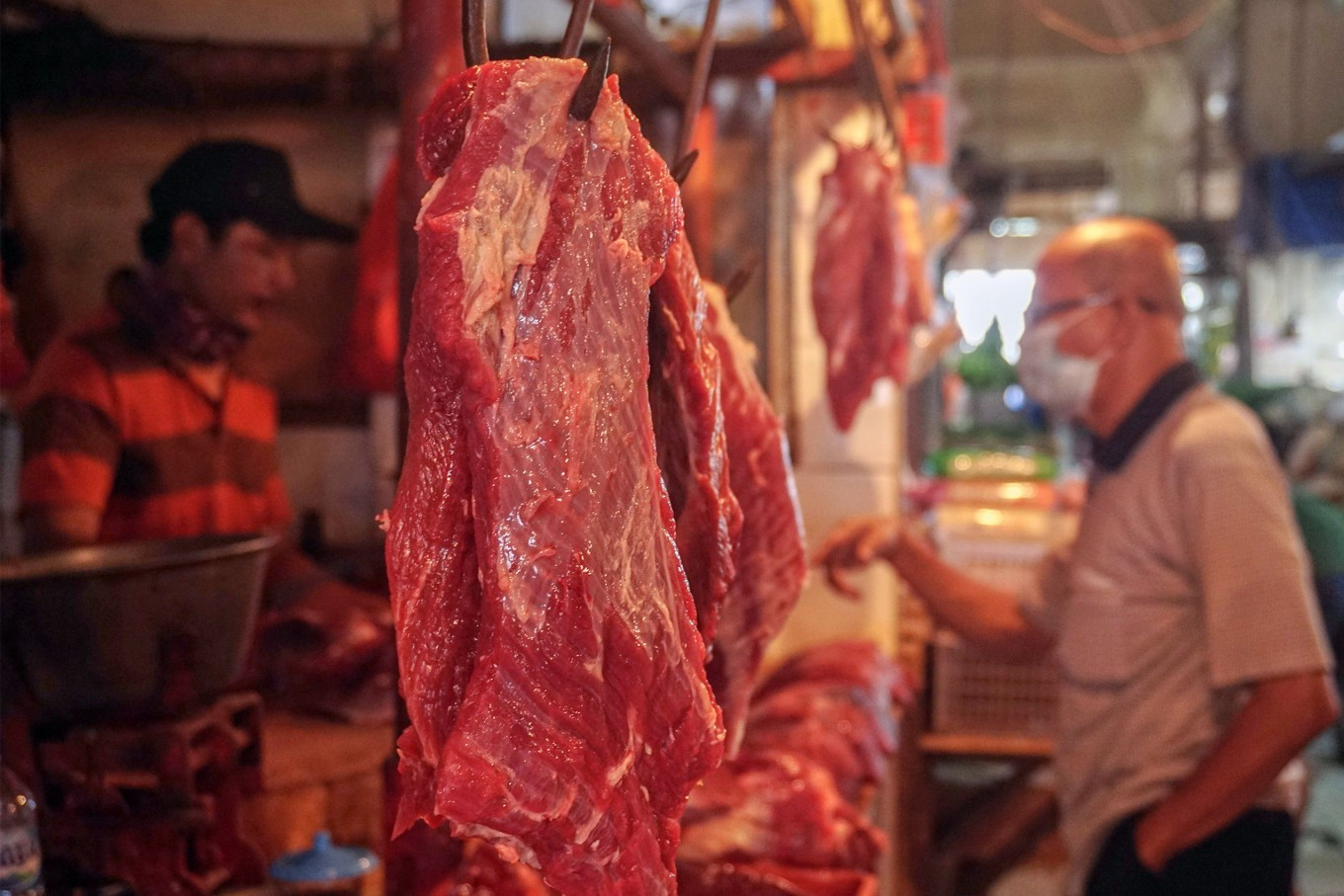 A fresh cut of beef hangs on a hook as a meat vendor (left) attends to a customer on April 6, 2021, at Cijantung Market in East Jakarta. (JP/Yulianto Catur Nugroho)
B
eef retailers have gone on strike in protest over the rising price of live cattle set by feedlot operators. While the increase is partly attributed to supply losses caused by flooding in Australia, Indonesia’s largest source of imported cattle, the Agriculture Ministry suspects foul play among feedlot operators, alleging that they are maintaining elevated prices to secure higher margins. This comes as the government earlier this month slashed the private sector’s beef import quota from 180,000 tonnes last year to just 30,000 tonnes.
Price data point to sustained pressures along the supply chain. The average national price of live cattle at the feedlot level stood at Rp 52,941 (US$3.14) per kilogram on Jan. 28, according to National Food Agency (Bapanas) data, below the government reference price of Rp 56,000–58,000 per kg. However, at the consumer level, the average national price of hindquarter beef reached Rp 136,720 per kg, approaching the government reference price of Rp 140,000 per kg, suggesting that price pressures remain downstream.
Traders in traditional markets said their purchase price from slaughterhouses had risen sharply, from around Rp 85,000–Rp 90,000 per kg previously to about Rp 110,000 per kg. Several traders said this had pushed their cost of goods sold to roughly Rp 125,000 per kg, forcing them to sell beef at around Rp 130,000 per kg over the past month. As a result, daily sales volumes have fallen significantly, with some traders reporting a drop from around 10 kg per day to just 3 kg.
Against this backdrop, traders and slaughterhouse operators in Greater Jakarta went on strike on Jan. 22–24, after negotiations on live cattle price stability with the Agriculture Ministry and other agencies on Jan. 5 failed to yield a solution. After the strike, the Agriculture Ministry, Bapanas and several associations reached an agreement to keep the benchmark purchase price of live cattle at the feedlot level at Rp 55,000 per kg to stabilize prices and ensure supply ahead of Ramadan and Idul Fitri 2026.
Several importers said they were already under pressure when the benchmark price had been set at Rp 58,000 per kg, as that price had been factored into their procurement plans to secure Australian cattle ahead of the peak Ramadan sales period. With the maximum benchmark price now lowered to Rp 55,000 per kg, they said the margin has become extremely thin, as the price is now close to their actual cost of sourcing cattle from Australia.
Amid mounting scrutiny, the Agriculture Ministry has formed a special task force to investigate alleged price speculation in the Greater Jakarta area. The ministry has warned that it could revoke business or import permits and pursue criminal charges against parties found to be manipulating prices.

The Jakarta provincial administration, however, offered a different assessment, saying it had found no evidence of supply shortages in the capital. Instead, it pointed to rising import costs, noting that the price of live cattle from Australia had increased from Rp 53,000 per kg in November 2025 to Rp 61,000 per kg. The increase had been attributed to rupiah exchange rate fluctuations and tighter supply from Australia, where cattle losses in Queensland reportedly exceeded 100,000 head following Tropical Cyclone Koji. Australia remains Indonesia’s dominant supplier, with beef imports reaching 113,622.94 tonnes in 2024, the highest among all origin countries, according to Statistics Indonesia (BPS).