TheJakartaPost
Please Update your browser
Your browser is out of date, and may not be compatible with our website. A list of the most popular web browsers can be found below.
Just click on the icons to get to the download page.


Popular Reads
Top Results
No results found. Please check your search term and try again
Can't find what you're looking for?
View all search results
Popular Reads
Top Results
No results found. Please check your search term and try again
Can't find what you're looking for?
View all search results‘Kampung haji’ and the challenge of building a sustainable pilgrimage hub
By serving the broader Southeast Asian Muslim community, the year-round demand base would become sufficiently large for kampung haji to stabilize occupancy and smooth seasonal fluctuations.
Change text size
Gift Premium Articles
to Anyone
Share the best of The Jakarta Post with friends, family, or colleagues. As a subscriber, you can gift 3 to 5 articles each month that anyone can read—no subscription needed!
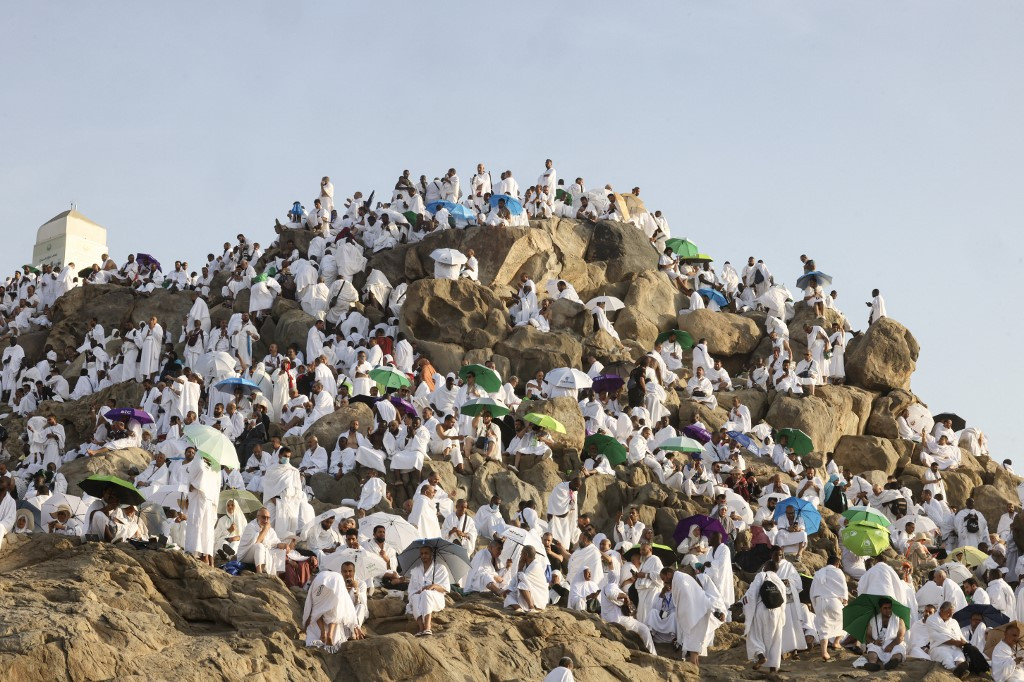 Muslim pilgrims pray at dawn on June 5, 2025, on Saudi Arabia's Mount Arafat, also known as Jabal al-Rahma or Mount of Mercy, during the climax of the haj, as Saudi officials called on participants to refrain from being outside during the hottest hours of the day. (AFP/Hazem Bader)
P
resident Prabowo Subianto’s proposal to develop a kampung haji (haj village) complex in Mecca, Saudi Arabia, marks one of Indonesia’s most ambitious overseas religious infrastructure initiatives. Managed and financed through state asset fund Danantara, the project reflects a serious commitment to improving services for Indonesian pilgrims and strengthening the nation’s institutional presence in the global pilgrimage economy.
Yet, the long-term success of kampung haji will depend on whether it is designed merely as a national housing facility or reimagined as a sustainable pilgrimage service hub within a rapidly expanding and increasingly competitive market.
The numbers involved are immense. Indonesia sends approximately 221,000 pilgrims annually under the official quota system, which stands as the largest national contingent in the world. Additionally, Indonesia generates between 1.2 and 1.5 million umrah (minor pilgrimage) pilgrims in a typical year, accounting for roughly 10 percent of total global umrah flows.
When combined with neighboring Southeast Asian markets, the figures become even more striking. Malaysia sends close to 350,000 umrah pilgrims annually, while Brunei, Singapore, southern Thailand and the southern Philippines contribute several hundred thousand more. In total, the "Nusantara" market comfortably exceeds 3 million umrah pilgrims per year, a figure that continues to grow alongside rising incomes and improved air connectivity.
Saudi Arabia itself plans to expand annual umrah arrivals toward 30 million by 2030 under its Vision 2030 program, turning pilgrimage into a core non-oil economic sector. In this context, Indonesia’s ambition to establish a permanent facility in Mecca is strategically sound, but volume alone does not guarantee sustainability.
Pilgrimage today operates in a decentralized and intensely competitive service market where accommodation decisions are rarely made by governments. Instead, they are negotiated by hundreds of licensed agencies that bundle hotels, transport and catering based on price, location and reliability.

This market reality is critical because kampung haji will require intensive capital requirements. Comparable large-scale hospitality developments within the Mecca central zone typically require investments ranging from US$300 million to over $700 million, depending on land acquisition and service facilities.