TheJakartaPost
Please Update your browser
Your browser is out of date, and may not be compatible with our website. A list of the most popular web browsers can be found below.
Just click on the icons to get to the download page.


Popular Reads
Top Results
No results found. Please check your search term and try again
Can't find what you're looking for?
View all search results
Popular Reads
Top Results
No results found. Please check your search term and try again
Can't find what you're looking for?
View all search resultsFrom subsidies to signals: Making Indonesia’s power market investable
The current setup asks PLN to be planner, procurer and operator. That was useful in the past decades, but today it blurs incentives, slows competitive procurement and makes it hard for investors to price risk.
Change text size
Gift Premium Articles
to Anyone
Share the best of The Jakarta Post with friends, family, or colleagues. As a subscriber, you can gift 3 to 5 articles each month that anyone can read—no subscription needed!
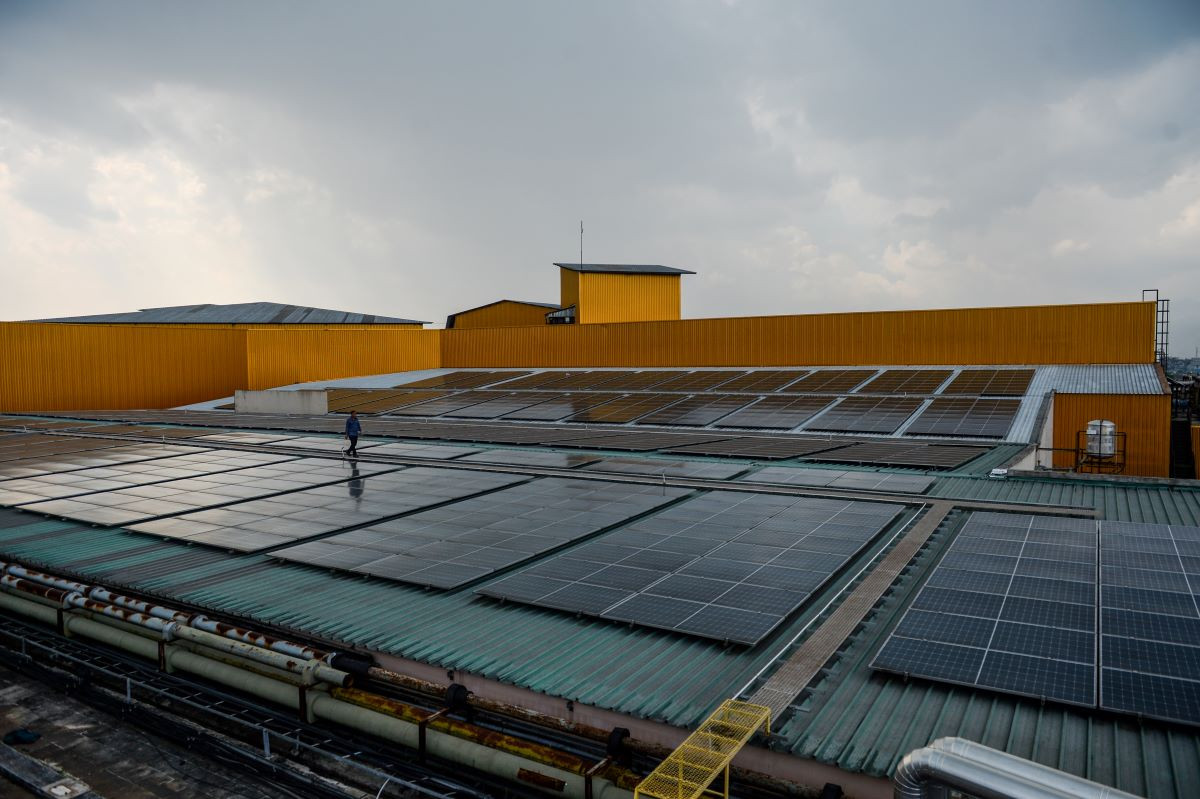 A technician inspects a rooftop solar power plant (PLTS) on Sept. 8, 2025 at Trans Studio Mall in Bandung, West Java. (Antara/Raisan Al Farisi)
I
ndonesia’s power ambitions are large and justified: delivering reliable, affordable electricity that also decarbonizes the economy and attracts investment. But the way we try to reach those goals by holding prices flat for years while asking a single state utility to plan, buy, build and operate everything has created a credibility gap between plans and projects delivered.
As of 2024, according to government reports, only about 0.72 gigawatts of solar is operating against a target of 17.1 gigawatts by 2034, with 10.3 gigawatts of storage pencilled in but not yet bankable at scale. These are very clear signals to investors that there is little progress in meeting the ambitious targets set by the government.
The energy industry is a significant attractor of foreign direct investments (FDI), given that Indonesia has reduced barriers for foreign investors. The execution of renewable energy projects must become an accelerator for the growth of the green-economy and for the deployment of foreign capital.
We see the contrary happening, as over the past two years several large and small international renewable energy investment companies decided to leave the country or to minimize their expectations and take a “wait-and-see” position, harming the government’s specific FDI targets drastically in the coming years. While FDI realized in 2023 was Rp 744 trillion (US$44.27 billion) in 2024 it increased to Rp 900.2 trillion, and stayed almost flat in 2025 at Rp 900.9 trillion.
Keeping average prices unchanged for commercial and industrial (C&I) users may appear pro‑growth, but it pushes a growing bill to the budget in the form of subsidy and compensation to state utility company PLN. In 2024, the illustrative gap between average operating cost and average selling price was roughly Rp 430/kWh. On sales of 306,219 GWh, that implies roughly Rp131 trillion extra revenue just to break even, before new capex.
Freezing prices for five more years pushes ever larger compensation needs, especially if costs inflate. Eventually, the bill must be paid by taxpayers, consumers or foregone investment, while the government needs large budgets to execute its other priorities.

Some will argue that low C&I tariffs protect jobs and competitiveness. In practice, the fiscal burden raises sovereign risk, delays payments, compresses PLN’s working capital and slows grid investment, the very backbone needed for industrial growth. The better path is a predictable tariff glide path for C&I, paired with direct support for lifeline households, clear compensation rules when prices are held below formula, and hard cost‑reduction targets inside PLN and across the system.