The Jakarta Post
Please Update your browser
Your browser is out of date, and may not be compatible with our website. A list of the most popular web browsers can be found below.
Just click on the icons to get to the download page.


Popular Reads
Top Results
No results found. Please check your search term and try again
Can't find what you're looking for?
View all search results
Popular Reads
Top Results
No results found. Please check your search term and try again
Can't find what you're looking for?
View all search resultsHow priority programs risk eroding meritocracy in bureaucracy
Indonesia’s pursuit of "fast-tracked" priority programs risks breaking the moral contract at the heart of its bureaucracy. When new initiatives jump the queue, the state doesn't just bypass a backlog of honorary workers, it threatens to replace meritocracy with programmatic proximity.
Change text size
Gift Premium Articles
to Anyone
Share the best of The Jakarta Post with friends, family, or colleagues. As a subscriber, you can gift 3 to 5 articles each month that anyone can read—no subscription needed!
 Set as preferred source
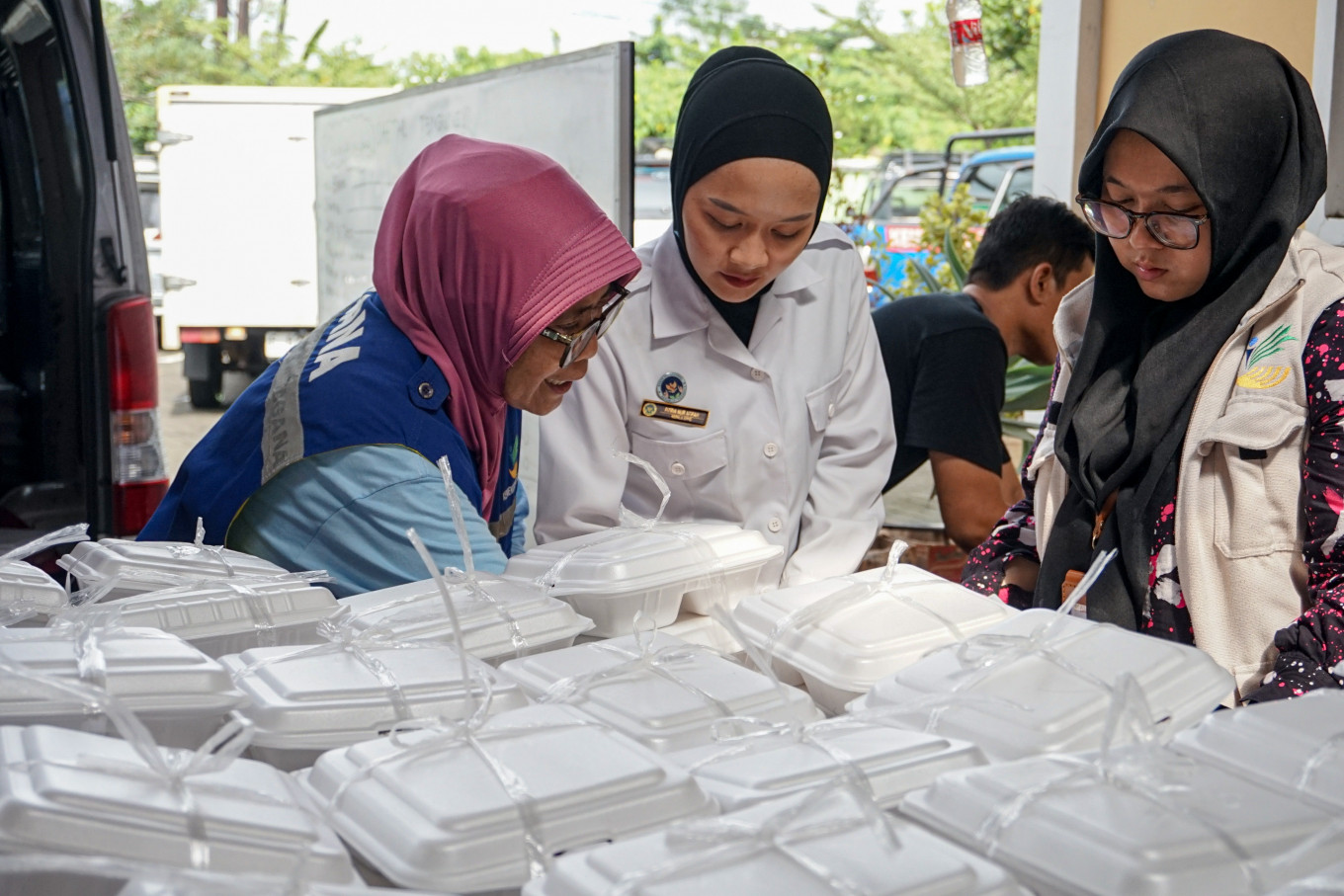 Workers from a Nutrition Service Unit (SPPG) distribute boxed meals to residents affected by flooding at the Pekalongan Social Affairs Agency in Central Java, on Jan 20, 2026. (Antara/Harviyan Perdana Putra)
M
eritocracy is frequently cited as the backbone of Indonesia’s bureaucratic reform. Yet the true test of meritocracy lies not in official speeches or regulatory texts, but in the state’s treatment of those who have waited longest for recognition.
In border regions, far from the center of political authority, non-civil service teachers and health workers spend decades serving the public without secure status or career certainty. They work for modest pay, often without pension guarantees. Their prolonged waiting is not incidental; it reflects a structural condition affecting hundreds of thousands of non-permanent public servants across the archipelago.
Having served within the government, I have seen that resolving such structural injustices is difficult but achievable. During my tenure at the Executive Office of the President (KSP) between 2016 and 2024, my team engaged in rigorous cross-ministerial coordination to address the stalled appointment of 176 civil service candidates in West Seram regency, Maluku, whose status had been unresolved since 2010.
Through regulatory alignment and persistent institutional collaboration, 151 of them were finally appointed in 2022. That process demonstrated a critical lesson: When meritocracy and fairness are treated as governing principles rather than procedural slogans, the state possesses the capacity to correct long-standing bureaucratic failures.
It is precisely this lesson that makes the current debate over the free nutritious meal program so consequential. The proposal to appoint core staff of the Nutrition Service Units (SPPG) under this flagship initiative as government contract employees (PPPK) is more than an administrative adjustment. It raises fundamental ethical, institutional and constitutional questions about the direction of Indonesia’s bureaucratic reform.
The contract workforce problem remains unresolved at scale. Since 2021, the government has appointed nearly 800,000 teachers through the PPPK scheme, yet official data from the Administrative and Bureaucratic Reform Ministry shows that hundreds of thousands of non-civil service contract teachers remain outside the system, constrained by limited quotas and policy asymmetries. In the health sector, the challenge is equally persistent, with over 200,000 non-civil service health workers serving in public facilities without employment security.

At the start of the 2023/2024 transition period, the verified non-civil service workforce totaled 2.3 million people. This “long queue” has become one of the most persistent fault lines in the country’s bureaucratic reform agenda.