TheJakartaPost
Please Update your browser
Your browser is out of date, and may not be compatible with our website. A list of the most popular web browsers can be found below.
Just click on the icons to get to the download page.


Popular Reads
Top Results
No results found. Please check your search term and try again
Can't find what you're looking for?
View all search results
Popular Reads
Top Results
No results found. Please check your search term and try again
Can't find what you're looking for?
View all search resultsElusive police reform
Today the National Police are increasingly reminiscent of the military during the New Order era.
Change text size
Gift Premium Articles
to Anyone
Share the best of The Jakarta Post with friends, family, or colleagues. As a subscriber, you can gift 3 to 5 articles each month that anyone can read—no subscription needed!
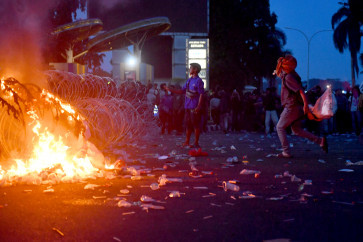
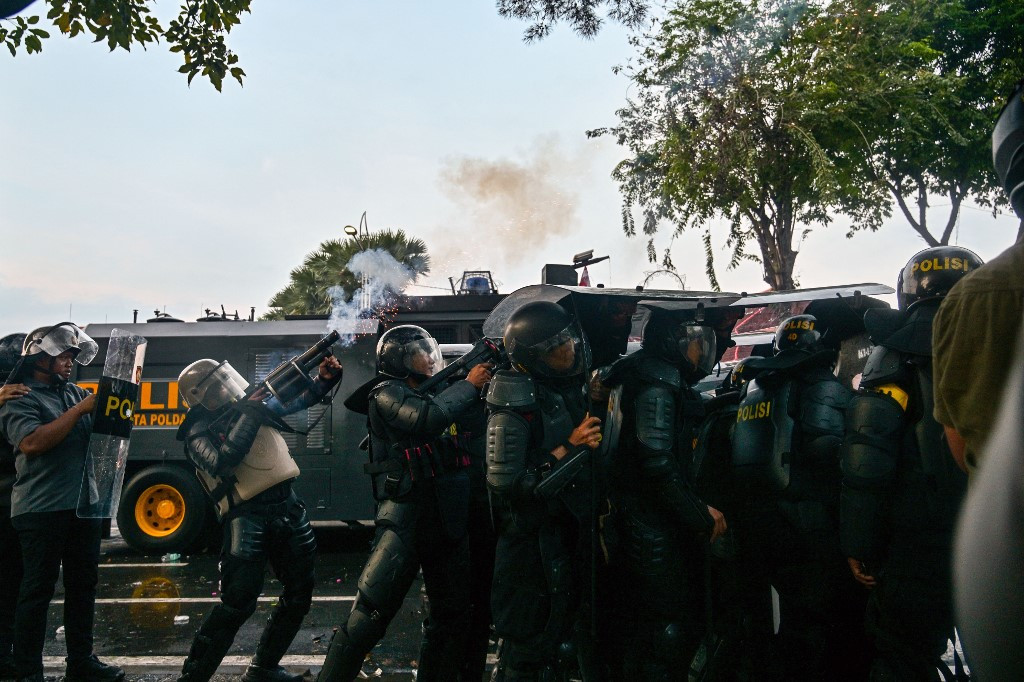 Police fire tear gas to disperse demonstrators during a protest against the Police Mobile Brigade (Brimob) in front of the East Java gubernatorial residence in Surabaya, East Java on Aug. 29, 2025, following the death of 21-year-old motorcycle transportation driver Affan Kurniawan, who was killed after being struck by a police tactical vehicle amid a protest against lavish allowances for lawmakers in Jakarta on Aug. 28. (AFP/Juni Kriswanto)
T
he prosecution of Hogi Minaya in Sleman, Yogyakarta, is not an isolated case of the bizarre standard operating procedures of the police. He was named a suspect for chasing down pickpockets who had stolen his wife’s bag, an act that tragically led to the deaths of the two thieves.
While the prosecutors eventually dropped the case and local police leaders were replaced following a grilling by House of Representatives Commission III, the incident reflects a flawed, deep-rooted culture of law enforcement.
This absurdity is part of a pattern to say the least. Whether it was the arrest of youths in Yogyakarta in August last year for "cheating" online gambling operators or the 2022 case in West Nusa Tenggara where a man was arrested for killing robbers in self-defense, the public is increasingly left questioning how the criminal justice system works in this country.
Demands for sweeping reform, including organizational overhaul, have intensified following the protests of August 2025, during which the police’s excessive use of force resulted in the death of a motorcycle transportation driver and the arrest of hundreds of protesters for exercising their freedom of expression.
In response, President Prabowo Subianto formed an ad hoc commission in early November to accelerate reform. However, three months later, the body has failed to inspire confidence, largely because the object of the reform, the police, makes up nearly half of the commission's membership.
National Police chief Gen. Listyo Sigit Prabowo’s blunt rejection of calls to place the police under a civilian ministry further illustrates the resistance from within. Since the police separated from the then-Indonesian Armed Forces (ABRI) in 1999, the goal has been to create a professional, transparent and accountable civilian institution. Two decades later, that promise remains unfulfilled. Public trust is at a deficit, eroded by perceptions of arrogance, extortion and selective enforcement.

The current structure, where the police answer directly to the President, has created a dangerous paradox: a powerful institution with ineffective civilian oversight. With a massive budget, the third-largest state budget spender this year, and wide-ranging authority but no external accountability, the police have morphed into a "superbody." This unchecked power provides fertile ground for a culture of impunity, allowing the force to become an instrument of political and business interests rather than a protector of the people.