TheJakartaPost
Please Update your browser
Your browser is out of date, and may not be compatible with our website. A list of the most popular web browsers can be found below.
Just click on the icons to get to the download page.


Popular Reads
Top Results
No results found. Please check your search term and try again
Can't find what you're looking for?
View all search results
Popular Reads
Top Results
No results found. Please check your search term and try again
Can't find what you're looking for?
View all search resultsFinancialization will not improve global health
This new architecture distorts the risk landscape in ways that socialize losses, while privatizing profits and control.
Change text size
Gift Premium Articles
to Anyone
Share the best of The Jakarta Post with friends, family, or colleagues. As a subscriber, you can gift 3 to 5 articles each month that anyone can read—no subscription needed!
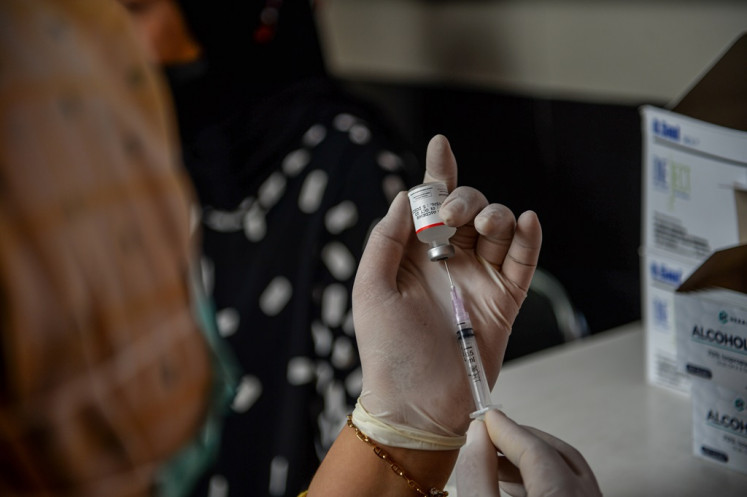
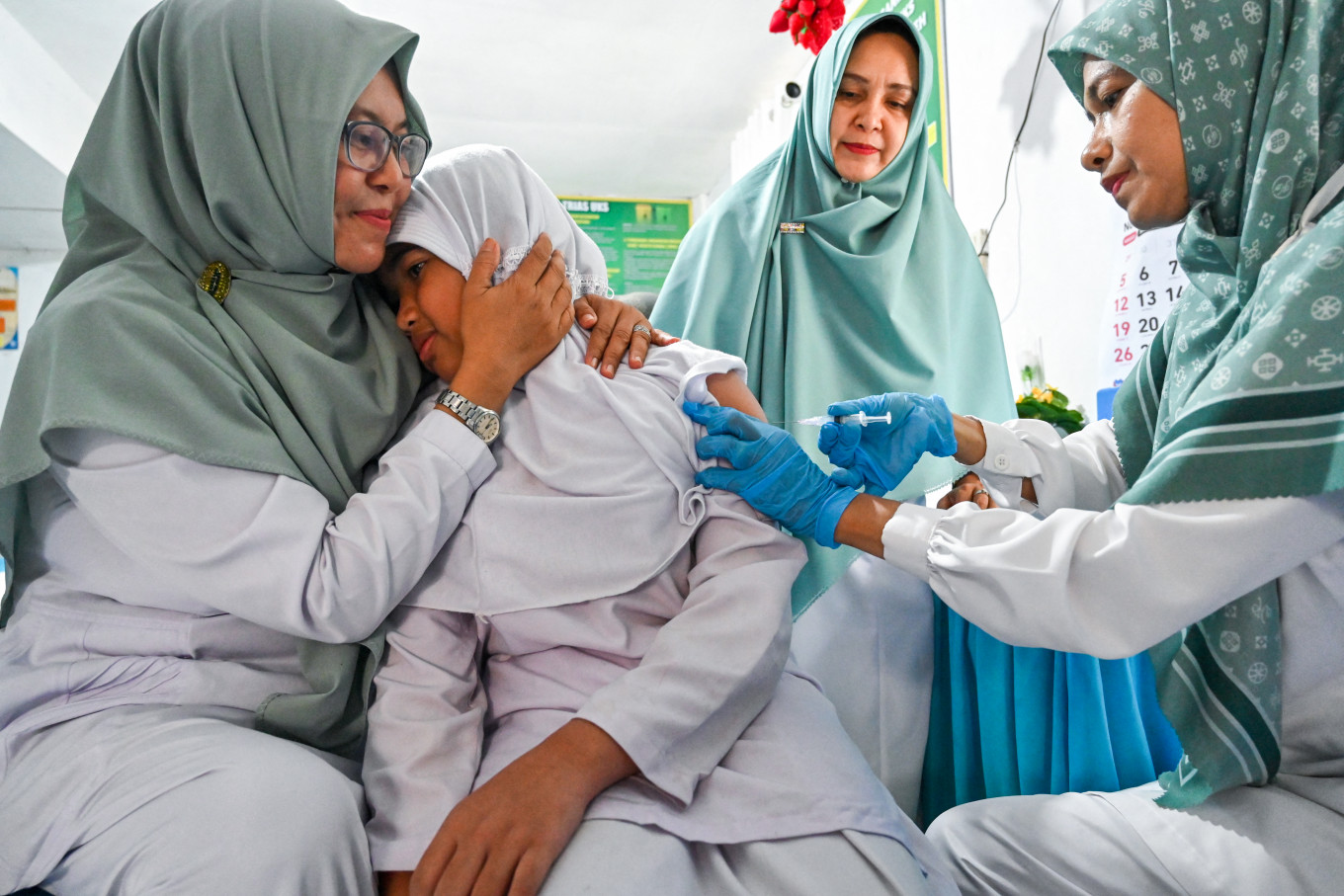 A student receives a diphtheria vaccine shot at an Islamic elementary school in Banda Aceh on Nov. 21, 2023. (AFP/Chaideer Mahyuddin)
F
or the past half-century, the economics of global health were straightforward. Rich countries gave grants to poor countries, which used the funds to meet their populations’ health needs. Success was measured in services provided or lives saved, rather than balance sheets balanced. While this model was far from perfect, the approach that is now replacing it, focused on using tools like guarantees and blended finance to crowd in private capital, threatens to produce even worse outcomes.
There are legitimate criticisms of the grant-based approach. Grants are finite, draw on limited public budgets and are subject to donor-country politics. Official development assistance (ODA) for health has stagnated, in real terms, since the late 2010s, even though need has grown. Moreover, the grant-based system makes much use of vertical health programs, which advance specific, measurable, narrow and often short-term objectives. Since these programs have their own procurement systems, reporting requirements and priorities that run parallel to overarching national objectives, they tend to lead to more fragmented health systems, not stronger ones.
More fundamentally, the grant-based system makes recipients accountable to donors, rather than citizens. Donor “earmarks”, restricting contributions to specific projects, objectives or places, create perverse incentives, as they are often narrow in scope and reflect short-term thinking. As a result, countries might be left with gleaming tuberculosis clinics but no funds for basic child-health services. And grants often breed dependency, with services collapsing as soon as the money dries up.
Rather than address the grant-based system’s weaknesses, however, development-finance institutions and donor countries want to scrap it, arguing that the embrace of “catalytic capital” can deliver scale without ever-larger budget lines. An independent evaluation found that, in 2015-24, the World Bank Group collectively issued more than US$60 billion in guarantees, mostly to mobilize private investment in low- and middle-income countries. Development-finance institutions now trumpet additionality ratios, “for every $1 of public money, private sources deliver $5”, as a primary metric of success, including in health-related investments.
Once you get past the jargon, however, it becomes clear that this new architecture distorts the risk landscape in ways that socialize losses, while privatizing profits and control. Of course, altering the distribution of risk is the point. For example, guarantees entail an entity (usually public or philanthropic) pledging to step in if a borrower defaults on a loan from private investors. Enabling private actors to enjoy financial and reputational benefits, with capped downside risks, lowers the cost of capital for projects deemed socially valuable.
But the results are far from benign. Donors claim fiscal prudence, but they are committing to obligations that materialize when things go wrong. Since the shocks that are covered, such as currency depreciation, political instability, regulatory changes and weak demand, are very common in lower-income countries, the chances donors will have to pay up are high. Recipient governments, meanwhile, remain bound by their repayment obligations, often denominated in foreign currency.

Consider vaccine manufacturing. Guarantees can de-risk factories and encourage local production, a genuine public good, particularly in a region like Africa, which imports over 99 percent of its vaccines. But vaccine demand is volatile; procurement depends heavily on donors; and margins are thin. To make projects bankable, guarantees often extend beyond construction costs to cover offtake risk or exchange-rate losses for years. When vaccine demand collapsed after the COVID-19 pandemic, manufacturers’ liabilities did not disappear; they shifted to the public actors that had underwritten the risk.