TheJakartaPost
Please Update your browser
Your browser is out of date, and may not be compatible with our website. A list of the most popular web browsers can be found below.
Just click on the icons to get to the download page.


Popular Reads
Top Results
No results found. Please check your search term and try again
Can't find what you're looking for?
View all search results
Popular Reads
Top Results
No results found. Please check your search term and try again
Can't find what you're looking for?
View all search resultsGlobal panic at our doorstep: Can Indonesia weather the next storm?
Indonesia must brace for a global liquidity storm of historic proportions. With the traditional "central bank put" now missing, the nation's survival depends on fortifying its economic ship before the waves of capital flight reach our shores.
Change text size
Gift Premium Articles
to Anyone
Share the best of The Jakarta Post with friends, family, or colleagues. As a subscriber, you can gift 3 to 5 articles each month that anyone can read—no subscription needed!
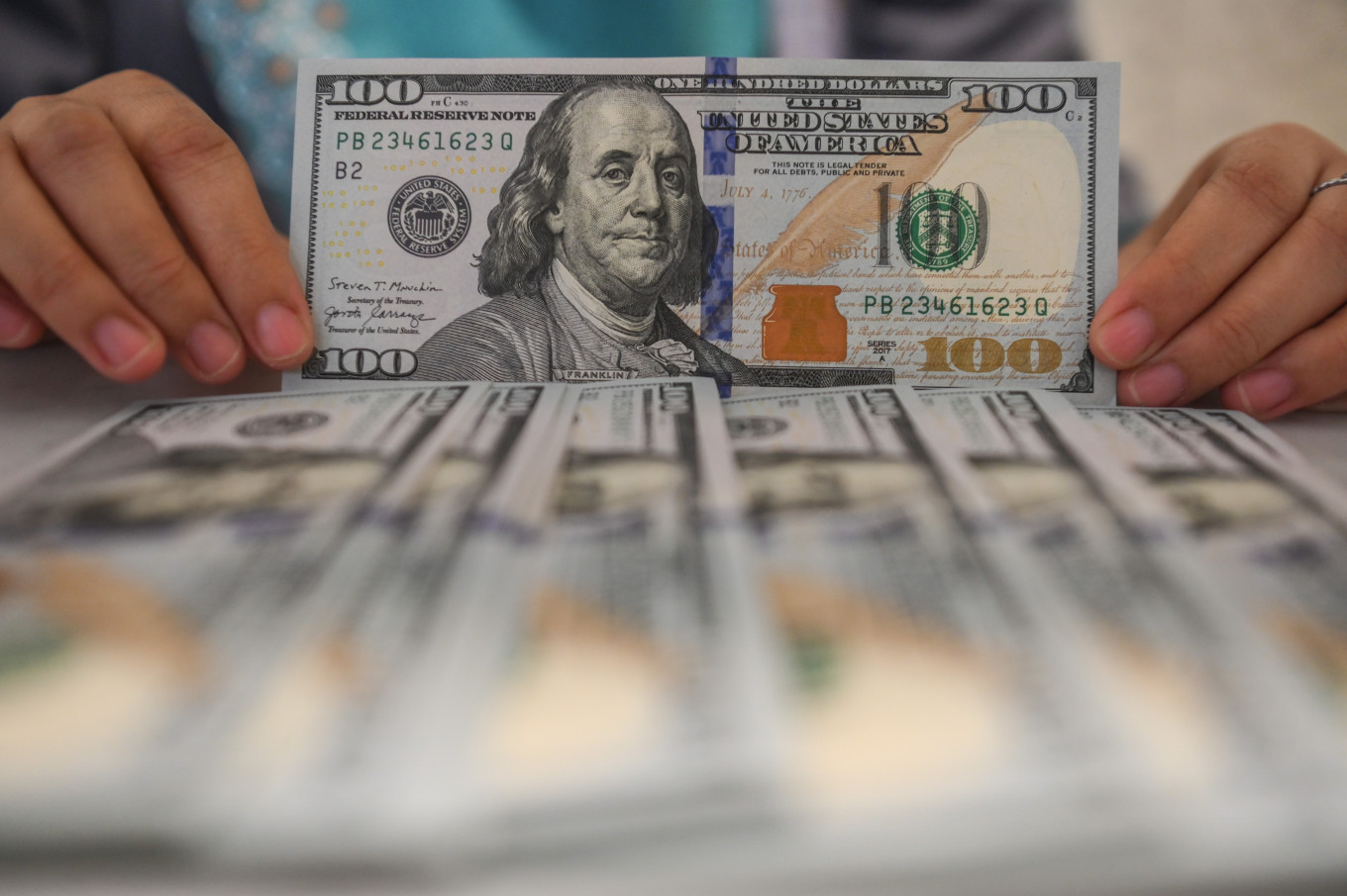 An employee displays United States dollar banknotes at Bank Syariah Indonesia in South Tangerang, Banten, on Jan. 21, 2026. (Antara/Hafidz Mubarak A)
T
he financial markets are signaling a warning, and it is one that every policymaker, investor and business leader must heed. In a simultaneous and alarming plunge, the prices of assets as diverse as gold, global stocks and cryptocurrencies are cratering. Yet, in the same breath, the Swiss franc and Japanese yen are soaring. This is not a typical market correction; it is the unmistakable signature of a more disturbing phenomenon.
Investors are not simply moving money from one asset to another, they are executing an urgent, wholesale retreat from risk itself. They are selling anything they can to raise cash and fleeing to the world’s most secure bunkers, even if those bunkers pay nothing. This collective behavior signals that the global economy is entering a danger zone of historic proportions, and the tremors will inevitably reach Indonesia’s shores.
Decoding these signals reveals a disturbing logic. Gold, the ancient sanctuary in times of crisis, is falling. This is highly unusual and suggests a scramble for United States dollar liquidity so severe that even traditional safe havens are being liquidated. It is a classic precursor to a liquidity freeze, where the machinery of credit begins to seize.
Meanwhile, the rush into the Swiss franc is a pure flight to safety, betting on political neutrality and economic stability above all else. Together, they paint a picture of an investor community bracing for impact.
The catalysts for this panic are a toxic cocktail of long-brewing vulnerabilities and immediate political shocks. The world is staggering under a historic mountain of debt. The recent era of high interest rates, engineered to combat inflation, has made servicing this debt expensive, creating a tinder-dry financial forest.
Now, the spark has been thrown: the threat of a new, wide-ranging era of US-led tariffs and worsening liquidity in the US banking system. These protectionist measures act as a tax on global growth, threatening to reignite inflation just as growth slows, disrupt intricate supply chains and crush corporate profits. The market is now pricing in a vicious stagflationary scenario of weak growth and persistent high prices.

The critical question is whether this constitutes the brink of another global financial crisis. The probability has risen dramatically, and the case for a full-blown crisis is chillingly strong. Central banks, particularly the US Federal Reserve, are now trapped. With tariffs potentially pushing inflation higher, they have lost their ability to act as saviors by cutting interest rates to stimulate the economy.